Viral Coefficient – Quick Study and Social Network Implications
Virality is a metric that has been borrowed from the field of epidemiology. It pertains to how quickly an element or content spreads through the population. Thus, these elements could be voluntarily or involuntarily adopted. Applying it to the world of digital content, I will restrict my scope to that of voluntary adoption by participants who have come into contact with the elements.
The two driving factors around virality relate to Viral Coefficient and Viral Cycle Time. They are mutually exclusive concepts, but once put together in a tight system within the context of product design for dissemination, it becomes a very powerful customer acquisition tool. However, this certainly does not mean that increased virality will lead to increased profits. We will touch upon this subject later on for in doing so we have to assess what profit means – in other words, the various components in the profit equation and whether virality has any consequence to the result. Introducing profit motive in a viral environment could, on the other hand, lead to counterfactual consequences and may depress the virality coefficient and entropy the network.
What is the Viral Coefficient?
You will often hear the Viral Coefficient referred to as K. For example, you start an application that you put out on the web as a private beta. You offer them the tool to invite their contacts to register for the application. For example, if you start off with 10 private beta testers, and each of them invites 10 friends and let us say 20% of the 10 friends actually convert to be a registered user. What does this mean mathematically as we step through the first cycle? Incrementally, that would mean 10*10*20% = 20 new users that will be generated by your initial ten users. So at the end of the first cycle, you would have 30 users. But bear in mind that this is the first cycle only. Now the 30 users have the Invite tool to send to 10 additional users of which 10% convert. What does that translate to? It would be 30*10*10% =30 additional people over the base of 30 of your current installed based. That means now you have a total of 60 users. So you have essentially sent out 100 invites and then another 300 invites for a total of 400 invites — you have converted 50 users out of the 400 invites which translates to a 12.5% conversion rate through the second cycle. In general, you will find that as you step through more cycles, your conversion percentage will actually decay. In the first cycle, the viral coefficient (K) = 2 (Number of Invites (10) * conversion percentage (20%)), and through the incremental second cycle (K) = 10% (Number of Invites (10) * conversion percentage (10%)), and the total viral coefficient (K) is 1. If the K < 1, the system lends itself to decay … the pace of decay being a function of how low the viral coefficient is. On the other hand if you have K>1 or 100%, then your system will grow fairly quickly. The actual growth will be based on you starting base. A large starting base with K>1 is a fairly compelling model for growth.

The Viral Cycle Time:
This is the response time of a recipient to act upon an invite and send it out to their connection. In other words, using the above example, when your 10 users send out 10 invites and they are immediately acted upon ( for modeling simplicity, immediate means getting the invite and turning it around and send additional invites immediately and so on and on), that constitutes the velocity of the viral cycle otherwise known as Viral Cycle time. The growth and adoption of your product is a function of the viral cycle time. In other words, the longer the viral cycle time, the growth is significantly lower than a shorter viral cycle time. For example if you reduce viral cycle time by ½, you may experience 100X+ growth. Thus, it is another important lever to manage the growth and adoption of the application.

So when one speaks of Virality, we have to consider the Virality Coefficient and the Viral Cycle Time. These are the key components and the drivers to these components may have dependencies, but there could be some mutually exclusive underlying value drivers. Virality hence must be built into the product. It is often common to think that marketing creates virality. I believe that marketing certainly does influence virality but it is more important, if and when possible, to design the product with the viral hooks.
Standing Ovation Problem and Product Design
When you seed another social network into an ecosystem, you are, for the lack of a better word, embracing the tenets of a standing ovation model. The standing ovation model has become, as of late, the fundamental rubric upon which several key principles associated with content, virality, emulation, cognitive psychology, location principles, social status and behavioral impulse coalesce together in various mixes to produce what would be the diffusion of the social network principles as it ripples through the population it contacts. Please keep in mind that this model provides the highest level perspective that fields the trajectory of the social network dynamics. There are however a number of other models that are more tactical and borrowed from the fields of epidemiology and growth economics that will address important elements like the tipping points that generally play a large role in essentially creating that critical mass of crowdswell, which once attained is difficult to reverse, unless of course there are legislative and technology reversals that may defeat the dynamics.
So I will focus, in this post, the importance of standing ovation model. The basic SOP (Standing Ovation problem) can be simply stated as: A lecture or content display in an audience ends and the audience starts to applaud. The applause builds and tentatively, a few audience may members may or may not decide to stand. This could be abstracted in our world as an audience that is a passive user versus an active user in the ecosystem. The question that emerges is whether a standing ovation ensues or does the enthusiasm fizzle. SOP problems were first studied by Schelling.
In the simplest form of the model, when a performance or content consumption ends, an audience member must decide whether or not to stand. Now if the decision to stand is made without any consideration of the dynamics of the other people in the audience, then there is no problem per se and the SOP model does not come into play. However, if the random person is on the fence or is reluctant or may not have enjoyed the content … would the behavioral and location dynamics of the other participants in the audience influence him enough to stand even against his better judgment. The latter case is an example of information cascade or what is often called the “following the herd” mentality which essentially means that the individuals abnegates his position in favor of the collective judgment of the people around him. So this model and its application to social networks is best explained by looking at the following elements:
1. Group Response: If you are part of a group and you have your set of judgments governing your decision to stand up, then are you willing to reserve those judgments to be part of group behavior. At what point is a person willing to seed doubt and play along with a larger response. This has important implications. For example, if you are in an audience and a member of a group that you know well, and a certain threshold quantity in the group responds favorably to the content, there may be some likelihood that you would follow along. On the other hand, if you are an individual in an audience, albeit not connected to a group, there is still some chance of you to follow along as long as it meets some threshold for example – if I can see about people stand, I will follow along. In a known group which may constitute you being a participant among five people, even if 3 people stand, you may stand up even though it does not meet your random 10 people formula. This has important implications in cohorts, building groups, providing tools and computational agents in social networks and dynamics to incline a passive consumer to an active consumer.

2. Visibility to the Group: Location is an important piece of the SOP. Imagine a theater. If you are the first one in the center of all rows, you will, unless you turn back, not be cognizant of people’s reactions. Thus, your response to the content will be preliminarily fed by the intensity of your reaction to the content. On the other hand, if you are seated behind, you will have a broader perspective and you may respond to the dynamics of how the others respond to the content. What does this mean in social dynamics and introducing more active participation? Simply that you have to again provide the underlying mechanisms that allow people to respond at a temporal level ( a short time frame) to how a threshold mass of people have responded. Affording that one person visibility that would follow up with a desired response would create the information cascade that would culminate in a large standing ovation.

3. Beachhead Response: An audience will have bias. That is another presumption in the model. They will carry certain judgments prior to a show – one of which is that the people in front who have bought the expensive seats are influential and have “celebrity” status. Now depending on the weight of this bias, a random person, in spite a positive audience response, may not respond positively if the front rows do not respond positively. Thus, he is heavily inclined to discounting the general audience threshold toward a threshold associated with a select group that could result in different behavior. However, it is also possible that if the beachhead responds positively and not the audience, the random person may react positively despite the general threshold dynamics. So the point being that designing and developing products in a social environment have to be able to measure such biases, see responses and then introduce computational agents to create fuller participation.

Thus, the SOP is the fundamental crux around which a product design has to be considered. In that, to the extent possible, you bring in a person who belongs to a group, has the spatial visibility, and responds accordingly would thus make for an enduring response to content. Of course, the content is a critical component as well for poor content, regardless of all ovation agents introduced, may not trigger a desired response. So content is as much an important pillar as is the placing of the random person with their thresholds of reaction. So build the content, design the audience, and design the placement of the random person in order that all three coalesce to make an active participant result out of a passive audience.
How To Build A Social Recruiting Platform On Twitter


Social recruiting. It sounds good, it’s ‘buzzy’ – but what does it really mean? More importantly, how can someone new to social media recruiting get started? This is a broad topic; as social recruiting is complex thing with many layers. Over time with, we’ll dissect the layers through a variety of posts covering topics like social referrals, Facebook company pages, employment branding, and sourcing – but today we’re going to focus on using Twitter as a recruiting tool. Specifically, we’ll be sharing tips on how to create, launch, and grow a corporate recruiting Twitter account.
These are some steps I recommend you take (or at least consider) when launching a social recruiting effort on Twitter. This isn’t designed to be an exact blueprint as every company and culture is different so you should personalize these suggestions for your organization. To that point, understand from the outset that you should…
View original post 1,013 more words
From a good friend of mine who has been there and done that.


Authors: Manu and Kanwal Rekhi
What is the difference between a manager and an entrepreneur? Is one better for society than the other? These are questions that frequently arise during our mentoring sessions with young college graduates who are at the beginning of their professional careers.
Management, as a scientific discipline, and managers as practitioners of it, are concerned with the control and maximization of a firm’s resources. These resources may include capital assets, human resource assets, customer assets, and processes. Managers thrive in and prefer relatively predictable and stable environments which enable them to steadily and incrementally improve utilization, nurture talent, cut costs, eliminate waste, and shorten development cycle times to extract more profits from same assets. That said, the ability for a manager to effect change in an organization is constrained by the inertia of his assets. A five percent annual improvement in productivity at a large industrial…
View original post 728 more words
Free, Freemium, Pay-to_Play: Business Model Implications
 “Free” has become ubiquitous in the digital age. It has been touted widely as the only mechanism which is a necessary condition or an iron law for providing digital products and services across the Internet. More exactly, there is an inexorable pressure upon price points on digital products whose marginal cost of production is minimal. So business models are cropping up and encouraging the consumers to chart an “Internet Consumer Bill of Rights”: the business models painfully and reluctantly argue that the consumers’ personal information is being exchanged to get these “free” products which can be monetized by advertisements and the like. However, these toutings and exclamations by the pundits of “Free” have adversely impacted many industries that have been forced to go along with it, absent any immediate choice in that matter. Read the rest of this entry
Walled Garden: Mirage or Oasis?
A walled garden in the context of the internet relays to full control of the user experience. In other words, it is a methodology that is deployed to ensure closed or exclusive content for consumption by a set of users.
One of the prime examples of the walled garden in the technology world is the Apple ecosystem. This constitutes the interplay or hardware and software intricately tied in a manner that precludes any legal way to contaminate the harmony of user experience. Well, at least that is what Apple has vociferously claimed over the ages. They have argued that adopting the walled garden has served to be a bedrock of innovation, and the millions of applications on the Appstore bears out that fact. But the open source folks argue otherwise.

Social Gaming and Organizational Psychology
 We encourage children to play. It is one of the oldest and cheapest forms of entertainment. Children create imaginary worlds, assume roles, establish rules, and determine what constitutes a win. In all that, along the way they create the processes that elevate fun and learning … though we, as adults, may have different opinions about the type of fun and the magnitude of learning that play fosters in the social tapestry of children’s play.
With time and increasing responsibilities, the communion established by play is supplanted for experiences that align the adult toward other goals. However, Read the rest of this entry
Organization Architecture – Evolving strain!
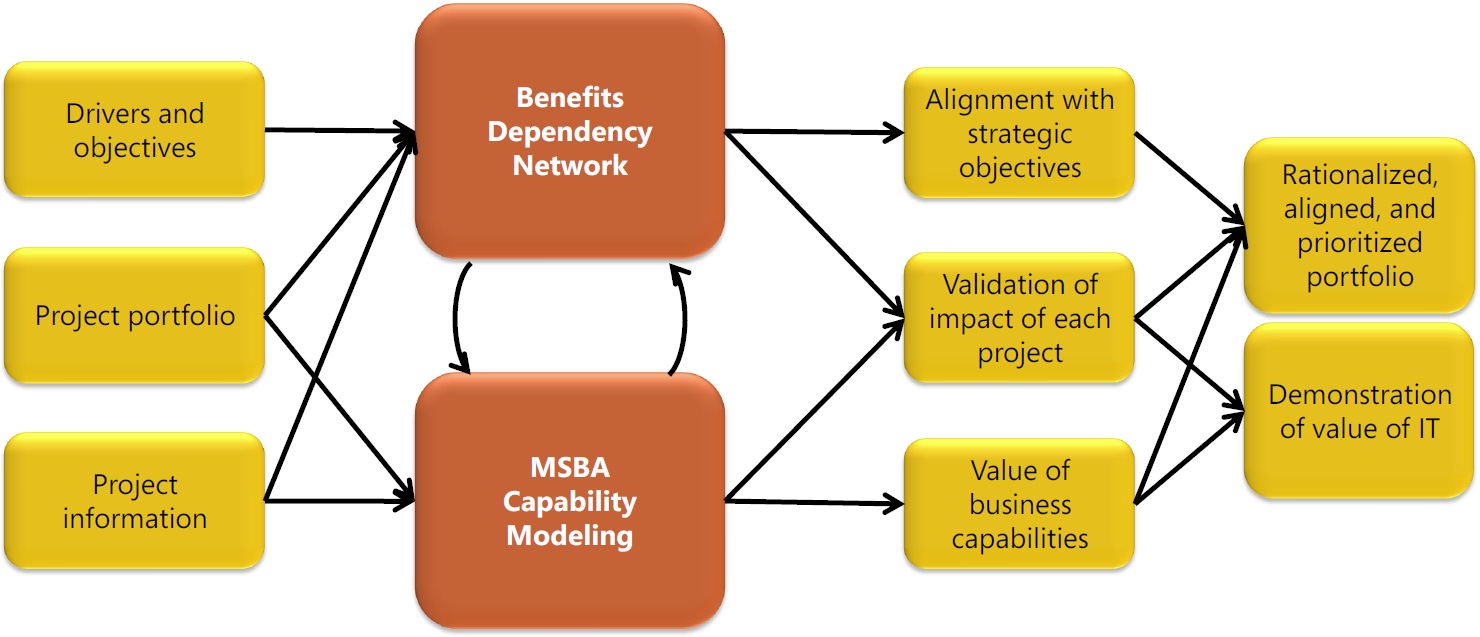 Innovation is happening at a rapid pace. An organization is being pummeled with new pieces of information, internally and externally, that is forcing pivots to accommodate changing customer needs and incorporating emerging technologies and solutions. Thus, the traditional organization structures have been fairly internally focused. Ronald Coase in his famous paper The Nature of the Firm (1937) had argued that organizations emerge to arrest transactional costs of managing multiple contracts with multiple service providers; the organization represents an efficient organizational unit given all other possible alternatives to coexist in an industrial ecosystem. Read the rest of this entry

 Linked Stars Blog