Category Archives: Learning Process
Managing Scale
| I think the most difficult thing had been scaling the infrastructure. Trying to support the response we had received from our users and the number of people that were interested in using the software. – Shawn Fanning |
Froude’s number? It is defined as the square of the ship’s velocity divided by its length and multiplied by the acceleration caused by gravity. So why are we introducing ships in this chapter? As I have done before, I am liberally standing on the shoulder of the giant, Geoffrey West, and borrowing from his account on the importance of the Froude’s number and the practical implications. Since ships are subject to turbulence, using a small model that works in a simulated turbulent environment might not work when we manufacture a large ship that is facing the ebbs and troughs of a finicky ocean. The workings and impact of turbulence is very complex, and at scale it becomes even more complex. Froude’s key contribution was to figure out a mathematical pathway of how to efficiently and effectively scale from a small model to a practical object. He did that by using a ratio as the common denominator. Mr. West provides an example that hits home: How fast does a 10-foot-long ship have to move to mimic the motion of a 700-foot-long ship moving at 20 knots. If they are to have the same Froude number (that is, the same value of the square of their velocity divided by their length), then the velocity has to scale as the square root of their lengths. The ratio of the square root of their lengths is the the square of 700 feet of the ship/10 feet of the model ship which turns out to be the square of 70. For the 10-foot model to mimic the motion of a large ship, it must move at the speed of 20 knots/ square of 70 or 2.5 knots. The Froude number is still widely used across many fields today to bridge small scale and large-scale thinking. Although this number applies to physical systems, the notion that adaptive systems can be similarly bridged through appropriate mathematical equations. Unfortunately, because of the increased number of variables impacting adaptive systems and all of these variables working and learning from one another, the task of establishing a Froude number becomes diminishingly small.

The other concept that has gained wide attention is the science of allometry. Allometry essentially states that as size increases, then the form of the object would change. Allometric scaling governs all complex physical and adaptive systems. So the question is whether there are some universal laws or mathematics that can be used to enable us to better understand or predict scale impacts. Let us extend this thinking a bit further. If sizes influence form and form constitute all sub-physical elements, then it would stand to reason that a universal law or a set of equations can provide deep explanatory powers on scale and systems. One needs to bear in mind that even what one might consider a universal law might be true within finite observations and boundaries. In other words, if there are observations that fall outside of those boundaries, one is forced into resetting our belief in the universal law or to frame a new paradigm to cover these exigencies. I mention this because as we seek to understand business and global grand challenges considering the existence of complexity, scale, chaos and seeming disorder – we might also want to embrace multiple laws or formulations working at different hierarchies and different data sets to arrive at satisficing solutions to the problems that we want to wrestle with.
Physics and mathematics allow a qualitatively high degree of predictability. One can craft models across different scales to make a sensible approach on how to design for scale. If you were to design a prototype using a 3D printer and decide to scale that prototype a 100X, there are mathematical scalar components that are factored into the mechanics to allow for some sort of equivalence which would ultimately lead to the final product fulfilling its functional purpose in a complex physical system. But how does one manage scale in light of those complex adaptive systems that emerge due to human interactions, evolution of organization, uncertainty of the future, and dynamic rules that could rapidly impact the direction of a company?
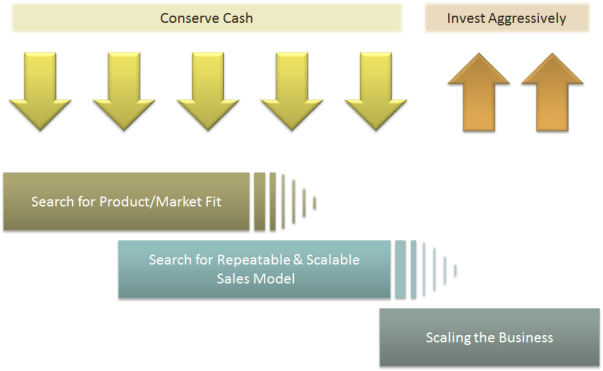
Is scale a single measure? Or is it a continuum? In our activities, we intentionally or unintentionally invoke scale concepts. What is the most efficient scale to measure an outcome, so we can make good policy decisions, how do we apply our learning from one scale to a system that operates on another scale and how do we assess how sets of phenomena operate at different scales, spatially and temporally, and how they impact one another? Now the most interesting question: Is scale polymorphous? Does the word scale have different meanings in different contexts? When we talk about microbiology, we are operating at micro-scales. When we talk at a very macro level, our scales are huge. In business, we regard scale with respect to how efficiently we grow. In one way, it is a measure but for the following discussion, we will interpret scale as non-linear growth expending fewer and fewer resources to support that growth as a ratio.
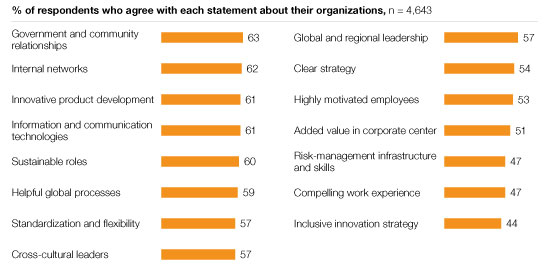
As we had discussed previously, complex adaptive systems self-organize over time. They arrive at some steady state outcome without active intervention. In fact, the active intervention might lead to unintended consequences that might even spell doom for the system that is being influenced. So as an organization scales, it is important to keep this notion of rapid self-organization in mind which will inform us to make or not make certain decisions from a central or top-down perspective. In other words, part of managing scale successfully is to not manage it at a coarse-grained level.
The second element of successfully managing scale is to understand the constraints that prevent scale. There is an entire chapter dedicated to the theory of constraints which sheds light on why this is a fundamental process management technique that increases the pace of the system. But for our purposes in this section, we will summarize as follows: every system as it grows have constraints. It is important to understand the constraints because these constraints slow the system: the bottlenecks have to be removed. And once one constraint is removed, then one comes across another constraint. The system is a chain of events and it is imperative that all of these events are identified. The weakest links harangue the systems and these weakest links have to be either cleared or resourced to enable the system to scale. It is a continuous process of observation and tweaking the results with the established knowledge that the demons of uncertainty and variability can reset the entire process and one might have to start again. Despite that fact, constraint management is an effective method to negotiate and manage scale.
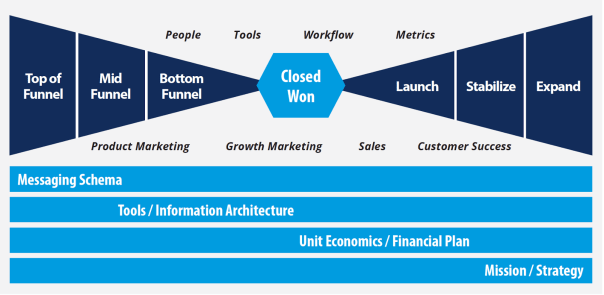
The third element is devising the appropriate organization architecture. As one projects into the future, management might be inclined toward developing and investing in the architecture early to accommodate the scale. Overinvestment in the architecture might not be efficient. As mentioned, cities and social systems that grow 100% require 85% investment in infrastructure: in other words, systems grow on a sublinear scale from an infrastructure perspective. How does management of scale arrive at the 85%? It is nigh impossible, but it is important to reserve that concept since it informs management to architect the infrastructure cautiously. Large investments upfront could be a waste or could slow the system down: alternative, investments that are postponed a little too late can also impact the system adversely.
The fourth element of managing scale is to focus your lens of opportunity. In macroecology, we can arrive at certain conclusions when we regard the system from a distance versus very closely. We can subsume our understanding into one big bucket called climate change and then we figure out different ways to manage the complexity that causes the climate change by invoking certain policies and incentives at a macro level. However, if we go closer, we might decide to target a very specific contributor to climate change – namely, fossil fuels. The theory follows that to manage the dynamic complexity and scale of climate impact – it would be best to address a major factor which, in this case, would be fossil fuels. The equivalence of this in a natural business setting would be to establish and focus the strategy for scale in a niche vertical or a relatively narrower set of opportunities. Even though we are working in the web of complex adaptive systems, we might devise strategies to directionally manage the business within the framework of complex physical systems where we have an understanding of the slight variations of initial state and the realization that the final outcome might be broad but yet bounded for intentional management.
The final element is the management of initial states. Complex physical systems are governed by variation in initial states. Perturbation of these initial states can lead to a wide divergence of outcomes, albeit bounded within a certain frame of reference. It is difficult perhaps to gauge all the interactions that might occur from a starting point to the outcome, although we agree that a few adjustments like decentralization of decision making, constraint management, optimal organization structure and narrowing the playing field would be helpful.
Internal versus External Scale
This article discusses internal and external complexity before we tee up a more detailed discussion on internal versus external scale. This chapter acknowledges that complex adaptive systems have inherent internal and external complexities which are not additive. The impact of these complexities is exponential. Hence, we have to sift through our understanding and perhaps even review the salient aspects of complexity science which have already been covered in relatively more detail in earlier chapter. However, revisiting complexity science is important, and we will often revisit this across other blog posts to really hit home the fundamental concepts and its practical implications as it relates to management and solving challenges at a business or even a grander social scale.

A complex system is a part of a larger environment. It is a safe to say that the larger environment is more complex than the system itself. But for the complex system to work, it needs to depend upon a certain level of predictability and regularity between the impact of initial state and the events associated with it or the interaction of the variables in the system itself. Note that I am covering both – complex physical systems and complex adaptive systems in this discussion. A system within an environment has an important attribute: it serves as a receptor to signals of external variables of the environment that impact the system. The system will either process that signal or discard the signal which is largely based on what the system is trying to achieve. We will dedicate an entire article on system engineering and thinking later, but the uber point is that a system exists to serve a definite purpose. All systems are dependent on resources and exhibits a certain capacity to process information. Hence, a system will try to extract as many regularities as possible to enable a predictable dynamic in an efficient manner to fulfill its higher-level purpose.
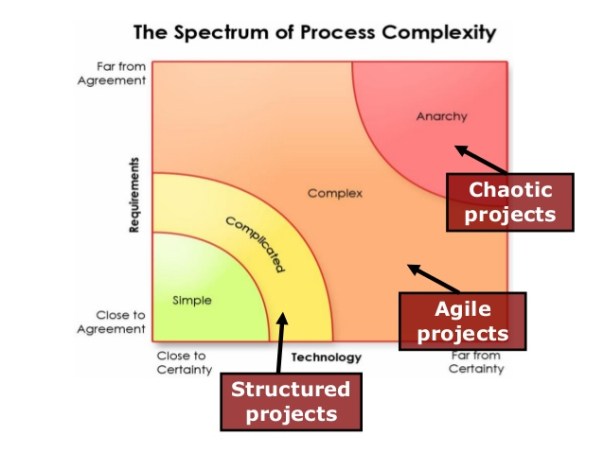
Let us understand external complexities. We can interchangeably use the word environmental complexity as well. External complexity represents physical, cultural, social, and technological elements that are intertwined. These environments beleaguered with its own grades of complexity acts as a mold to affect operating systems that are mere artifacts. If operating systems can fit well within the mold, then there is a measure of fitness or harmony that arises between an internal complexity and external complexity. This is the root of dynamic adaptation. When external environments are very complex, that means that there are a lot of variables at play and thus, an internal system has to process more information in order to survive. So how the internal system will react to external systems is important and they key bridge between those two systems is in learning. Does the system learn and improve outcomes on account of continuous learning and does it continually modify its existing form and functional objectives as it learns from external complexity? How is the feedback loop monitored and managed when one deals with internal and external complexities? The environment generates random problems and challenges and the internal system has to accept or discard these problems and then establish a process to distribute the problems among its agents to efficiently solve those problems that it hopes to solve for. There is always a mechanism at work which tries to align the internal complexity with external complexity since it is widely believed that the ability to efficiently align the systems is the key to maintaining a relatively competitive edge or intentionally making progress in solving a set of important challenges.
Internal complexity are sub-elements that interact and are constituents of a system that resides within the larger context of an external complex system or the environment. Internal complexity arises based on the number of variables in the system, the hierarchical complexity of the variables, the internal capabilities of information pass-through between the levels and the variables, and finally how it learns from the external environment. There are five dimensions of complexity: interdependence, diversity of system elements, unpredictability and ambiguity, the rate of dynamic mobility and adaptability, and the capability of the agents to process information and their individual channel capacities.
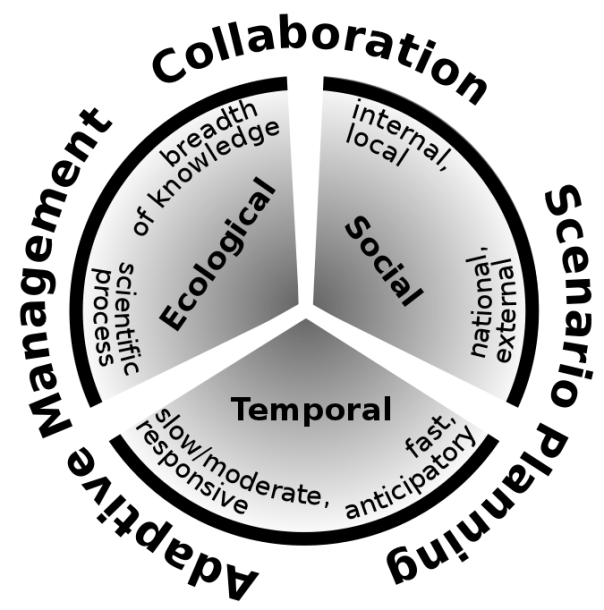
If we are discussing scale management, we need to ask a fundamental question. What is scale in the context of complex systems? Why do we manage for scale? How does management for scale advance us toward a meaningful outcome? How does scale compute in internal and external complex systems? What do we expect to see if we have managed for scale well? What does the future bode for us if we assume that we have optimized for scale and that is the key objective function that we have to pursue?
Model Thinking
| Model Framework |
The fundamental tenet of theory is the concept of “empiria“. Empiria refers to our observations. Based on observations, scientists and researchers posit a theory – it is part of scientific realism.
A scientific model is a causal explanation of how variables interact to produce a phenomenon, usually linearly organized. A model is a simplified map consisting of a few, primary variables that is gauged to have the most explanatory powers for the phenomenon being observed. We discussed Complex Physical Systems and Complex Adaptive Systems early on this chapter. It is relatively easier to map CPS to models than CAS, largely because models become very unwieldy as it starts to internalize more variables and if those variables have volumes of interaction between them. A simple analogy would be the use of multiple regression models: when you have a number of independent variables that interact strongly between each other, autocorrelation errors occur, and the model is not stable or does not have predictive value.

Research projects generally tend to either look at a case study or alternatively, they might describe a number of similar cases that are logically grouped together. Constructing a simple model that can be general and applied to many instances is difficult, if not impossible. Variables are subject to a researcher’s lack of understanding of the variable or the volatility of the variable. What further accentuates the problem is that the researcher misses on the interaction of how the variables play against one another and the resultant impact on the system. Thus, our understanding of our system can be done through some sort of model mechanics but, yet we share the common belief that the task of building out a model to provide all of the explanatory answers are difficult, if not impossible. Despite our understanding of our limitations of modeling, we still develop frameworks and artifact models because we sense in it a tool or set of indispensable tools to transmit the results of research to practical use cases. We boldly generalize our findings from empiria into general models that we hope will explain empiria best. And let us be mindful that it is possible – more so in the CAS systems than CPS that we might have multiple models that would fight over their explanatory powers simply because of the vagaries of uncertainty and stochastic variations.
Popper says: “Science does not rest upon rock-bottom. The bold structure of its theories rises, as it were, above a swamp. It is like a building erected on piles. The piles are driven down from above into the swamp, but not down to any natural or ‘given’ base; and when we cease our attempts to drive our piles into a deeper layer, it is not because we have reached firm ground. We simply stop when we are satisfied that they are firm enough to carry the structure, at least for the time being”. This leads to the satisficing solution: if a model can choose the least number of variables to explain the greatest amount of variations, the model is relatively better than other models that would select more variables to explain the same. In addition, there is always a cost-benefit analysis to be taken into consideration: if we add x number of variables to explain variation in the outcome but it is not meaningfully different than variables less than x, then one would want to fall back on the less-variable model because it is less costly to maintain.
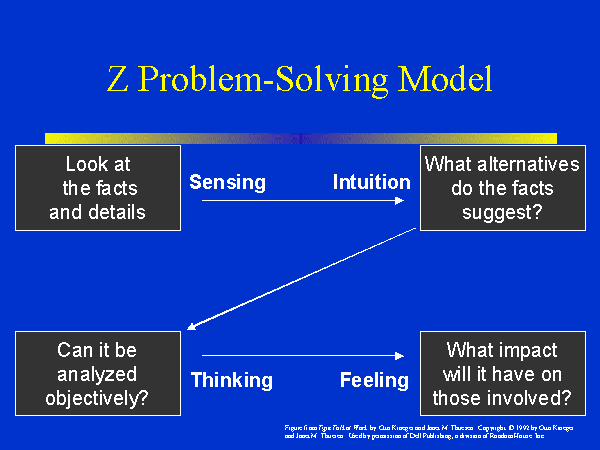
Researchers must address three key elements in the model: time, variation and uncertainty. How do we craft a model which reflects the impact of time on the variables and the outcome? How to present variations in the model? Different variables might vary differently independent of one another. How do we present the deviation of the data in a parlance that allows us to make meaningful conclusions regarding the impact of the variations on the outcome? Finally, does the data that is being considered are actual or proxy data? Are the observations approximate? How do we thus draw the model to incorporate the fuzziness: would confidence intervals on the findings be good enough?
Two other equally other concepts in model design is important: Descriptive Modeling and Normative Modeling.
Descriptive models aim to explain the phenomenon. It is bounded by that goal and that goal only.
There are certain types of explanations that they fall back on: explain by looking at data from the past and attempting to draw a cause and effect relationship. If the researcher is able to draw a complete cause and effect relationship that meets the test of time and independent tests to replicate the results, then the causality turns into law for the limited use-case or the phenomenon being explained. Another explanation method is to draw upon context: explaining a phenomenon by looking at the function that the activity fulfills in its context. For example, a dog barks at a stranger to secure its territory and protect the home. The third and more interesting type of explanation is generally called intentional explanation: the variables work together to serve a specific purpose and the researcher determines that purpose and thus, reverse engineers the understanding of the phenomenon by understanding the purpose and how the variables conform to achieve that purpose.
This last element also leads us to thinking through the other method of modeling – namely, normative modeling. Normative modeling differs from descriptive modeling because the target is not to simply just gather facts to explain a phenomenon, but rather to figure out how to improve or change the phenomenon toward a desirable state. The challenge, as you might have already perceived, is that the subjective shadow looms high and long and the ultimate finding in what would be a normative model could essentially be a teleological representation or self-fulfilling prophecy of the researcher in action. While this is relatively more welcome in a descriptive world since subjectivism is diffused among a larger group that yields one solution, it is not the best in a normative world since variation of opinions that reflect biases can pose a problem.
How do we create a representative model of a phenomenon? First, we weigh if the phenomenon is to be understood as a mere explanation or to extend it to incorporate our normative spin on the phenomenon itself. It is often the case that we might have to craft different models and then weigh one against the other that best represents how the model can be explained. Some of the methods are fairly simple as in bringing diverse opinions to a table and then agreeing upon one specific model. The advantage of such an approach is that it provides a degree of objectivism in the model – at least in so far as it removes the divergent subjectivity that weaves into the various models. Other alternative is to do value analysis which is a mathematical method where the selection of the model is carried out in stages. You define the criteria of the selection and then the importance of the goal (if that be a normative model). Once all of the participants have a general agreement, then you have the makings of a model. The final method is to incorporate all all of the outliers and the data points in the phenomenon that the model seeks to explain and then offer a shared belief into those salient features in the model that would be best to apply to gain information of the phenomenon in a predictable manner.

There are various languages that are used for modeling:
Written Language refers to the natural language description of the model. If price of butter goes up, the quantity demanded of the butter will go down. Written language models can be used effectively to inform all of the other types of models that follow below. It often goes by the name of “qualitative” research, although we find that a bit limiting. Just a simple statement like – This model approximately reflects the behavior of people living in a dense environment …” could qualify as a written language model that seeks to shed light on the object being studied.
Icon Models refer to a pictorial representation and probably the earliest form of model making. It seeks to only qualify those contours or shapes or colors that are most interesting and relevant to the object being studied. The idea of icon models is to pictorially abstract the main elements to provide a working understanding of the object being studied.
Topological Models refer to how the variables are placed with respect to one another and thus helps in creating a classification or taxonomy of the model. Once can have logical trees, class trees, Venn diagrams, and other imaginative pictorial representation of fields to further shed light on the object being studied. In fact, pictorial representations must abide by constant scale, direction and placements. In other words, if the variables are placed on a different scale on different maps, it would be hard to draw logical conclusions by sight alone. In addition, if the placements are at different axis in different maps or have different vectors, it is hard to make comparisons and arrive at a shared consensus and a logical end result.
Arithmetic Models are what we generally fall back on most. The data is measured with an arithmetic scale. It is done via tables, equations or flow diagrams. The nice thing about arithmetic models is that you can show multiple dimensions which is not possible with other modeling languages. Hence, the robustness and the general applicability of such models are huge and thus is widely used as a key language to modeling.
Analogous Models refer to crafting explanations using the power of analogy. For example, when we talk about waves – we could be talking of light waves, radio waves, historical waves, etc. These metaphoric representations can be used to explain phenomenon, but at best, the explanatory power is nebulous, and it would be difficult to explain the variations and uncertainties between two analogous models. However, it still is used to transmit information quickly through verbal expressions like – “Similarly”, “Equivalently”, “Looks like ..” etc. In fact, extrapolation is a widely used method in modeling and we would ascertain this as part of the analogous model to a great extent. That is because we time-box the variables in the analogous model to one instance and the extrapolated model to another instance and we tie them up with mathematical equations.
The Law of Unintended Consequences
The Law of Unintended Consequence is that the actions of a central body that might claim omniscient, omnipotent and omnivalent intelligence might, in fact, lead to consequences that are not anticipated or unintended.
The concept of the Invisible Hand as introduced by Adam Smith argued that it is the self-interest of all the market agents that ultimately create a system that maximizes the good for the greatest amount of people.
Robert Merton, a sociologist, studied the law of unintended consequence. In an influential article titled “The Unanticipated Consequences of Purposive Social Action,” Merton identified five sources of unanticipated consequences.
Ignorance makes it difficult and impossible to anticipate the behavior of every element or the system which leads to incomplete analysis.
Errors that might occur when someone uses historical data and applies the context of history into the future. Linear thinking is a great example of an error that we are wrestling with right now – we understand that there are systems, looking back, that emerge exponentially but it is hard to decipher the outcome unless one were to take a leap of faith.
Biases work its way into the study as well. We study a system under the weight of our biases, intentional or unintentional. It is hard to strip that away even if there are different bodies of thought that regard a particular system and how a certain action upon the system would impact it.
Weaved with the element of bias is the element of basic values that may require or prohibit certain actions even if the long-term impact is unfavorable. A good example would be the toll gates established by the FDA to allow drugs to be commercialized. In its aim to provide a safe drug, the policy might be such that the latency of the release of drugs for experiments and commercial purposes are so slow that many patients who might otherwise benefit from the release of the drug lose out.
Finally, he discusses the self-fulfilling prophecy which suggests that tinkering with the elements of a system to avert a catastrophic negative event might in actuality result in the event.
It is important however to acknowledge that unintended consequences do not necessarily lead to a negative outcome. In fact, there are could be unanticipated benefits. A good example is Viagra which started off as a pill to lower blood pressure, but one discovered its potency to solve erectile dysfunctions. The discovery that ships that were sunk became the habitat and formation of very rich coral reefs in shallow waters that led scientists to make new discoveries in the emergence of flora and fauna of these habitats.
If there are initiatives exercised that are considered “positive initiative” to influence the system in a manner that contribute to the greatest good, it is often the case that these positive initiatives might prove to be catastrophic in the long term. Merton calls the cause of this unanticipated consequence as something called the product of the “relevance paradox” where decision makers thin they know their areas of ignorance regarding an issue, obtain the necessary information to fill that ignorance gap but intentionally or unintentionally neglect or disregard other areas as its relevance to the final outcome is not clear or not lined up to values. He goes on to argue, in a nutshell, that unintended consequences relate to our hubris – we are hardwired to put our short-term interest over long term interest and thus we tinker with the system to surface an effect which later blow back in unexpected forms. Albert Camus has said that “The evil in the world almost always comes of ignorance, and good intentions may do as much harm as malevolence if they lack understanding.”
An interesting emergent property that is related to the law of unintended consequence is the concept of Moral Hazard. It is a concept that individuals have incentives to alter their behavior when their risk or bad decision making is borne of diffused among others. For example:
If you have an insurance policy, you will take more risks than otherwise. The cost of those risks will impact the total economics of the insurance and might lead to costs being distributed from the high-risk takers to the low risk takers.
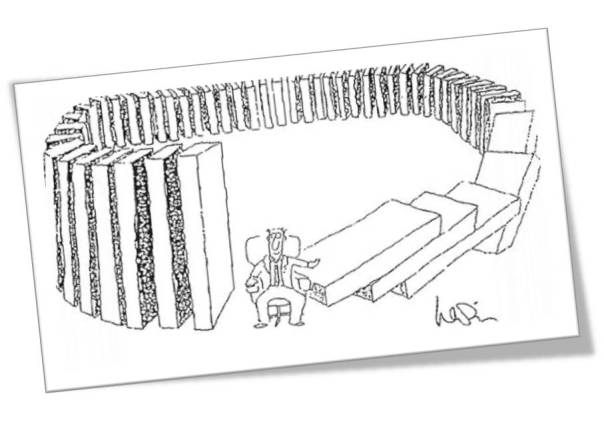
How do the conditions of the moral hazard arise in the first place? There are two important conditions that must hold. First, one party has more information than another party. The information asymmetry thus creates gaps in information and that creates a condition of moral hazard. For example, during 2006 when sub-prime mortgagors extended loans to individuals who had dubitable income and means to pay. The Banks who were buying these mortgages were not aware of it. Thus, they ended up holding a lot of toxic loans due to information asymmetry. Second, is the existence of an understanding that might affect the behavior of two agents. If a child knows that they are going to get bailed out by the parents, he/she might take some risks that he/she would otherwise might not have taken.
To counter the possibility of unintended consequences, it is important to raise our thinking to second-order thinking. Most of our thinking is simplistic and is based on opinions and not too well grounded in facts. There are a lot of biases that enter first order thinking and in fact, all of the elements that Merton touches on enters it – namely, ignorance, biases, errors, personal value systems and teleological thinking. Hence, it is important to get into second-order thinking – namely, the reasoning process is surfaced by looking at interactions of elements, temporal impacts and other system dynamics. We had mentioned earlier that it is still difficult to fully wrestle all the elements of emergent systems through the best of second-order thinking simply because the dynamics of a complex adaptive system or complex physical system would deny us that crown of competence. However, this fact suggests that we step away from simple, easy and defendable heuristics to measure and gauge complex systems.
Emergent Systems: Introduction
The whole is greater than the sum of its parts. “Emergent properties” refer to those properties that emerge that might be entirely unexpected. As discussed in CAS, they arise from the collaborative functioning of a system. In other words, emergent properties are properties of a group of items, but it would be erroneous for us to reduce such systems into properties of atomic elements and use those properties as binding elements to understand emergence Some common examples of emergent properties include cities, bee hives, ant colonies and market systems. Out thinking attributes causal effects – namely, that behavior of elements would cause certain behaviors in other hierarchies and thus an entity emerges at a certain state. However, we observe that a process of emergence is the observation of an effect without an apparent cause. Yet it is important to step back and regard the relationships and draw lines of attribution such that one can concur that there is an impact of elements at the lowest level that surfaces, in some manner, at the highest level which is the subject of our observation.

Jochenn Fromm in his paper “Types and Forms of Emergence” has laid this out best. He says that emergent properties are “amazing and paradox: fundamental but familiar.” In other words, emergent properties are changeless and changing, constant and fluctuating, persistent and shifting, inevitable and unpredictable. The most important note that he makes is that the emergent property is part of the system and at the same time it might not always be a part of the system. There is an undercurrent of novelty or punctuated gaps that might arise that is inexplicable, and it is this fact that renders true emergence virtually irreducible. Thus, failure is embodied in all emergent systems – failure being that the system does not behave according to expectation. Despite all rules being followed and quality thresholds are established at every toll gate at the highest level, there is still a possibility of failure which suggests that there is some missing information in the links. It is also possible that the missing information is dynamic – you do not step in the same water twice – which makes the study to predict emergent systems to be a rather difficult exercise. Depending on the lens through which we look at, the system might appear or disappear.
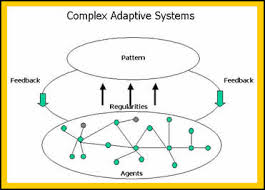
There are two types of emergence: Descriptive and Explanatory emergence. Descriptive emergence means that properties of wholes cannot be necessarily defined through the properties of the pasts. Explanatory emergence means laws of complex systems cannot be deduced from the laws of interaction of simpler elements that constitute it. Thus the emergence is a result of the amount of variety embodied in the system, the amount of external influence that weights and shapes the overall property and direction of the system, the type of resources that the system consumes, the type of constraints that the system is operating under and the number of levels of sub-systems that work together to build out the final system. Thus, systems can be benign as in the system is relatively more predictable whereas a radical system is a material departure of a system from expectation. If the parts that constitute a system is independent of its workings from other parts and can be boxed within boundaries, emergent systems become more predictable. A watch is an example of a system that follows the different mechanical elements in a watch that are geared for reading the time as it ultimate purpose. It is a good example of a complex physical system. However, these systems are very brittle – a failure in one point can cascade into a failure of the entire system. Systems that are more resilient are those where the elements interact and learn from one another. In other words, the behavior of the elements excites other elements – all of which work together to create a dance toward a more stable state. They deploy what is often called the flocking trick and the pheromone trick. Flocking trick is largely the emulation of the particles that are close to each other – very similar to the cellular automata as introduced by Neumann and discussed in the earlier chapter. The Pheromone trick reflects how the elements leave marks that are acted upon as signals by other elements and thus they all work together around these signal trails to behave and thus act as a forcing function to create the systems.

There are systems that have properties of extremely strong emergence. What does Consciousness, Life, and Culture have in common? How do we look at Climate? What about the organic development of cities? These are just some examples of system where determinism is nigh impossible. We might be able to tunnel through the various and diverse elements that embody the system, but it would be difficult to coherently and tangibly draw all set of relationships, signals, effectors and detectors, etc. to grapple with a complete understanding of the system. Wrestling a strong emergent system would be a task that might even be outside the purview of the highest level of computational power available. And yet, these systems exist, and they emerge and evolve. Yet we try to plan for these systems or plan to direct policies to influence the system, not fully knowing the impact. This is also where the unintended consequences of our action might take free rein.
Complex Physical and Adaptive Systems
There are two models in complexity. Complex Physical Systems and Complex Adaptive Systems! For us to grasp the patterns that are evolving, and much of it seemingly out of our control – it is important to understand both these models. One could argue that these models are mutually exclusive. While the existing body of literature might be inclined toward supporting that argument, we also find some degree of overlap that makes our understanding of complexity unstable. And instability is not to be construed as a bad thing! We might operate in a deterministic framework, and often, we might operate in the realms of a gradient understanding of volatility associated with outcomes. Keeping this in mind would be helpful as we deep dive into the two models. What we hope is that our understanding of these models would raise questions and establish mental frameworks for intentional choices that we are led to make by the system or make to influence the evolution of the system.
Complex Physical Systems (CPS)
Complex Physical Systems are bounded by certain laws. If there are initial conditions or elements in the system, there is a degree of predictability and determinism associated with the behavior of the elements governing the overarching laws of the system. Despite the tautological nature of the term (Complexity Physical System) which suggests a physical boundary, the late 1900’s surfaced some nuances to this model. In other words, if there is a slight and an arbitrary variation in the initial conditions, the outcome could be significantly different from expectations. The assumption of determinism is put to the sword. The notion that behaviors will follow established trajectories if rules are established and the laws are defined have been put to test. These discoveries by introspection offers an insight into the developmental block of complex physical systems and how a better understanding of it will enable us to acknowledge such systems when we see it and thereafter allow us to establish certain toll-gates and actions to navigate, to the extent possible, to narrow the region of uncertainty around outcomes.

The universe is designed as a complex physical system. Just imagine! Let this sink in a bit. A complex physical system might be regarded relatively simpler than a complex adaptive system. And with that in mind, once again …the universe is a complex physical system. We are awed by the vastness and scale of the universe, we regard the skies with an illustrious reverence and we wonder and ruminate on what lies beyond the frontiers of a universe, if anything. Really, there is nothing bigger than the universe in the physical realm and yet we regard it as a simple system. A “Simple” Complex Physical System. In fact, the behavior of ants that lead to the sustainability of an ant colony, is significantly more complex: and we mean by orders of magnitude.

Complexity behavior in nature reflects the tendency of large systems with many components to evolve into a poised “critical” state where minor disturbances or arbitrary changes in initial conditions can create a seemingly catastrophic impact on the overall system such that system changes significantly. And that happens not by some invisible hand or some uber design. What is fundamental to understanding complex systems is to understand that complexity is defined as the variability of the system. Depending on our lens, the scale of variability could change and that might lead to different apparatus that might be required to understand the system. Thus, determinism is not the measure: Stephen Jay Gould has argued that it is virtually impossible to predict the future. We have hindsight explanatory powers but not predictable powers. Hence, systems that start from the initial state over time might represent an outcome that is distinguishable in form and content from the original state. We see complex physical systems all around us. Snowflakes, patterns on coastlines, waves crashing on a beach, rain, etc.
Complex Adaptive Systems (CAS)
Complex adaptive systems, on the contrary, are learning systems that evolve. They are composed of elements which are called agents that interact with one another and adapt in response to the interactions.

Markets are a good example of complex adaptive systems at work.
CAS agents have three levels of activity. As described by Johnson in Complexity Theory: A Short Introduction – the three levels of activity are:
- Performance (moment by moment capabilities): This establishes the locus of all behavioral elements that signify the agent at a given point of time and thereafter establishes triggers or responses. For example, if an object is approaching and the response of the agent is to run, that would constitute a performance if-then outcome. Alternatively, it could be signals driven – namely, an ant emits a certain scent when it finds food: other ants will catch on that trail and act, en masse, to follow the trail. Thus, an agent or an actor in an adaptive system has detectors which allows them to capture signals from the environment for internal processing and it also has the effectors that translate the processing to higher order signals that influence other agents to behave in certain ways in the environment. The signal is the scent that creates these interactions and thus the rubric of a complex adaptive system.
- Credit assignment (rating the usefulness of available capabilities): When the agent gathers experience over time, the agent will start to rely heavily on certain rules or heuristics that they have found useful. It is also typical that these rules may not be the best rules, but it could be rules that are a result of first discovery and thus these rules stay. Agents would rank these rules in some sequential order and perhaps in an ordinal ranking to determine what is the best rule to fall back on under certain situations. This is the crux of decision making. However, there are also times when it is difficult to assign a rank to a rule especially if an action is setting or laying the groundwork for a future course of other actions. A spider weaving a web might be regarded as an example of an agent expending energy with the hope that she will get some food. This is a stage setting assignment that agents have to undergo as well. One of the common models used to describe this best is called the bucket-brigade algorithm which essentially states that the strength of the rule depends on the success of the overall system and the agents that constitute it. In other words, all the predecessors and successors need to be aware of only the strengths of the previous and following agent and that is done by some sort of number assignment that becomes stronger from the beginning of the origin of the system to the end of the system. If there is a final valuable end-product, then the pathway of the rules reflect success. Once again, it is conceivable that this might not be the optimal pathway but a satisficing pathway to result in a better system.
- Rule discovery (generating new capabilities): Performance and credit assignment in agent behavior suggest that the agents are governed by a certain bias. If the agents have been successful following certain rules, they would be inclined toward following those rules all the time. As noted, rules might not be optimal but satisficing. Is improvement a matter of just incremental changes to the process? We do see major leaps in improvement … so how and why does this happen? In other words, someone in the process have decided to take a different rule despite their experiences. It could have been an accident or very intentional.
One of the theories that have been presented is that of building blocks. CAS innovation is a result of reconfiguring the various components in new ways. One quips that if energy is neither created, nor destroyed …then everything that exists today or will exist tomorrow is nothing but a reconfiguration of energy in new ways. All of tomorrow resides in today … just patiently waiting to be discovered. Agents create hypotheses and experiment in the petri dish by reconfiguring their experiences and other agent’s experiences to formulate hypotheses and the runway for discovery. In other words, there is a collaboration element that comes into play where the interaction of the various agents and their assignment as a group to a rule also sets the stepping stone for potential leaps in innovation.
Another key characteristic of CAS is that the elements are constituted in a hierarchical order. Combinations of agents at a lower level result in a set of agents higher up and so on and so forth. Thus, agents in higher hierarchical orders take on some of the properties of the lower orders but it also includes the interaction rules that distinguishes the higher order from the lower order.
Short History of Complexity
Complexity theory began in the 1930’s when natural scientists and mathematicians rallied together to get a deeper understanding of how systems emerge and plays out over time. However, the groundwork of complexity theory began in the 1850’s with Darwin’s introduction to Natural Selection. It was further extended by Mendel’s genetic algorithms. Darwin’s Theory of Evolution has been posited as a slow gradual process. He says that “Natural selection acts only by taking advantage of slight successive variations; she can never take a great and sudden leap, but must advance by short and sure, though slow steps.” Thus, he concluded that complex systems evolve by leaps and the result is an organic formulation of an irreducibly complex system which is composed of many parts, all of which work together closely for the overall system to function. If any part is missing or does not act as expected, then the system becomes unwieldy and breaks down. So it was an early foray into distinguishing the emergent property of a system from the elements that constitute it. Mendel, on the other hand, laid out the property of inheritance across generations. An organic system inherits certain traits that are reconfigured over time and adapts to the environment, thus leading to the development of an organism which for our purposes fall in the realm of a complex outcome. One would imagine that there is a common thread between Darwin’s Natural Selection and Mendel’s laws of genetic inheritance. But that is not the case and that has wide implications in complexity theory. Mendel focused on how the traits are carried across time: the mechanics which are largely determined by some probabilistic functions. The underlying theory of Mendel hinted at the possibility that a complex system is a result of discrete traits that are passed on while Darwin suggests that complexity arises due continuous random variations.

In the 1920’s, literature suggested that a complex system has elements of both: continuous adaptation and discrete inheritance that is hierarchical in nature. A group of biologists reconciled the theories into what is commonly known as the Modern Synthesis. The principles guiding Modern Synthesis were: Natural Selection was the major mechanism for evolutionary change. Small random variations of genes and natural selection result in the origin of new species. Furthermore, the new species might have properties different than the elements that constitute. Modern Synthesis thus provided the framework around Complexity theory. What does this great debate mean for our purposes? Once we arrive at determining whether a system is complex, then how does the debate shed more light into our understanding of complexity. Does this debate shed light into how we regard complexity and how we subsequently deal with it? We need to further extend our thinking by looking at a few new developments that occurred in the 20th century that would give us a better perspective. Let us then continue our journey into the evolution of the thinking around complexity.
Axioms are statements that are self-evident. It serves to be a premise or starting point for further reasoning and arguments. An axiom thus is not contestable because if it, then all the following reasoning that is extended against axioms would fall apart. Thus, for our purposes and our understanding of complexity theory – A complex system has an initial state that is irreducible physically or mathematically.
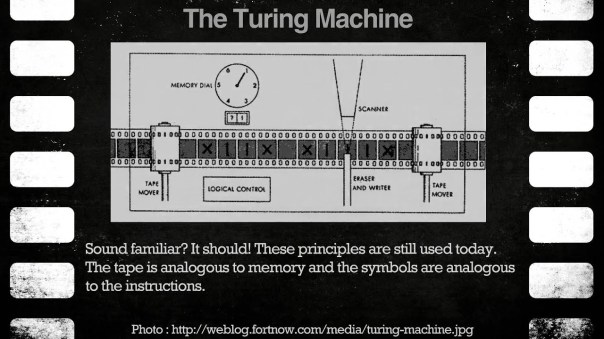
One of the key elements in Complexity is computation or computability. In the 1930’s, Turing introduced the abstract concept of the Turing machine. There is a lot of literature that goes into the specifics of how the machine works but that is beyond the scope of this book. However, there are key elements that can be gleaned from that concept to better understand complex systems. A complex system that evolves is a result of a finite number of steps that would solve a specific challenge. Although the concept has been applied in the boundaries of computational science, I am taking the liberty to apply this to emerging complex systems. Complexity classes help scientists categorize the problems based on how much time and space is required to solve problems and verify solutions. The complexity is thus a function of time and memory. This is a very important concept and we have radically simplified the concept to attend to a self-serving purpose: understand complexity and how to solve the grand challenges? Time complexity refers to the number of steps required to solve a problem. A complex system might not necessarily be the most efficient outcome but is nonetheless an outcome of a series of steps, backward and forward to result in a final state. There are pathways or efficient algorithms that are produced and the mechanical states to produce them are defined and known. Space complexity refers to how much memory that the algorithm depends on to solve the problem. Let us keep these concepts in mind as we round this all up into a more comprehensive work that we will relay at the end of this chapter.
Around the 1940’s, John von Neumann introduced the concept of self-replicating machines. Like Turing, Von Neumann’s would design an abstract machine which, when run, would replicate itself. The machine consists of three parts: a ‘blueprint’ for itself, a mechanism that can read any blueprint and construct the machine (sans blueprint) specified by that blueprint, and a ‘copy machine’ that can make copies of any blueprint. After the mechanism has been used to construct the machine specified by the blueprint, the copy machine is used to create a copy of that blueprint, and this copy is placed into the new machine, resulting in a working replication of the original machine. Some machines will do this backwards, copying the blueprint and then building a machine. The implications are significant. Can complex systems regenerate? Can they copy themselves and exhibit same behavior and attributes? Are emergent properties equivalent? Does history repeat itself or does it rhyme? How does this thinking move our understanding and operating template forward once we identify complex systems?
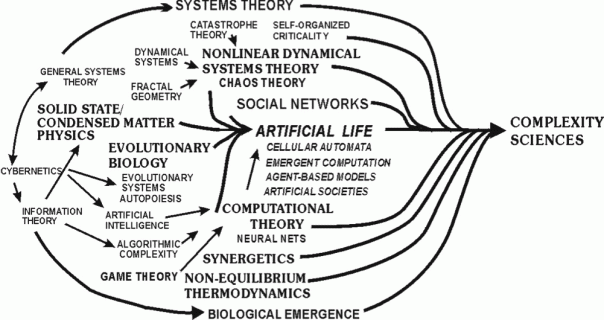
Let us step forward into the late 1960’s when John Conway started doing experiments extending the concept of the cellular automata. He introduced the concept of the Game of Life in 1970 as a result of his experiments. His main theses was simple : The game is a zero-player game, meaning that its evolution is determined by its initial state, requiring no further input. One interacts with the Game of Life by creating an initial configuration and observing how it evolves, or, for advanced players, by creating patterns with properties. The entire formulation was done on a two-dimensional universe in which patterns evolved over time. It is one of the finest examples in science of how a set of few simple non-arbitrary rules can result in an incredibly complex behavior that is fluid and provides a pleasing pattern over time. In other words, if one were an outsider looking in, you would see a pattern emerging from simple initial states and simple rules. We encourage you to look at several patterns that many people have constructed using different Game of Life parameters. The main elements are as follows. A square grid contains cells that are alive or dead. The behavior of each cell is dependent on the state of its eight immediate neighbors. Eight is an arbitrary number that Conway established to keep the model simple. These cells will strictly follow the rules.
Live Cells:
- A live cell with zero or one live neighbors will die
- A live cell with two or three live neighbors will remain alive
- A live cell with four or more live neighbors will die.
Dead Cells:
- A dead cell with exactly three live neighbors becomes alive
- In all other cases a dead cell will stay dead.
Thus, what his simulation led to is the determination that life is an example of emergence and self-organization. Complex patterns can emerge from the implementation of very simple rules. The game of life thus encourages the notion that “design” and “organization” can spontaneously emerge in the absence of a designer.
Stephen Wolfram introduced the concept of a Class 4 cellular automata of which the Rule of 110 is well known and widely studied. The Class 4 automata validates a lot of the thinking grounding complexity theory. He proves that certain patterns emerge from initial conditions that are not completely random or regular but seems to hint at an order and yet the order is not predictable. Applying a simple rule repetitively to the simplest possible starting point would bode the emergence of a system that is orderly and predictable: but that is far from the truth. The resultant state is that the results exhibit some randomness and yet produce patters with order and some intelligence.
Thus, his main conclusion from his discovery is that complexity does not have to beget complexity: simple forms following repetitive and deterministic rules can result in systems that exhibit complexity that is unexpected and unpredictable. However, he sidesteps the discussion around the level of complexity that his Class 4 automata generates. Does this determine or shed light on evolution, how human beings are formed, how cities evolve organically, how climate is impacted and how the universe undergoes change? One would argue that is not the case. However, if you take into account Darwin’s natural selection process, the Mendel’s law of selective genetics and its corresponding propitiation, the definitive steps proscribed by the Turing machine that captures time and memory, Von Neumann’s theory of machines able to replicate themselves without any guidance, and Conway’s force de tour in proving that initial conditions without any input can create intelligent systems – you essentially can start connecting the dots to arrive at a core conclusion: higher order systems can organically create itself from initial starting conditions naturally. They exhibit a collective intelligence which is outside the boundaries of precise prediction. In the previous chapter we discussed complexity and we introduced an element of subjective assessment to how we regard what is complex and the degree of complexity. Whether complexity falls in the realm of a first-person subjective phenomenon or a scientific third-party objective phenomenon has yet to be ascertained. Yet it is indisputable that the product of a complex system might be considered a live pattern of rules acting upon agents to cause some deterministic but random variation.
Building a Lean Financial Infrastructure!
A lean financial infrastructure presumes the ability of every element in the value chain to preserve and generate cash flow. That is the fundamental essence of the lean infrastructure that I espouse. So what are the key elements that constitute a lean financial infrastructure?
And given the elements, what are the key tweaks that one must continually make to ensure that the infrastructure does not fall into entropy and the gains that are made fall flat or decay over time. Identification of the blocks and monitoring and making rapid changes go hand in hand.
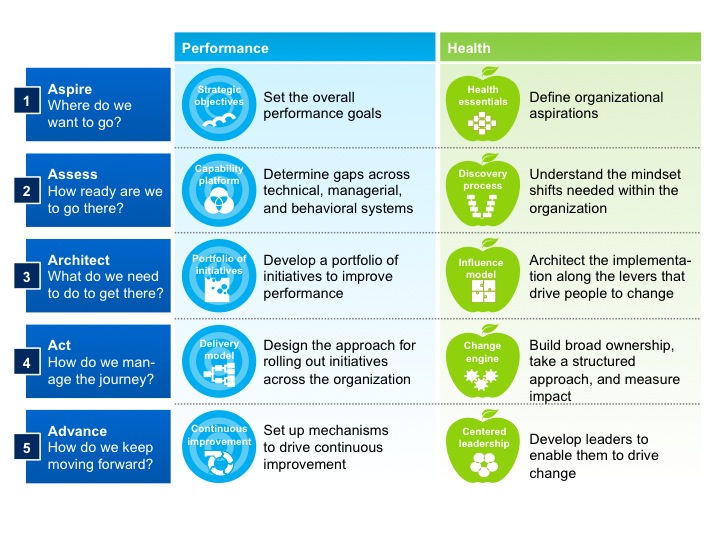
The Key Elements or the building blocks of a lean finance organization are as follows:
- Chart of Accounts: This is the critical unit that defines the starting point of the organization. It relays and groups all of the key economic activities of the organization into a larger body of elements like revenue, expenses, assets, liabilities and equity. Granularity of these activities might lead to a fairly extensive chart of account and require more work to manage and monitor these accounts, thus requiring incrementally a larger investment in terms of time and effort. However, the benefits of granularity far exceeds the costs because it forces management to look at every element of the business.
- The Operational Budget: Every year, organizations formulate the operational budget. That is generally a bottoms up rollup at a granular level that would map to the Chart of Accounts. It might follow a top-down directive around what the organization wants to land with respect to income, expense, balance sheet ratios, et al. Hence, there is almost always a process of iteration in this step to finally arrive and lock down the Budget. Be mindful though that there are feeders into the budget that might relate to customers, sales, operational metrics targets, etc. which are part of building a robust operational budget.

- The Deep Dive into Variances: As you progress through the year and part of the monthly closing process, one would inquire about how the actual performance is tracking against the budget. Since the budget has been done at a granular level and mapped exactly to the Chart of Accounts, it thus becomes easier to understand and delve into the variances. Be mindful that every element of the Chart of Account must be evaluated. The general inclination is to focus on the large items or large variances, while skipping the small expenses and smaller variances. That method, while efficient, might not be effective in the long run to build a lean finance organization. The rule, in my opinion, is that every account has to be looked and the question should be – Why? If the management has agreed on a number in the budget, then why are the actuals trending differently. Could it have been the budget and that we missed something critical in that process? Or has there been a change in the underlying economics of the business or a change in activities that might be leading to these “unexpected variances”. One has to take a scalpel to both – favorable and unfavorable variances since one can learn a lot about the underlying drivers. It might lead to managerially doing more of the better and less of the worse. Furthermore, this is also a great way to monitor leaks in the organization. Leaks are instances of cash that are dropping out of the system. Much of little leaks amounts to a lot of cash in total, in some instances. So do not disregard the leaks. Not only will that preserve the cash but once you understand the leaks better, the organization will step up in efficiency and effectiveness with respect to cash preservation and delivery of value.

- Tweak the process: You will find that as you deep dive into the variances, you might want to tweak certain processes so these variances are minimized. This would generally be true for adverse variances against the budget. Seek to understand why the variance, and then understand all of the processes that occur in the background to generate activity in the account. Once you fully understand the process, then it is a matter of tweaking this to marginally or structurally change some key areas that might favorable resonate across the financials in the future.
- The Technology Play: Finally, evaluate the possibilities of exploring technology to surface issues early, automate repetitive processes, trigger alerts early on to mitigate any issues later, and provide on-demand analytics. Use technology to relieve time and assist and enable more thinking around how to improve the internal handoffs to further economic value in the organization.

All of the above relate to managing the finance and accounting organization well within its own domain. However, there is a bigger step that comes into play once one has established the blocks and that relates to corporate strategy and linking it to the continual evolution of the financial infrastructure.
The essential question that the lean finance organization has to answer is – What can the organization do so that we address every element that preserves and enhances value to the customer, and how do we eliminate all non-value added activities? This is largely a process question but it forces one to understand the key processes and identify what percentage of each process is value added to the customer vs. non-value added. This can be represented by time or cost dimension. The goal is to yield as much value added activities as possible since the underlying presumption of such activity will lead to preservation of cash and also increase cash acquisition activities from the customer.
Disseminating financial knowledge to develop engaged organizations
Financial awareness of key drivers are becoming the paramount leading indicators for organizational success. For most, the finance department is a corner office service that offers ad hoc analysis on strategic and operational initiatives to a company, and provides an ex-post assessment of the financial condition of the company among a select few. There are some key financial metrics that one wants to measure across all companies and all industries without exception, but then there are unique metrics that reflect the key underlying drivers for organizational success. Organizations align their forays into new markets, new strategies and new ventures around a narrative that culminates in a financial metric or a proxy that illustrates opportunities lost or gained.
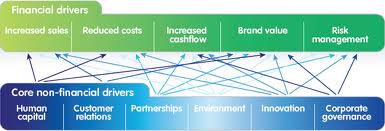
Having been cast in operational finance roles for a good length of my career, I have often encountered a high level of interest to learn financial concepts in areas such as engineering, product management, operations, sales, etc. I have to admit that I have been humbled by the fairly wide common-sense understanding of basic financial concepts that these folks have. However, in most cases, the understanding is less than skin deep with misunderstandings that are meaningful. The good news is that I have also noticed a promising trend, namely … the questions are more thoroughly weighed by the “non-finance” participants, and there seems to be an elevated understanding of key financial drivers that translate to commercial success. This knowledge continues to accelerate … largely, because of convergence of areas around data science, analytics, assessment of personal ownership stakes, etc. But the passing of such information across these channels to the hungry recipients are not formalized. In other words, I posit that having a formal channel of inculcating financial education across the various functional areas would pay rich dividends for the company in the long run. Finance is a vast enough field that partaking general knowledge in these concepts which are more than merely skin-deep would also enable the finance group to engage in meaningful conversations with other functional experts, thus allowing the narrative around the numbers to be more wholesome. Thus, imparting the financial knowledge would be beneficial to the finance department as well.

To be effective in creating a formal channel of disseminating information of the key areas in finance that matter to the organization, it is important to understand the operational drivers. When I say operational drivers, I am expanding that to encompass drivers that may uniquely affect other functional areas. For example, sales may be concerned with revenue, margins whereas production may be concerned with server capacity, work-in-process and throughput, etc. At the end, the financial metrics are derivatives. They are cross products of single or multiple drivers and these are the elements that need to be fleshed out to effect a spirited conversation. That would then enable the production of a financial barometer that everyone in the organization can rally behind and understand, and more importantly … be able to assess how their individual contribution has and will advance organization goals.
Aaron Swartz took down a piece of the Berlin Wall! We have to take it all down!
“The world’s entire scientific … heritage … is increasingly being digitized and locked up by a handful of private corporations… The Open Access Movement has fought valiantly to ensure that scientists do not sign their copyrights away but instead ensure their work is published on the Internet, under terms that allow anyone to access it.” – Aaron Swartz
Information, in the context of scholarly articles by research at universities and think-tanks, is not a zero sum game. In other words, one person cannot have more without having someone have less. When you start creating “Berlin” walls in the information arena within the halls of learning, then learning itself is compromised. In fact, contributing or granting the intellectual estate into the creative commons serves a higher purpose in society – an access to information and hence, a feedback mechanism that ultimately enhances the value to the end-product itself. How? Since now the product has been distributed across a broader and diverse audience, and it is open to further critical analyses.

The universities have built a racket. They have deployed a Chinese wall between learning in a cloistered environment and the world who are not immediate participants. The Guardian wrote an interesting article on this matter and a very apt quote puts it all together.
“Academics not only provide the raw material, but also do the graft of the editing. What’s more, they typically do so without extra pay or even recognition – thanks to blind peer review. The publishers then bill the universities, to the tune of 10% of their block grants, for the privilege of accessing the fruits of their researchers’ toil. The individual academic is denied any hope of reaching an audience beyond university walls, and can even be barred from looking over their own published paper if their university does not stump up for the particular subscription in question.

This extraordinary racket is, at root, about the bewitching power of high-brow brands. Journals that published great research in the past are assumed to publish it still, and – to an extent – this expectation fulfils itself. To climb the career ladder academics must get into big-name publications, where their work will get cited more and be deemed to have more value in the philistine research evaluations which determine the flow of public funds. Thus they keep submitting to these pricey but mightily glorified magazines, and the system rolls on.”
http://www.guardian.co.uk/commentisfree/2012/apr/11/academic-journals-access-wellcome-trust

JSTOR is a not-for-profit organization that has invested heavily in providing an online system for archiving, accessing, and searching digitized copies of over 1,000 academic journals. More recently, I noticed some effort on their part to allow public access to only 3 articles over a period of 21 days. This stinks! This policy reflects an intellectual snobbery beyond Himalayan proportions. The only folks that have access to these academic journals and studies are professors, and researchers that are affiliated with a university and university libraries. Aaron Swartz noted the injustice of hoarding such knowledge and tried to distribute a significant proportion of JSTOR’s archive through one or more file-sharing sites. And what happened thereafter was perhaps one of the biggest misapplication of justice. The same justice that disallows asymmetry of information in Wall Street is being deployed to preserve the asymmetry of information at the halls of learning.

MSNBC contributor Chris Hayes criticized the prosecutors, saying “at the time of his death Aaron was being prosecuted by the federal government and threatened with up to 35 years in prison and $1 million in fines for the crime of—and I’m not exaggerating here—downloading too many free articles from the online database of scholarly work JSTOR.”
The Associated Press reported that Swartz’s case “highlights society’s uncertain, evolving view of how to treat people who break into computer systems and share data not to enrich themselves, but to make it available to others.”
Chris Soghioian, a technologist and policy analyst with the ACLU, said, “Existing laws don’t recognize the distinction between two types of computer crimes: malicious crimes committed for profit, such as the large-scale theft of bank data or corporate secrets; and cases where hackers break into systems to prove their skillfulness or spread information that they think should be available to the public.”
Kelly Caine, a professor at Clemson University who studies people’s attitudes toward technology and privacy, said Swartz “was doing this not to hurt anybody, not for personal gain, but because he believed that information should be free and open, and he felt it would help a lot of people.”
And then there were some modest reservations, and Swartz actions were attributed to reckless judgment. I contend that this does injustice to someone of Swartz’s commitment and intellect … the recklessness was his inability to grasp the notion that an imbecile in the system would pursue 35 years of imprisonment and $1M fine … it was not that he was not aware of what he was doing but he believed, as does many, that scholarly academic research should be available as a free for all.
We have a Berlin wall that needs to be taken down. Swartz started that but he was unable to keep at it. It is important to not rest in this endeavor and that everyone ought to actively petition their local congressman to push bills that will allow open access to these academic articles.
John Maynard Keynes had warned of the folly of “shutting off the sun and the stars because they do not pay a dividend”, because what is at stake here is the reach of the light of learning. Aaron was at the vanguard leading that movement, and we should persevere to become those points of light that will enable JSTOR to disseminate the information that they guard so unreservedly.

 Linked Stars Blog