Author Archives: Hindol Datta
Unveiling the Invisible Engine of Finance
Part I: Foundations of the Invisible Engine
I never wanted the spotlight. From my early days in finance, long before dashboards became fashionable and RevOps earned its acronym, I found joy in making complex systems work. I thrived in the silent cadence of reconciliations, the murmur of cross-functional debates over marginal cost assumptions, and the first moment a model finally converged. Unlike the sales team celebrating a quarter-end close or the product team announcing a roadmap win, the finance function rarely gets applause. But it moves the levers that make those moments possible.
Over three decades, I have learned that execution lives in the details and finance runs those details. Not with fanfare, but with discipline. We set hiring budgets months before a hiring surge begins. We write the logic trees that govern pricing behavior across regions. We translate long-range strategy into quarterly targets and daily prioritization frameworks. We forecast uncertainty, allocate capital, and define constraints, often before most stakeholders realize those constraints are the key to their success.
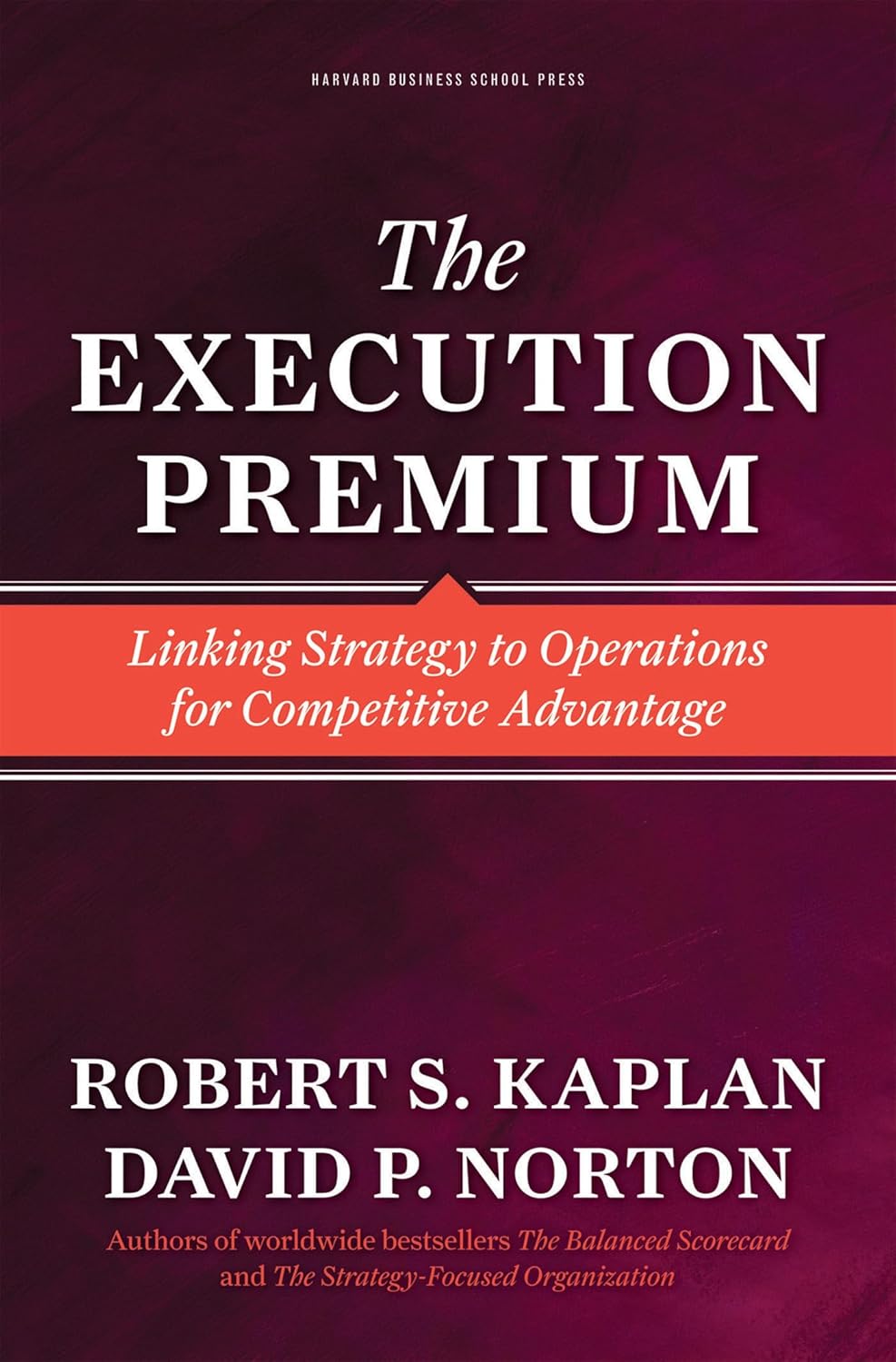
What I came to understand, and what books like The Execution Premium and the philosophies of Andy Grove and Jack Welch confirmed, was that finance does not just report performance. It quietly enables it. Behind every high-functioning Go-to-Market engine lies a financial scaffolding of predictive models, scenario assumptions, margin guardrails, and spend phasing. Without it, GTM becomes a series of disconnected sprints. With it, the organization earns compound momentum.

When I studied engineering management and supply chain systems, I began to appreciate the inherent lag in decision-making. Execution is not a sequence of isolated actions; it is a system of interdependent bets. You cannot plan hiring without demand signals. You cannot allocate pipeline coverage without confidence in product-market fit. And you cannot spend ahead of bookings unless your forecast engine tells you where the edge of safe investment lies. Finance is the only function that sees all those interlocks. We do not own the decision, but we build the boundaries within which good decisions happen.
This is where my training in information theory and systems thinking proved invaluable. Finance teams often drown in data. They mistake precision for insight. But not every number informs. I learned to ask: what reduces decision entropy? What signals help our executive team act more quickly with greater clarity? In an age where dashboards multiply daily, the finance function’s real job is to prioritize which visualizations matter, not to produce them all. A good forecast does not predict the future. It tells you which futures are worth preparing for.
Take hiring. Most people treat it as a headcount function. I see it as a vector of bet placement. When we authorized a 20 percent ramp in customer success headcount during a critical product launch, we did not do so because the spreadsheets said “green.” We modeled time-to-value thresholds, churn avoidance probabilities, and reference customer pipeline multipliers. We knew that delaying CSM ramp would cost us more in future expansion than it saved in current payroll. So we pulled forward the hiring curve. The team scaled. Revenue followed. Finance got no credit. But that was never the point.
In pricing, too, finance enables velocity. It is easy to believe pricing belongs solely to sales or product. But pricing without financial architecture is just an opinion. When we revamped our deal desk, we embedded margin thresholds not as hard stops, but as prompts for tradeoff conversations. If a seller wanted to discount below the floor, the system required a compensating upsell path or customer reference value. Finance did not say no. We asked, “What are you trading for this discount?” The deal desk transformed from a compliance gate to a business partner. It worked because we framed constraints as enablers—not limits, but levers.
Constraints often get misunderstood in early-stage companies. Founders want freedom. Boards want velocity. But constraints are not brakes; they are railings. They guide movement. I’ve seen companies chase too many markets too fast, hire too many reps without a pipeline, or build too much product without usage telemetry. Finance plays the role of orchestrator—not by saying “don’t,” but by asking “when,” “how much,” and “under what assumptions.” We stage bets. We create funding ladders. We model the downside—not to instill fear, but to earn permission to go faster with confidence.
These functions become more valuable as companies scale. A Series A company can live by intuition. By Series B, it needs structure. By Series C, it needs orchestration. And by Series D, it needs capital efficiency. At each stage, finance morphs from modeler, to strategist, to risk-adjusted investor. In one company, I helped define the bridge between finance and product through forecast-driven prioritization. Features did not get roadmap space until we modeled their revenue unlock path. The team resisted at first. But when they saw how each feature connected to pipeline expansion or customer lifetime value, product velocity improved. Not because we said “go,” but because we clarified why it mattered.
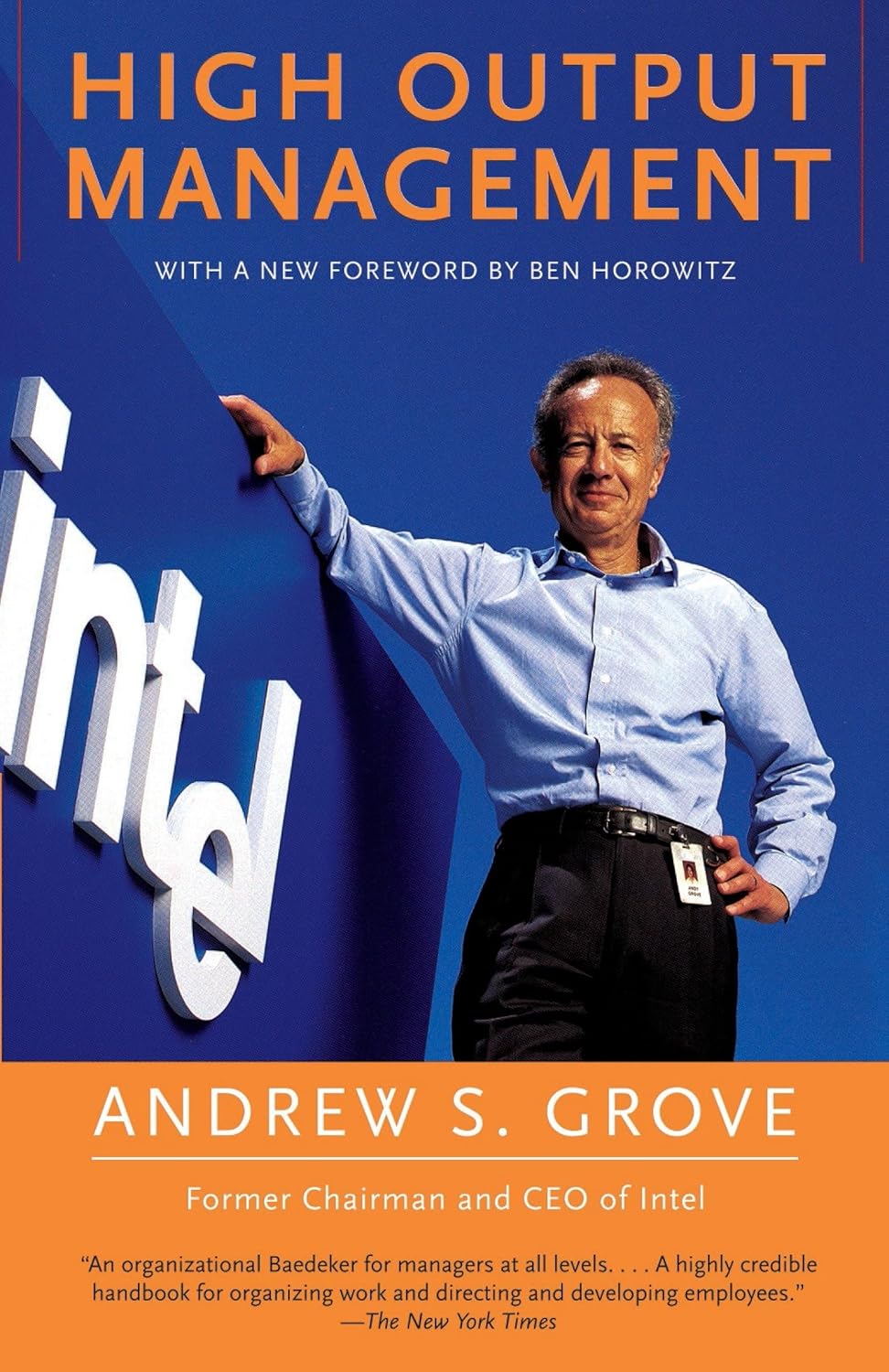
The teachings of Andy Grove always resonated here. His belief that “only the paranoid survive” aligns perfectly with financial discipline. Not paranoia for its own sake, but an obsessive focus on signal detection. When you build systems to catch weak signals early, you gain time. And time is the most underappreciated resource in high-growth execution. I recall one moment when our leading indicator for churn, a decline in logins per seat, triggered a dashboard alert. Our finance team, not success, flagged it first. We escalated. We intervened. We saved the account. Again, finance took no credit. But the system worked.
Jack Welch’s insistence on performance clarity shaped how I think about transparency. I believe every team should know not just whether they hit plan, but what financial model their work fits into. When a seller closes a deal, they should know the implied CAC, the modeled payback period, and the expansion probability. When a marketer launches a campaign, they should know not just the leads generated, but the contribution margin impact. Finance builds this clarity. We translate goals into economics. We make strategy measurable.
And yet, the irony remains. We rarely stand on stage. The engine stays invisible.
But perhaps that is the point. True performance systems don’t need constant validation. They hum in the background. They adapt. They enable. In my experience, the best finance organizations are not the ones that make the loudest noise, but they are the ones who design the best rails, the clearest dashboards, and the most thoughtful budget release triggers. They let the company move faster not because they permit it, but because they made it possible.
Part II: Execution in Motion
Execution does not begin with goals. It starts with alignment. Once the strategy sets direction, operations must translate intention into motion. Finance, often misconstrued as a control tower, acts more like a conductor, ensuring that timing, tempo, and resourcing harmonize across functional lines. In my experience with Series A through Series D companies, execution always breaks down not because people lack energy but because rhythm collapses. Finance preserves that rhythm.
RevOps, though a relatively recent formalization, has long been native to the thinking of any operational CFO. I have experienced the fragmented days when sales ops sat in isolation, marketing ran on instinct, and customer success tracked NPS with no tie to revenue forecasts. These silos cost more than inefficiency, they eroded trust. By embedding finance early into revenue operations, we gained coherence. Finance doesn’t need to own RevOps. But it must architect its boundaries. It must define the information flows that allow the CRO to see CAC payback, the CMO to see accurate pipeline attribution, and the CS lead to see retention’s capital impact.
One of the earliest systems I helped redesign was our quote-to-cash (QTC) pipeline. Initially, deal desk approvals were delayed. Pricing approvals were ad hoc. Order forms included exceptions with no financial logic. It was not malice, but it was momentum outrunning structure. We rebuild the process using core tenets from The Execution Premium: clarifying strategic outcomes, aligning initiatives, and continuously monitoring execution. Each approval step is mapped directly to a business rule: gross margin minimums, billing predictability, and legal risk thresholds. The system responded to the signal. A high-volume, low-risk customer triggered auto-approval. A multi-country deal with non-standard terms routed to a senior analyst with pre-built financial modeling templates. Execution accelerated not because we added steps but because we aligned incentives and made intelligence accessible.
I have long believed that systems should amplify judgment, not replace it. Our deal desk didn’t become fast because it went fully automated. It became fast because it surfaced the right tradeoffs at the right time to the right person. When a rep discounted beyond policy, the tool didn’t just flag it. It showed how that discount impacted CAC efficiency and expansion potential. Sales, empowered with context, often self-correct. We did not need vetoes. We needed shared logic.
Beyond QTC, I found that the most powerful but least appreciated place for finance is inside customer success. Most teams view CS as a post-sale cost center or retention enabler. I see it as an expansion engine. We began modeling churn not as a static risk but as a time-weighted probability. Our models, built in R and occasionally stress-tested in Arena simulations, tracked indicators like usage density, support escalation type, and stakeholder breadth. These were not metrics, but they were leading indicators of commercial health.
Once we had that model, finance did not sit back. We acted. We redefined CSM coverage ratios based on predicted dollar retention value. We prioritized accounts with latent expansion signals. We assigned executive sponsors to at-risk customers where the cost of churn exceeded two times the average upsell. These choices, while commercial in nature, had financial roots. We funded success teams not based on headcount formulas but on expected net revenue contribution. Over time, customer LTV rose. We never claimed the win. But we knew the role we played.
Legal and compliance often sit adjacent to finance, but in fast-growth companies, they need to co-conspire. I remember a debate over indemnity clauses in multi-tenant environments. The sales team wanted speed. Legal wanted coverage. We reframed the question: what’s the dollar impact of each clause in worst-case scenarios? Finance modeled the risk exposure, ran stress scenarios, and presented a range. With that data, legal softened. Sales moved. And our contracting process shortened by four days on average. It was not about removing risk, but it was about quantifying it, then negotiating knowingly. That is where finance shines.
When capital becomes scarce, as it inevitably does between Series B and Series D, execution becomes less about breadth and more about precision. The principles of The Execution Premium came into sharp focus then. Strategy becomes real only when mapped to a budget. We built rolling forecasts with scenario ranges. We tagged every major initiative with a strategic theme: new markets, platform expansion, cross-sell, and margin improvement. This tagging wasn’t for reporting. It was to ensure that when trade-offs emerged—and they always do—we had a decision rule embedded in financial logic.
One of my most memorable decisions involved delaying a product line expansion to preserve runway. Emotionally, the team felt confident in its success. However, our scenario tree, which assigned probabilities to outcomes, suggested a 40 percent chance of achieving the revenue needed within 18 months. Too risky. Instead, we doubled down on our core platform and built optionality into the paused initiative. When usage signals later exceeded the forecast, we reactivated. Execution didn’t slow. It sequenced. That difference came from finance-led clarity.
Jack Welch often spoke of candor and speed. I have found both thrive when finance curates a signal. We don’t have to own product roadmaps. But we can model the NPV of each feature. We don’t run SDR teams. But we can flag which segments produce a pipeline with the lowest acquisition friction. We don’t manage engineering sprints. But we can link backlog prioritization to commercial risk. Execution becomes not a matter of more effort, but of smarter effort.
As CFOs, we must resist the urge to be behind the curtain entirely. While invisibility enables trust, periodic presence reinforces relevance. I hold quarterly strategy ops syncs with cross-functional leaders. We don’t review P&Ls. We review the signal: what is changing, what bets are unfolding, and where are we off course? These sessions have become the nervous system of the organization. Not flashy. But vital.
The final piece is culture. Finance cannot enable execution in a vacuum. We must build a culture where trade-offs are discussed openly, where opportunity cost is understood, and where constraints are welcomed as tools. When a marketing leader asks for more spend, the best response is not “no.” It is, “Show me the comparative ROI between this and the stalled product launch acceleration.” When a CRO asks for higher quota relief, the correct answer is not “what’s budgeted?” It is “Let us simulate conversion ranges and capacity impact.” That is not gatekeeping. That is enabling performance with discipline.
To be an invisible engine requires humility. We do not win alone. But we make winning possible. The sales team celebrates the close. The board praises product velocity. The CEO narrates the vision. But behind every close, every roadmap shift, and every acceleration lies a decision framework, a financial model, a guardrail, or a constraint that is quietly designed by finance.
That is our role. And that is our impact.
From Noise to Signal: Optimizing Dashboard Utility in Business
Part I: From Data Dump to Strategic Signal
I have spent over three decades ( 1994 – present) watching dashboards bloom like wildflowers in spring, each prettier than the last, and many equally ephemeral. They promise insight but often serve as a distraction. I have seen companies paralyzed by reports, their leadership boards overwhelmed not by lack of data but by its glut. And as someone who has lived deep inside the engine room of operations, finance, and data systems, I have come to a simple conclusion: dashboards don’t win markets. Decisions do.

As a CFO, I understand the appeal. Dashboards give the impression of control. They are colorful, interactive, data-rich. They offer certainty in the face of chaos or at least the illusion of it. But over the years, I have also witnessed how they can mislead, obfuscate, or lull an executive team into misplaced confidence. I recall working with a sales organization that took pride in having “real-time dashboards” that tracked pipeline coverage, close velocity, and discount trends. Yet their forecast was consistently off. The dashboard was not wrong, but it was simply answering the wrong question. It told us what had happened, not what we should do next.
This distinction matters. Strategy is not about looking in the rearview mirror. It is about choosing the right path ahead under uncertainty. That requires a signal. Not more data. Not more KPIs. Just the proper insight, at the right moment, framed for action. The dashboard’s job is not to inform—it is to illuminate. It must help the executive team sift through complexity, separate signal from noise, and move with deliberate intent.
In my own practice, I have increasingly turned to systems thinking to guide how I design and use dashboards. A system is only as good as its feedback loops. If a dashboard creates no meaningful feedback, no learning, no adjustment, no new decision, then it is a display, not a system. This is where information theory, particularly the concept of entropy, becomes relevant. Data reduces entropy only when it reduces uncertainty about the following action. Otherwise, it merely adds friction. In too many organizations, dashboards serve as elegant friction.
We once ran a study internally to assess how many dashboards were used to change course mid-quarter. The answer was less than 10 percent. Most were reviewed, nodded at, and archived. I asked one of our regional sales leaders what he looked at before deciding to reassign pipeline resources. His answer was not the heat map dashboard. It was a Slack message from a CSE who noticed a churn signal. This anecdote reinforced a powerful lesson: humans still drive strategy. Dashboards should not replace conversation. They should sharpen it.
To that end, we began redesigning how we built and used dashboards. First, we changed the intent. Instead of building dashboards to summarize data, we built them to interrogate hypotheses. Every chart, table, or filter had to serve a strategic question. For example, “Which cohorts show leading indicators of expansion readiness?” or “Which deals exhibit signal decay within 15 days of proposal?” We abandoned vanity metrics. We discarded stacked bar charts with no decision relevance. And we stopped reporting on things we could not act on.
Next, we enforced context. Data without narrative is noise. Our dashboards always accompany written interpretation, which is usually a paragraph, sometimes a sentence, but never left to guesswork. We required teams to annotate what they believed the data was saying and what they would do about it. This small habit had a disproportionate impact. It turned dashboards from passive tools into active instruments of decision-making.
We also streamlined cadence. Not all metrics need to be watched in real time. Some benefit from a weekly review. Others require only quarterly inspection. We categorized our KPIs into daily operational, weekly tactical, and monthly strategic tiers. This allowed each dashboard to live in its appropriate temporal frame, and avoided the trap of watching slow-moving indicators obsessively, like staring at a tree to catch it growing.
A decisive shift occurred when we introduced a “signal strength” scoring to each dashboard component. This concept came directly from my background in information theory and data science. Each visualization was evaluated based on its historical ability to correlate with a meaningful outcome, such as renewal, upsell, margin improvement, or forecast accuracy. If a metric consistently failed to predict or guide a better decision, we removed it. We treated every dashboard tile like an employee. It had to earn its place.
This process revealed a surprising truth: many of our most beloved dashboards were aesthetically superior but strategically inert. They looked good but led nowhere. Meanwhile, the dashboards that surfaced the most valuable insights were often ugly, sparse, and narrowly focused. One dashboard, built on a simple SQL query, showed the lag time between proposal issuance and executive signature. When that lag exceeded 21 days, deal closure probability dropped below 30 percent. That insight helped us redesign our sales playbook around compression tactics in that window. No animation. No heat map. Just signal.
As our visualization maturity evolved, so too did our team’s confidence. We no longer needed to pretend that more data equaled a better strategy. We embraced the value of absence. If we lacked signal on a given issue, we acknowledged it. We deferred action. Or we sought better data, better modeling, better proxies. But we never confused motion with progress.
In my view, the CFO bears special responsibility here. Finance is the clearinghouse of data. Our teams sit closest to the systems, the models, the cross-functional glue. If we treat dashboards as reporting tools, that is how the organization will behave. But if we elevate them to strategy-shaping instruments, we change the company’s posture toward information itself. We teach teams to seek clarity, not comfort. We ask not what happened, but what it means. And we anchor every conversation in actionability.
I have often said that the most crucial question a CFO can ask of any dashboard is not “What does it show?” but “What would you do differently because of this?” If that answer is unclear, then the visualization has failed, no matter how real-time, colorful, or filterable it may be.
Part II: From Visuals to Velocity—Using Dashboards to Orchestrate Strategy
Let us now move beyond the philosophical and diagnostic into the orchestration and application of data in real business decisions. The CFO’s role as chaperone of insight comes into sharper relief not as a scorekeeper, but as a signal curator, strategic moderator, and velocity enabler.
As dashboards matured inside our company, we began to see their true power, not in their aesthetics or real-time updates, but in their ability to synchronize conversation and decision-making across multiple, disparate stakeholders. Dashboards that previously served the finance team alone became shared reference points between customer success, product, sales, and marketing. In this new role, the CFO was no longer the gatekeeper of numbers. Instead, the finance function became the steward of context. That shift changed everything.
Most board conversations begin with a review of the past. Revenue by line of business. Operating expenses against budget. Gross margin by cohort. And while these are useful, they often miss the core strategic debate. The board doesn’t need to relive the past. It needs to allocate attention, capital, and people toward what will move the needle next. This is where the CFO must assert the agenda, not by dominating the conversation, but by reframing it.
I began preparing board materials with fewer metrics and more signal. We replaced six pages of trend charts with two dashboards that showed “leverage points.” One visual highlighted accounts where both product adoption and NPS were rising, but expansion hadn’t yet been activated. Another showed pipeline velocity by segment, adjusted for marketing spend, which effectively surfaces which go-to-market investments produced yield under real-world noise. These dashboards weren’t just reports. They were springboards into strategy.
In one memorable session, a dashboard showing delayed ramp in a new region sparked a lively debate. Traditionally, we might have discussed headcount or quota performance. Instead, the visualization pointed toward a process gap in deal desk approvals. That insight reframed the problem—and the solution. We did not hire more sellers. We fixed the latency. This was not a lucky guess. It was the product of designing dashboards not to summarize activity, but to provoke action.
One of the critical ideas I championed during this evolution was the notion of “strategic bets.” Every quarter, we asked: what are the 3 to 5 non-obvious bets we are placing, and what leading indicators will tell us if they’re working? We linked these bets directly to our dashboards. If a bet was to scale customer-led growth in a new vertical, then the dashboard showed usage by that cohort, mapped to support ticket volume and upsell intent. If the bet was to expand our footprint in a region, the dashboard visualized cycle time, executive engagement, and partner productivity. These weren’t vanity metrics. They were wagers. Dashboards, in this model, became betting scorecards.
This way of thinking required finance to act differently. No longer could we assemble metrics after the fact. We had to co-design the bets with the business, ensure the data structures could support the indicators, and align incentives to reward learning especially when the bet didn’t pay off. In that context, the most valuable metric was not the one that confirmed success. It was the one that showed us we were wrong, early enough to pivot.
Internally, we began running quarterly “signal reviews.” These were not forecast meetings. They were sessions where each function presented its version of the signal. Product discussed feature adoption anomalies. Sales surfaced movement in deal structure or pricing pushback. Marketing shared behavior clustering from campaign performance. Each team showed dashboards, but more importantly, they translated those visuals into forward-looking decisions. Finance played the role of facilitator, connecting the dots.
One of the more powerful innovations during this phase came from a colleague in business intelligence, who introduced “decision velocity” as a KPI. It was not a system metric. It was an organizational behavior metric: how fast we decided from first signal appearance. We tracked time from the first indication of churn risk to action taken. We tracked lag from slow pipeline conversion to campaign change. This reshaped our dashboard design, which is making us ask not “What’s informative?” but “What helps us move?”
To manage scale, we adopted a layered visualization model. Executive dashboards showed outcome signals. Functional dashboards went deeper into diagnostic detail. Each dashboard had an owner. Each visual had a purpose. And we ruthlessly sunset any visualization that didn’t earn its keep. We no longer treated dashboards as permanent. They were tools, like code that is refactored, deprecated, sometimes rebuilt entirely.
The tools helped, but the mindset made the difference. In one planning cycle, we debated whether to enter a new adjacent market. Rather than modeling the full three-year forecast, we built an “option dashboard” showing market readiness indicators: inbound signal volume, competitor overlap, early adopter referenceability. The dashboard made the risk legible and the optionality visible. We greenlit a modest pilot with clear expansion thresholds. The dashboard didn’t make the decision. But it made the bet more intelligent.
Incentives followed. We restructured performance reviews to include “dashboard contribution” as a secondary metric, but not in the sense of building them, but in terms of whether someone’s decisions demonstrated the use of data, especially when counterintuitive. When a regional lead pulled forward hiring based on a sub-segment signal and proved correct, that was rewarded. When another leader ignored emerging churn flags despite visible dashboard cues, we did not scold, but we studied. Because every miss was a design opportunity.
This approach did not remove subjectivity. Nor did it make decision-making robotic. Quite the opposite. By using dashboards to surface ambiguity clearly, we created more honest debates. We didn’t pretend the data had all the answers. We used it to ask better questions. And we framed every dashboard not as a mirror, but as a lens.
A CFO who understands this becomes not just the keeper of truth, but the amplifier of motion. By chaperoning how dashboards are built, interpreted, and acted upon, finance can shift an entire company from metric compliance to strategic readiness. That, in my view, is the core of performance amplification. And it is how companies outlearn their competitors—not by having more data, but by making meaning faster.
The ultimate role of the CFO is not to defend ratios or explain variances. It is to shape where the company looks, what it sees, and how it decides. Dashboards are only the beginning. The real work lies in curating signal, orchestrating learning, and aligning incentives to reward decision quality, not just outcomes.
Markets reward companies that move with clarity, not just confidence. Dashboards alone can’t create that clarity. But a CFO who treats visualization as strategy infrastructure. And in the years ahead, those are the finance leaders who will reshape how companies navigate ambiguity, invest capital, and win markets.
The CFO as Chief Option Architect: Embracing Uncertainty
Part I: Embracing the Options Mindset
This first half explores the philosophical and practical foundation of real options thinking, scenario-based planning, and the CFO’s evolving role in navigating complexity. The voice is grounded in experience, built on systems thinking, and infused with a deep respect for the unpredictability of business life.
I learned early that finance, for all its formulas and rigor, rarely rewards control. In one of my earliest roles, I designed a seemingly watertight budget, complete with perfectly reconciled assumptions and cash flow projections. The spreadsheet sang. The market didn’t. A key customer delayed a renewal. A regulatory shift in a foreign jurisdiction quietly unraveled a tax credit. In just six weeks, our pristine model looked obsolete. I still remember staring at the same Excel sheet and realizing that the budget was not a map, but a photograph, already out of date. That moment shaped much of how I came to see my role as a CFO. Not as controller-in-chief, but as architect of adaptive choices.

The world has only become more uncertain since. Revenue operations now sit squarely in the storm path of volatility. Between shifting buying cycles, hybrid GTM models, and global macro noise, what used to be predictable has become probabilistic. Forecasting a quarter now feels less like plotting points on a trendline and more like tracing potential paths through fog. It is in this context that I began adopting and later, championing, the role of the CFO as “Chief Option Architect.” Because when prediction fails, design must take over.
This mindset draws deeply from systems thinking. In complex systems, what matters is not control, but structure. A system that adapts will outperform one that resists. And the best way to structure flexibility, I have found, is through the lens of real options. Borrowed from financial theory, real options describe the value of maintaining flexibility under uncertainty. Instead of forcing an all-in decision today, you make a series of smaller decisions, each one preserving the right, but not the obligation, to act in a future state. This concept, though rooted in asset pricing, holds powerful relevance for how we run companies.
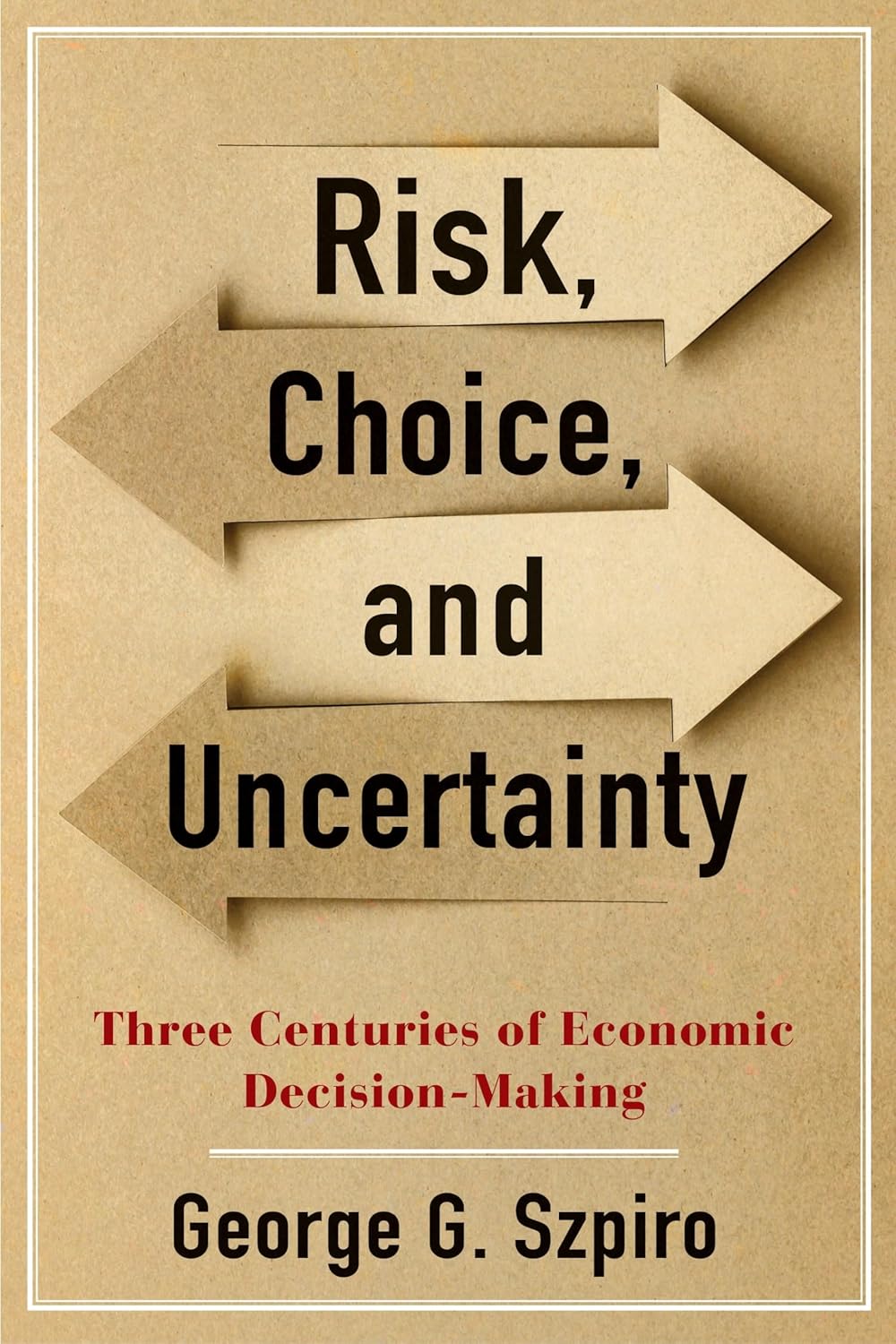
When I began modeling capital deployment for new GTM motions, I stopped thinking in terms of “budget now, or not at all.” Instead, I started building scenario trees. Each branch represented a choice: deploy full headcount at launch or split into a two-phase pilot with a learning checkpoint. Invest in a new product SKU with full marketing spend, or wait for usage threshold signals to pass before escalation. These decision trees capture something that most budgets never do—the reality of the paths not taken, the contingencies we rarely discuss. And most importantly, they made us better at allocating not just capital, but attention. I am sharing my Bible on this topic, which was referred to me by Dr. Alexander Cassuto at Cal State Hayward in the Econometrics course. It was definitely more pleasant and easier to read than Jiang’s book on Econometrics.
This change in framing altered my approach to every part of revenue operations. Take, for instance, the deal desk. In traditional settings, deal desk is a compliance checkpoint where pricing, terms, and margin constraints are reviewed. But when viewed through an options lens, the deal desk becomes a staging ground for strategic bets. A deeply discounted deal might seem reckless on paper, but if structured with expansion clauses, usage gates, or future upsell options, it can behave like a call option on account growth. The key is to recognize and price the option value. Once I began modeling deals this way, I found we were saying “yes” more often, and with far better clarity on risk.
Data analytics became essential here not for forecasting the exact outcome, but for simulating plausible ones. I leaned heavily on regression modeling, time-series decomposition, and agent-based simulation. We used R to create time-based churn scenarios across customer cohorts. We used Arena to simulate resource allocation under delayed expansion assumptions. These were not predictions. They were controlled chaos exercises, designed to show what could happen, not what would. But the power of this was not just in the results, but it was in the mindset it built. We stopped asking, “What will happen?” and started asking, “What could we do if it does?”
From these simulations, we developed internal thresholds to trigger further investment. For example, if three out of five expansion triggers were fired, such as usage spike, NPS improvement, and additional department adoption, then we would greenlight phase two of GTM spend. That logic replaced endless debate with a predefined structure. It also gave our board more confidence. Rather than asking them to bless a single future, we offered a roadmap of choices, each with its own decision gates. They didn’t need to believe our base case. They only needed to believe we had options.
Yet, as elegant as these models were, the most difficult challenge remained human. People, understandably, want certainty. They want confidence in forecasts, commitment to plans, and clarity in messaging. I had to coach my team and myself to get comfortable with the discomfort of ambiguity. I invoked the concept of bounded rationality from decision science: we make the best decisions we can with the information available to us, within the time allotted. There is no perfect foresight. There is only better framing.
This is where the law of unintended consequences makes its entrance. In traditional finance functions, overplanning often leads to rigidity. You commit to hiring plans that no longer make sense three months in. You promise CAC thresholds that collapse under macro pressure. You bake linearity into a market that moves in waves. When this happens, companies double down, pushing harder against the wrong wall. But when you think in options, you pull back when the signal tells you to. You course-correct. You adapt. And paradoxically, you appear more stable.
As we embedded this thinking deeper into our revenue operations, we also became more cross-functional. Sales began to understand the value of deferring certain go-to-market investments until usage signals validated demand. Product began to view feature development as portfolio choices: some high-risk, high-return, others safer but with less upside. Customer Success began surfacing renewal and expansion probabilities not as binary yes/no forecasts, but as weighted signals on a decision curve. The shared vocabulary of real options gave us a language for navigating ambiguity together.
We also brought this into our capital allocation rhythm. Instead of annual budget cycles, we moved to rolling forecasts with embedded thresholds. If churn stayed below 8% and expansion held steady, we would greenlight an additional five SDRs. If product-led growth signals in EMEA hit critical mass, we’d fund a localized support pod. These weren’t whims. They were contingent commitments, bound by logic, not inertia. And that changed everything.
The results were not perfect. We made wrong bets. Some options expired worthless. Others took longer to mature than we expected. But overall, we made faster decisions with greater alignment. We used our capital more efficiently. And most of all, we built a culture that didn’t flinch at uncertainty—but designed for it.
In the next part of this essay, I will go deeper into the mechanics of implementing this philosophy across the deal desk, QTC architecture, and pipeline forecasting. I will also show how to build dashboards that visualize decision trees and option paths, and how to teach your teams to reason probabilistically without losing speed. Because in a world where volatility is the only certainty, the CFO’s most enduring edge is not control, but it is optionality, structured by design and deployed with discipline.
Part II: Implementing Option Architecture Inside RevOps
A CFO cannot simply preach agility from a whiteboard. To embed optionality into the operational fabric of a company, the theory must show up in tools, in dashboards, in planning cadences, and in the daily decisions made by deal desks, revenue teams, and systems owners. I have found that fundamental transformation comes not from frameworks, but from friction—the friction of trying to make the idea work across functions, under pressure, and at scale. That’s where option thinking proves its worth.
We began by reimagining the deal desk, not as a compliance stop but as a structured betting table. In conventional models, deal desks enforce pricing integrity, review payment terms, and ensure T’s and C’s fall within approved tolerances. That’s necessary, but not sufficient. In uncertain environments—where customer buying behavior, competitive pressure, or adoption curves wobble without warning: rigid deal policies become brittle. The opportunity lies in recasting the deal desk as a decision node within a larger options tree.
Consider a SaaS enterprise deal involving land-and-expand potential. A rigid model forces either full commitment upfront or defers expansion, hoping for a vague “later.” But if we treat the deal like a compound call option, we see more apparent logic. You price the initial land deal aggressively, with usage-based triggers that, when met, unlock favorable expansion terms. You embed a re-pricing clause if usage crosses a defined threshold in 90 days. You insert a “soft commit” expansion clause tied to the active user count. None of these is just a term. They are embedded with real options. And when structured well, they deliver upside without requiring the customer to commit to uncertain future needs.
In practice, this approach meant reworking CPQ systems, retraining legal, and coaching reps to frame options credibly. We designed templates with optionality clauses already coded into Salesforce workflows. Once an account crossed a pre-defined trigger say, 80% license utilization, then the next best action flowed to the account executive and customer success manager. The logic wasn’t linear. It was branching. We visualized deal paths in a way that corresponds to mapping a decision tree in a risk-adjusted capital model.
Yet even the most elegant structure can fail if the operating rhythm stays linear. That is why we transitioned away from rigid quarterly forecasts toward rolling scenario-based planning. Forecasting ceased to be a spreadsheet contest. Instead, we evaluated forecast bands, not point estimates. If base churn exceeded X% in a specific cohort, how did that impact our expansion coverage ratio? If deal velocity in EMEA slowed by two weeks, how would that compress the bookings-to-billings gap? We visualized these as cascading outcomes, not just isolated misses.
To build this capability, we used what I came to call “option dashboards.” These were layered, interactive models with inputs tied to a live pipeline and post-sale telemetry. Each card on the dashboard represented a decision node—an inflection point. Would we deploy more headcount into SMB if the average CAC-to-LTV fell below 3:1? Would we pause feature rollout in one region to redirect support toward a segment with stronger usage signals? Each choice was pre-wired with boundary logic. The decisions didn’t live in a drawer—they lived in motion.
Building these dashboards required investment. But more than tools, it required permission. Teams needed to know they could act on signal, not wait for executive validation every time a deviation emerged. We institutionalized the language of “early signal actionability.” If revenue leaders spotted a decline in renewal health across a cluster of customers tied to the same integration module, they didn’t wait for a churn event. They pulled forward roadmap fixes. That wasn’t just good customer service, but it was real options in flight.
This also brought a new flavor to our capital allocation rhythm. Rather than annual planning cycles that locked resources into static swim lanes, we adopted gated resourcing tied to defined thresholds. Our FP&A team built simulation models in Python and R, forecasting the expected value of a resourcing move based on scenario weightings. For example, if a new vertical showed a 60% likelihood of crossing a 10-deal threshold by mid-Q3, we pre-approved GTM spend to activate contingent on hitting that signal. This looked cautious to some. But in reality, it was aggressive and in the right direction, at the right moment.
Throughout all of this, I kept returning to a central truth: uncertainty punishes rigidity, but rewards those who respect its contours. A pricing policy that cannot flex will leave margin on the table or kill deals in flight. A hiring plan that commits too early will choke working capital. And a CFO who waits for clarity before making bets will find they arrive too late. In decision theory, we often talk about “the cost of delay” versus “the cost of error.” A good options model minimizes both, which, interestingly, is not by being just right, but by being ready.
Of course, optionality without discipline can devolve into indecision. We embedded guardrails. We defined thresholds that made decision inertia unacceptable. If a cohort’s NRR dropped for three consecutive months and win-back campaigns failed, we sunsetted that motion. If a beta feature was unable to hit usage velocity within a quarter, we reallocated the development budget. These were not emotional decisions, but they were logical conclusions of failed options. And we celebrated them. A failed option, tested and closed, beats a zombie investment every time.
We also revised our communication with the board. Instead of defending fixed forecasts, we presented probability-weighted trees. “If churn holds, and expansion triggers fire, we’ll beat target by X.” “If macro shifts pull SMB renewals down by 5%, we stay within plan by flexing mid-market initiatives.” This shifted the conversation from finger-pointing to scenario readiness. Investors liked it. More importantly, so did the executive team. We could disagree on base assumptions but still align on decisions because we’d mapped the branches ahead of time.
One area where this thought made an outsized impact was compensation planning. Sales comp is notoriously fragile under volatility. We redesigned quota targets and commission accelerators using scenario bands, not fixed assumptions. We tested payout curves under best, base, and downside cases. We then ran Monte Carlo simulations to see how frequently actuals would fall into the “too much upside” or “demotivating downside” zones. This led to more durable comp plans, which meant fewer panicked mid-year resets. Our reps trusted the system. And our CFO team could model cost predictability with far greater confidence.
In retrospection, all these loops back to a single mindset shift: you don’t plan to be right. You plan to stay in the game. And staying in the game requires options that are well-designed, embedded into the process, and respected by every function. Sales needs to know they can escalate an expansion offer once particular customer signals fire. Success needs to know they have the budget authority to engage support when early churn flags arise. Product needs to know they can pause a roadmap stream if NPV no longer justifies it. And finance needs to know that its most significant power is not in control, but in preparation.
Today, when I walk into a revenue operations review or a strategic planning offsite, I do not bring a budget with fixed forecasts. I get a map. It has branches. It has signals. It has gates. And it has options, and each one designed not to predict the future, but to help us meet it with composure, and to move quickly when the fog clears.
Because in the world I have operated in, spanning economic cycles, geopolitical events, sudden buyer hesitation, system failures, and moments of exponential product success since 1994 until now, one principle has held. The companies that win are not the ones who guess right. They are the ones who remain ready. And readiness, I have learned, is the true hallmark of a great CFO.

The CFO’s Role in Cyber Risk Management
The modern finance function, once built on ledgers and guarded by policy, now lives almost entirely in code. Spreadsheets have become databases, vaults have become clouds, and the most sensitive truths of a corporation, like earnings, projections, controls, and compensation, exist less in file cabinets and more in digital atmospheres. With that transformation has come both immense power and a new kind of vulnerability. Finance, once secure in the idea that security was someone else’s concern, now finds itself at the frontlines of cyber risk.
This is not an abstraction. It is not the theoretical fear that lives in PowerPoint decks and tabletop exercises. It is the quiet, urgent reality that lives in every system login, every vendor integration, every data feed, and control point. Finance holds the keys to liquidity, to payroll, to treasury pipelines, to the very structure of internal trust. When cyber risk is real, it is financial risk. And when controls are breached, the numbers are not the only thing that shatter. You lose confidence, and the reputational risk is sticky.
The vocabulary of cybersecurity has long been technical, coded in the language of firewalls, encryption, threat surfaces, and zero-day exploits. But finance speaks a different dialect. We talk of exposure, continuity, auditability, and control. The true challenge is not simply to secure the digital perimeter. It is to translate cybersecurity into terms of governance, capital stewardship, and business continuity. This is the work of resilience. Not just defending the system, but ensuring the system can recover, restore, and preserve value under duress.
At the core of this transformation lies data governance. The finance function is very data-intensive. Forecasting, compliance, scenario modeling, and shareholder reporting all rely on the integrity of structured data. Yet in many organizations, data governance is fragmented. Spreadsheets circulate beyond their owners. Sensitive assumptions are stored in personal folders. Access rights sprawl. The very fuel of modern finance—real-time, interconnected, multi-source data—becomes a liability when it is ungoverned.
Good governance begins with clarity: what data exists, who owns it, who touches it, and where it flows. Finance must work hand-in-glove with IT to establish data taxonomies, define master records, enforce role-based access, and ensure encryption in transit and at rest. This is not busywork. It is the scaffolding of cyber hygiene. Without it, even the most advanced cybersecurity investments like AI-driven threat detection, intrusion response, and behavioral analytics will fail to protect what cannot be clearly seen or structurally controlled.
But governance is only the beginning. The real test lies in continuity. Cyber risk does not always appear as a breach. Sometimes, it appears as latency. A payroll file that fails to transmit. A trading system that goes dark. A treasury platform was locked by ransomware. I know some banks that were hit by bad actors. The damage is not theoretical. It is operational. Financial leaders must therefore shift their attention from perimeter defense to resilience engineering, which essentially means designing systems that are fault-tolerant, recoverable, and auditable even under cyber stress.
This involves more than backup protocols or redundant servers. It requires scenario thinking. What happens if our accounts payable system is locked for 48 hours? What if our cloud provider is compromised? What if our vendors become attack vectors? Resilience means designing finance systems with degraded modes—ensuring that key processes like payroll, fund transfer, and regulatory filing can continue, even if other systems are compromised.
Cyber risk also brings a strategic lens to third-party exposure. In an increasingly connected ecosystem—outsourced payroll, cloud ERPs, digital banks, fintech APIs—finance’s risk perimeter is now shared with others. Vendor due diligence, once a procurement checkbox, must now include cybersecurity audits, penetration tests, and shared incident response plans. The risk is no longer only what happens inside your house, but what happens next door.
As this landscape evolves, the CFO must take a more active seat at the cybersecurity table. This is not just a matter of policy; it is a matter of posture. Cybersecurity is not solely an IT concern. It is a financial one. It affects liquidity planning, insurance coverage, regulatory exposure, and reputational capital. It demands board-level attention and enterprise-level investment. And it benefits enormously from the disciplines finance brings to bear: control frameworks, risk quantification, scenario planning, and governance structures.
The future of managing cyber risk in finance lies in integration. Not in building walls, but in building bridges—between IT and FP&A, between security protocols and business rules, between resilience architecture and capital planning. Finance professionals do not need to become technologists. But they must become interpreters—able to translate digital risk into economic consequence, and to shape investment decisions accordingly.
In recent years, regulators have taken note. New reporting requirements around cyber incidents, from the SEC to international financial authorities, are forcing companies to formalize what was once left informal. Boards are asking tougher questions. Insurance markets are pricing risk more carefully. And investors are beginning to distinguish between companies that prepare and those that hope.
All of these points point to a subtle but important shift: cybersecurity is no longer about threat prevention. It is about enterprise trust. It is about whether a company can maintain its operations, protect its capital, and recover its footing when—not if—an incident occurs. And finance, as the institutional function of trust, is uniquely positioned to lead.
To do so, we must go beyond cost-benefit analyses of security tools. We must think in terms of systemic resilience. What are the controls that matter most? What is our recovery time objective? What are the systems of record we cannot afford to lose? Which processes must remain manual-capable, should automation fail? These are financial design questions. And they demand financial stewardship.
There is an old assumption that the CFO guards the past, while the CIO builds the future. But in the world of cyber risk, that boundary dissolves. Today, the CFO must guard the continuity of the future. And that means thinking like a strategist, acting like a technologist, and investing like a risk manager.
Managing cybersecurity risk in finance is not about responding to the last attack. It is about preparing for the next one—and the one after that. It is about designing systems that are not only efficient in normal times but also defensible in moments of failure. It is about knowing that the numbers we report, the capital we protect, and the trust we uphold, which is that we all depend on systems we can govern, audit, and restore.
Resilience is not a project. It is a philosophy. And in a world where the invisible breach can shape the visible outcome, it may be the most important capital a CFO can build.
AI in Finance: Balancing Technology and Human Decision-Making
There is a peculiar moment in finance—quiet, almost imperceptible—when a model’s suggestion begins to feel like a decision. It arrives not with fanfare, but with familiarity. A recommendation to adjust forecast weights, a revision to a credit risk tier, a realignment of pricing parameters. It all seems helpful. Rational. Unemotional. And yet, as the suggestions accumulate and the human hands recede, a more delicate question emerges: Who’s in charge here?
In the age of financial AI, this is not a hypothetical concern. It is a daily negotiation between human judgment and machine-generated logic. Algorithms now assist in treasury management, fraud detection, scenario modeling, procurement, pricing, and even board-level financial storytelling. The spreadsheet has evolved into a system that not only calculates but infers, predicts, and optimizes. And with that evolution comes a new obligation—not to resist the machine, but to restrain it, to instruct it, to guard against the drift from assistance to authority.
Finance, unlike many other corporate functions, thrives on discipline. It is the keeper of thresholds, the defender of policy, the quiet enforcer of institutional memory. But AI systems do not remember in the way humans do. They learn from patterns, not principles. They adapt quickly, sometimes too quickly. They reward efficiency and correlation. They do not pause to ask why a variance matters or whether a cost is truly sunk. They do not understand the fragility of context. Left unchecked, they risk encoding biases that have never been audited, compounding errors that go unnoticed until they become embedded in the system’s logic. What begins as a helpful model can, over time, shape decisions that no longer pass through human scrutiny.
This is not a crisis. But it is a caution. And the answer is not to unplug the tools, but to surround them with guardrails—practical, ethical, operational structures that ensure AI systems in finance serve their intended role: augmentation, not automation of thought. Guardrails are not constraints; they are clarity. They prevent drift. They remind both the machine and its users of the boundaries between prediction and discretion.
The first guardrail is transparency. Not merely of the output, but of the underlying logic. Black-box models—those that produce results without exposing their reasoning—have no place in core finance. If a system cannot explain why it flagged a transaction, revised a projection, or rejected a claim, then it cannot be trusted to make decisions. Interpretability is not a luxury. It is a governance requirement. CFOs must demand model lineage, input traceability, and algorithmic audit trails. We must know how the machine learns, what it values, and how it handles ambiguity.
The second guardrail is human-in-the-loop oversight. AI should never operate autonomously in high-impact financial decisions. Forecast adjustments, pricing recommendations, capital allocations—these require human validation, not just as a matter of control, but of accountability. A machine can surface an anomaly; only a person can determine whether it matters. The best systems are designed to assist, not to replace. They invite interrogation. They offer explanations, not conclusions. In a world of intelligent systems, human intelligence remains the ultimate fail-safe.
The third is ethics and fairness, especially in areas like credit scoring, expense flagging, and vendor selection. AI models trained on biased data can unintentionally replicate discriminatory patterns. A seemingly neutral system might deprioritize small vendors, misinterpret regional cost norms, or penalize outlier behavior that is actually legitimate. Finance cannot afford to delegate ethical reasoning to algorithms. We must build into our systems the ability to test for disparate impact, to run fairness audits, to ask not just “does it work?” but “for whom does it work, and at what cost?”
The fourth is scenario resilience. AI tools are only as good as the environment they’re trained in. A system trained on pre-2020 data would struggle to predict the pandemic’s liquidity shocks or supply chain collapse. Models must be stress-tested across extreme scenarios—black swans, grey rhinos, structural shifts. Finance leaders must insist on robustness checks that go beyond validation accuracy. We must model the edge cases, the tail risks, the regime changes that reveal a model’s blind spots.
And finally, organizational literacy. Guardrails are not just technical constructs; they are cultural. Finance teams must be trained not only to use AI tools but to question them. To understand how they work, where they fail, and when to override. The CFO’s role is not to become a data scientist, but to demand fluency in how machine intelligence intersects with financial decision-making. We must invest in talent that bridges analytics and judgment, in processes that elevate curiosity over compliance.
It is tempting to embrace AI as a means of speed and scale, and in many respects, that promise is real. AI can detect anomalies at a scale no auditor could match. It can simulate thousands of scenarios in seconds. It can reduce manual errors, accelerate closes, optimize procurement, and forecast with remarkable accuracy. But the goal is not to outrun the human. It is to empower them. The machine is not the oracle. It is the mirror, the map, the assistant. It sharpens judgment, but does not replace it.
Finance has always been a function of rigor. Of double-checking the math, of reading between the numbers, of understanding not just the statement but the story. As AI assumes a more central role in this domain, the imperative is not to cede control, but to strengthen it—through questions, through transparency, through design.
In the end, the success of AI in finance will not be measured by its autonomy, but by its alignment—with strategy, with integrity, with human reason. The machine may compute, but we decide.
And in that simple assertion lies both the promise and the responsibility of this new financial age.
Understanding Unit Economics: The CFO’s Secret Weapon
In the hushed corridors of financial planning, amid the rustle of investor decks and the polished cadence of earnings calls, there is a language often whispered but rarely spoken out loud: the economics of the unit. Not the business. Not the balance sheet. But the atomic element of value—the single customer, the single product, the single transaction. Unit economics, as it is dryly labeled, is perhaps the most misunderstood—and most quietly powerful—tool in the CFO’s arsenal.
You won’t find it on the first page of a 10-K, and it rarely makes its way into the soundbites fed to analysts. It lives behind the curtain, beneath the averages, tucked between the revenue lines and the cost pools. But ask any CFO who’s lived through scale, through slowdown, through crisis, and you will find a common refrain: that the truth of a business—its sustainability, its leverage, its soul—is written not in its gross margin, but in the story of the unit.
The unit is not glamorous. It is humble by design. A single product sold, a single user retained, a single basket checked out. It resists abstraction. It refuses the safety of averages. It demands specificity. And in its specificity lies power. Because once you understand the unit, you understand the machine. You see the engine underneath the dashboard. You stop guessing.
When I work with business leaders—whether operators launching a new market, or founders charting their path to profitability—I ask them one question, again and again: Do you know what you make or lose on the last unit you sold? And not in theory. In practice. With all the costs included. With churn accounted for. With real customer behavior, not modeled behavior. The answers vary. The silences are revealing.
It is easy, intoxicating even, to be swept up by top-line growth. Especially in the early stages of a company’s life, when the market is forgiving and capital is cheap. Revenue masks sin. But the true test is always at the unit level. What does it cost to acquire a customer? How long before they repay that cost? What does retention look like at month six versus month twelve? How much gross profit is left after serving that customer? And what fixed costs are truly fixed?
In high-growth environments, the instinct is often to subsidize—to acquire aggressively, to underprice strategically, to postpone margin in favor of momentum. There’s a logic to it, up to a point. But without an honest reckoning of unit economics, the business becomes an illusion: revenue today at the cost of value tomorrow. The cracks don’t show immediately. They appear slowly, like a soft leak in the hull—ignored until it’s too late to plug.
Unit economics is not just a cost exercise. It is a design principle. It forces you to interrogate the structure of the business. Is our pricing model aligned with our cost to serve? Are we rewarding the right behavior? Do our sales incentives reflect long-term value or short-term wins? What does our most profitable customer look like, and are we attracting more of them—or fewer?
It is also the most powerful forecasting tool we have. While top-down models depend on market assumptions and growth rates, unit economics builds from the bottom up. If we sell this many units at this contribution margin, we can afford this much overhead and still be cash flow positive. If we can increase average order value by 10%, we unlock 200 basis points of margin. Every lever becomes visible. Trade-offs are grounded in physics, not wishful thinking.
In periods of stress, when revenue falters or costs spike, it is unit economics that gives leadership clarity. Not vanity metrics, not growth charts, but a clean view of what happens when the music slows. Do we make money on the marginal customer? Can we survive a contraction in volume? Is our model defensible at scale, or only at saturation?
And in periods of opportunity, it becomes the compass for investment. If the unit is profitable and repeatable, then scaling makes sense. If not, then growth becomes a gamble. CFOs, more than any other executive, must be custodians of this clarity. Not to restrain ambition, but to make it more durable.
There is an elegance to businesses with clean unit economics. They scale predictably. They absorb shocks. They invite capital, not because of a story, but because of a structure. And they allow for strategic risk-taking—because the core is solid.
Unit economics also unlocks internal alignment. Product teams understand what features drive profitability. Marketing teams know which segments convert efficiently. Operations knows where service costs spike. Incentives align with outcomes. The organization stops working in silos and starts pulling in concert, because the definition of success is shared and measurable.
But mastering unit economics is not just a technical achievement. It is a cultural one. It requires discipline, honesty, and a willingness to confront complexity. It resists simplification. It demands data integrity, cross-functional visibility, and intellectual humility. It does not always offer tidy answers. But it always points to the right questions.
In my career, I have seen businesses with massive revenue and no future. I have seen turnarounds born from a single insight into customer-level profitability. I have seen CFOs rescued by the truth they found in unit economics. And I have seen entire companies fall apart because they mistook averages for insight.
Behind every margin is a story. Unit economics tells that story in full—line by line, customer by customer, reality over narrative. It is not glamorous. But it is, quietly, the CFO’s most honest tool. And in a world that increasingly rewards clarity over charm, that may be the ultimate advantage.
Navigating Uncertainty: The Power of Scenario Planning
Strategy is, in its purest form, a statement of confidence in the future. It is a declaration of belief—sometimes grounded, sometimes aspirational—about where the world is going and how an enterprise should move with or against its currents. And yet, the act of building strategy is increasingly fraught, not because we lack vision, but because the world itself has become less obliging. The edges have frayed. The center does not hold. We live and plan in an era when discontinuity is the rule, not the exception, and in this new terrain, the old rituals of forecasting, budgeting, and linear projections feel not just inadequate, but almost performative. It is in this climate—part anxiety, part acceleration—that scenario analytics has emerged, quietly, as a new form of strategic literacy. Not as a substitute for conviction, but as a scaffold for its complexity. In the past, scenario planning was often relegated to the margins of strategic work. A side exercise conducted in board retreats or risk workshops, sometimes useful, often ignored. But the logic of scenario thinking has matured, becoming both more empirical and more urgent. It is no longer about mapping best, worst, and base cases, those comforting simplifications of financial variability. It is about embracing structural ambiguity. It is about answering a different kind of question—one that begins not with “what is most likely to happen?” but with “what could happen, and what would we do then?”
In my early years in finance, we were trained to look backward. Past performance was the raw material of decision-making. Everything could be extrapolated, smoothed, trended. The models obeyed the logic of yesterday. It was a comforting worldview, built on order and probability. But today, the threats and opportunities we face emerge not gradually but instantaneously. A pandemic closes supply chains overnight. A viral trend inflates or destroys market demand in days. Regulators rewrite rules on the fly. Data infrastructures collapse, customers pivot, competitors appear from unexpected quarters. In this environment, linear thinking is not merely insufficient—it can be dangerous. It blinds us to inflection points. It dulls our response time. It presumes a future that resembles the past. Scenario analytics, in contrast, invites us to think in branches and forks. It is less about precision and more about structure. It says: there are multiple ways the future could unfold, and we must be ready to live in several of them at once. We do not need to predict which one will win. We need to design for optionality, to create a strategy that flexes without breaking.
Of course, to speak of scenario analytics is to risk abstraction. The phrase itself sounds like a consultant’s tool—sterile, theoretical. But in practice, it is anything but. The work is grounded, often disarmingly so. It begins with questions. What if our largest customer disappears? What if energy costs double? What if AI commoditizes our advantage? What if our talent base moves faster than our operating model? Each of these what-ifs becomes the seed of a scenario, and from it grows a set of operational implications. We are forced to ask ourselves: what would we stop doing? What would we double down on? What assumptions would unravel? What decisions would suddenly become urgent? The process is not one of abstraction but of illumination. In many ways, scenario thinking is a return to first principles. It demands that we unearth the assumptions buried in our models. That we surface our mental shortcuts. That we examine the scaffolding on which our plans rest. It is uncomfortable work, but deeply clarifying. It exposes not only risk but dependency. We see where our business leans too heavily on fragile inputs, where we are overexposed to single points of failure, where we have invested conviction in mirages.
And the tools have improved. In recent years, scenario analytics has evolved from a whiteboard exercise to a rigorous discipline, enabled by data science, probabilistic modeling, and enterprise systems that can simulate complex interdependencies. But the technology, while impressive, is not the point. The real power lies in the mindset it cultivates. Scenario analytics changes the way leaders think. It trains us to hold multiple hypotheses at once, to evaluate decisions across time horizons and contexts, to ask not just “what is the plan?” but “what are the conditions under which this plan survives?” When implemented seriously, it reshapes governance. It forces executives to argue not just for outcomes, but for flexibility. It elevates the quality of dialogue in the boardroom. It shifts conversations from reactive to anticipatory.
And it has changed how I lead. As a CFO, I used to pride myself on clarity, on tightening the aperture of possibility to a single number. But clarity is not the same as certainty. And in a volatile world, it can be a kind of hubris. Today, I value range. I value preparedness. I value the discipline of saying: we don’t know exactly what will happen, but we know what we will do if it does. That is not equivocation. It is responsibility. It is what separates firms that flinch in crisis from those that act with conviction. In scenario thinking, we replace the question “what’s the plan?” with “what’s our agility?” And this shift has profound consequences for how capital is allocated, how talent is deployed, and how resilience is built.
Some scenarios are improbable. That is not a reason to ignore them. On the contrary, it is often the improbable that proves most disruptive. The value of a scenario is not in its likelihood but in its impact. A low-probability event with catastrophic consequences deserves more attention than a high-probability one with minor effects. This asymmetry is hard for organizations to digest. It feels irrational. It requires us to model events that may never happen. But the cost of preparedness is often trivial compared to the cost of unpreparedness. And the act of preparing, even if the scenario does not materialize, strengthens the organization. It builds muscles of rapid decision-making. It fosters clarity about priorities. It exposes outdated assumptions.
There is a moral dimension as well. Scenario analytics, when used responsibly, democratizes strategy. It invites more voices into the room. The analyst who sees a risk that leadership has ignored. The product lead who imagines a pivot others dismissed. The frontline operator who knows the system’s true vulnerabilities. In a world of rigid planning, these insights are often lost. In scenario thinking, they become essential. It creates a culture where uncertainty is not a weakness but a shared field of inquiry.
This is not easy work. It demands time, and imagination, and rigor. It can be tiring to live in multiple futures. But it is also liberating. It breaks the spell of false precision. It restores the humility that complex systems require. And in its place, it offers something better than certainty. It offers readiness.
For me, scenario analytics is no longer a tool. It is a habit of mind. It is how I think about everything—from capital planning to risk management to organizational design. I do not fear uncertainty as I once did. I expect it. I welcome it. Because I know that while I cannot predict the future, I can prepare for it. And in that preparation lies the difference between navigating volatility and being undone by it.
There is no perfect plan. There is only a process of strategic calibration—an ongoing effort to adjust, to learn, to decide. Scenario analytics is how we keep that process honest. How we move through uncertainty with eyes open. How we build organizations that are not brittle but resilient, not reactive but poised. The future will continue to surprise us. That much is guaranteed. But how we respond—that is still within our control.
Understanding KPIs: Bridging the Gap in Performance Measurement
There’s a certain seduction in numbers, especially in the corporate world. They promise clarity in complexity, structure in chaos, accountability in ambition. Chief among these are KPIs—Key Performance Indicators—those neat acronyms etched into slide decks and dashboards, often recited with solemnity in boardrooms. They are meant to guide, to align, to measure what matters. But in practice, across sprawling enterprises with multiple business units, KPIs rarely behave as their tidy moniker suggests. They stretch. They splinter. They confuse more than they clarify. And they often reflect not performance, but misunderstanding.
At the top of an organization, performance indicators tend to glow with confidence: revenue growth, operating margin, return on capital. These are crisp metrics, acceptable to investors and digestible to boards. But as they cascade downward—through regions, departments, and functions—they fracture into a mosaic of proxies, approximations, and interpretive adjustments. A financial target imposed centrally might mean one thing in a high-margin software division and something entirely different in a logistics unit where margins are thin and volatility is endemic. The indicator, constant in name, becomes variable in meaning.
This interpretive drift is not simply a nuisance. It is a strategic liability. When performance metrics are misaligned or misunderstood across divisions, companies lose the ability to see themselves clearly. They misallocate resources. They chase the wrong incentives. They conflate activity with impact. In extreme cases, they reward success that actually undermines long-term value. And yet, the solution is not standardization for its own sake. It is not a universal dashboard populated by color-coded traffic lights. Instead, it is the cultivation of a shared language of performance—one that honors local nuance while preserving enterprise coherence.
Each division of a modern business functions within its own economic logic. A digital services unit prioritizes user engagement and monthly recurring revenue. A manufacturing plant must watch throughput, defect rates, and inventory turns. A retail arm lives by same-store sales and foot traffic. These realities demand specificity. But specificity without structure yields chaos. So the challenge becomes one of orchestration: to allow each unit its tailored indicators while ensuring those indicators harmonize with the broader financial and strategic goals of the enterprise.
This is not merely a technical task. It is cultural. It requires leaders to think of performance management not as a reporting function, but as a dialogue. The CFO and divisional heads must sit together and ask not just what to measure, but why. What behavior will this metric encourage? What assumptions does it carry? What trade-offs does it conceal? When KPIs are discussed with this level of candor, they become more than metrics. They become a lens for understanding the business.
Much depends on time. Different parts of an enterprise move to different clocks. A fast-scaling consumer app may evolve month by month, its fortunes rising and falling with user adoption curves. A regulated utility company may shift slowly, bound by infrastructure timelines and political cycles. Yet the pressure to synchronize persists—quarterly reporting, annual budgeting, five-year strategic plans. The trick is not to force all divisions into a single rhythm, but to reconcile those rhythms into a common score. When performance reviews respect the tempo of each business, while still tying outcomes to broader objectives, KPIs become not only functional but fair.
Still, even the most thoughtfully designed metric systems can produce distortion. People manage to what they’re measured on. Sales teams rewarded purely on volume may sacrifice margin. Call centers judged by response time may prioritize speed over resolution. When KPIs fail to account for second-order effects, they generate the very dysfunctions they were meant to prevent. And in large organizations, where thousands of employees are nudged daily by performance targets, the consequences of poor design compound quickly.
The antidote is deliberate calibration. Metrics should be revisited not only for performance outcomes but for behavioral feedback. What happened is one question. Why it happened is another. And what the metric incentivized may be the most important of all. This kind of introspection—examining not just the numbers but the narrative they create—distinguishes mature organizations from merely metricized ones.
There is also the question of change. KPIs, like business models, must evolve. A metric that once captured a company’s core value may become obsolete as markets shift, technologies advance, and strategies pivot. Metrics, in other words, have a life cycle. They must be reviewed, retired, replaced. Clinging to outdated indicators can be as dangerous as having none at all. Yet many companies resist change, fearing the loss of continuity. In truth, continuity without relevance is the greater risk. Metrics should serve strategy, not the other way around.
The most sophisticated enterprises recognize this dynamic. They design their performance systems not as monuments but as instruments—adaptive, responsive, and integrated with the learning rhythms of the business. They resist both the tyranny of over-measurement and the complacency of under-reflection. They treat KPIs not as compliance artifacts, but as windows into health, agility, and alignment.
To master performance indicators across divisional lines is therefore an exercise in leadership, not just analysis. It demands that executives move beyond abstraction and into conversation—that they ask not only what success looks like, but how it is defined, who defines it, and how it evolves. It requires humility in measurement and discipline in interpretation. And above all, it requires the belief that numbers, when properly understood, can unite rather than divide.
There will always be friction. Metrics will occasionally conflict. Objectives will compete. But when an organization commits to coherence—not uniformity, but intelligibility—it transforms its performance system into a shared language. And in that shared language lies the possibility of strategic clarity, operational focus, and organizational trust.
That, in the end, is the real purpose of a performance indicator—not to reduce the business to numbers, but to remind the numbers of their purpose. Not to chase alignment for its own sake, but to use it to find out what really matters.
CEO and CFO: Driving Transformation Together
In the architecture of corporate leadership, the relationship between the Chief Executive Officer and the Chief Financial Officer has often been portrayed as one of tension—a creative mind balanced by a cautious one, ambition met with arithmetic. The CEO dreams; the CFO interrogates. One looks outward to markets and missions; the other inward to margins and mechanics.
But such caricatures, while dramatic, are increasingly outdated. In the modern enterprise, where transformation is not a singular initiative but a continuous mandate, the CEO–CFO dynamic is not about friction. It is about orchestration. And when well-aligned, it can form the most potent alliance in business leadership—a duet of vision and precision, of velocity and discipline.
The most compelling transformations, after all, do not begin with a slide deck or an executive offsite. They begin when a CEO dares to ask, What’s next?—and a CFO responds, Let’s make it possible.
Transformation, as it is now understood, is neither episodic nor cosmetic. It is not simply the adoption of digital tools or the reconfiguration of business units. It is structural, cultural, and strategic. It redefines how value is created, how talent is engaged, and how organizations respond to a world in motion. And in this world, the CFO is no longer a steward of the past but a co-architect of the future.
For a long time, the CFO’s role was circumscribed by accounting cycles, regulatory rigor, and capital discipline. But today’s CFO must navigate capital markets, geopolitical risks, ESG commitments, supply chain shocks, AI adoption, and the economics of business models in flux. And no meaningful transformation can proceed without financial fluency woven into its design.
When a CEO envisions a move into new markets, it is the CFO who tests its return profile, calibrates its capital intensity, and considers the liquidity tradeoffs. When the strategy calls for innovation and investment, the CFO helps structure a funding roadmap that avoids overextension. And when ambition exceeds the comfort zone, the CFO becomes not the brakes, but the ballast.
The most effective CFOs no longer see themselves as guardians of constraint but as designers of possibility. They help CEOs translate vision into executable, financially coherent programs. They challenge not to diminish, but to refine. They bring order to uncertainty and shape options that would otherwise seem unattainable.
Conversely, the most effective CEOs welcome this engagement not as intrusion, but as elevation. They recognize that a financially grounded transformation is more credible, more durable, and more investable. They understand that storytelling to investors, boards, and employees carries more weight when paired with conviction in the numbers. A strategy without financial rhythm is a melody without meter—it may be beautiful, but it will not endure.
This evolving partnership is not merely one of professional compatibility. It is a function of trust. CEOs and CFOs must operate with radical transparency, frequent dialogue, and a shared appetite for rigor. They must be able to say no without defensiveness, and yes without hesitation. The most transformative companies are those where the CEO and CFO co-own not just the outcomes, but the risks.
In recent years, the COVID-19 pandemic, inflation shocks, and accelerated digitalization have pushed this relationship to new frontiers. Businesses pivoted rapidly. Supply chains were reimagined. Hybrid work challenged old norms. Throughout these disruptions, CEOs relied on CFOs to model new scenarios, manage liquidity, and invest with agility. What emerged was not just resilience, but a new model of co-leadership—one where financial clarity did not constrain ambition but enabled it.
One sees this in the shift from annual budgets to rolling forecasts. From static reporting to real-time analytics. From cost control to value creation. When CFOs bring data to the strategy table—not in retrospect, but in anticipation—they shift the narrative. The CFO becomes not just a recorder of the story but a co-author.
Moreover, in a landscape where ESG performance, stakeholder trust, and long-term value are paramount, the CFO’s voice is vital. Sustainability investments, workforce strategies, and governance practices are no longer side topics. They are central to transformation—and their success depends on thoughtful financial framing. The CFO ensures that impact is not just stated but measured. That intent is not just professed but budgeted.
At its best, the CEO–CFO partnership fosters a culture where performance and purpose coexist. Where bold bets are backed by rigorous preparation. Where the story of the company is told not just in grand language, but in clear, navigable metrics.
This is not to suggest the relationship is always smooth. Healthy tension remains essential. The CEO must sometimes push beyond what is comfortable; the CFO must at times insist on the integrity of the core. But it is in this tension—constructive, mutual, and respectful—that the enterprise finds its balance. Much like a great jazz duo, it is not the lack of dissonance that defines the performance, but the fluency with which it is resolved.
Boards increasingly look for this dynamic when assessing executive leadership. Investors listen for it in earnings calls. Employees sense it in strategic rollouts. When the CEO and CFO are aligned, it shows. Messaging becomes consistent. Decisions feel intentional. Priorities hold. The company moves not in fragmented initiatives but in concerted momentum.
And in a world where transformation is not a destination but a direction, this kind of leadership is invaluable.
To elevate the CEO–CFO collaboration is not to blur roles, but to enrich them. It is to recognize that transformation is not achieved by vision alone, nor by financial rigor in isolation. It is realized in the interdependence of those two forces—vision bold enough to stretch the organization, and discipline grounded enough to sustain it.
In this regard, the future of transformation lies not in frameworks or technologies, but in relationships. In dialogue. In shared context. In the moments when the CEO and CFO sit across from each other—not in opposition, but in alignment—and ask not “can we afford this?” or “is this bold enough?” but rather, “how do we build something that lasts?”
That question, when asked together, becomes the beginning of something rare: transformation with velocity and depth, with creativity and control, with imagination and permanence.
It is the art of collaboration. And it is the soul of enduring leadership.
Bridging Finance and Strategy with Metrics
It begins with a sheet of numbers. A spreadsheet filled with columns of income statements and balance sheets—earnings per share, free cash flow, return on invested capital. For many, these are lifeless figures resting quietly in a finance system. But for those who truly understand their power, they are the compass of transformation, the signal of where to walk next, when to pivot, and how to shape tomorrow.
Consider a global retailer navigating digital disruption. It’s easy to drown in talk of e-commerce platforms, same-store sales, and customer acquisition. Yet amid these conversations, the real guiding lights are EBITDA margins, working capital ratios, customer lifetime value, and incremental return on marketing spend. When finance and strategy teams wield these metrics with discipline, they do more than react. They transform.
Financial metrics are not passive reflections of what has happened. They are strategic levers, akin to gears in a transmission. Adjust the gear of pricing strategy, and you change your revenue velocity. Tweak your cost of goods sold, and margins move. Push on working capital efficiency, and cash flow expands, enabling new investments. Each metric is a node in a web of levers that, when pulled intentionally, redefine the business.
Yet this power is often overlooked. Strategy conversations devolve into visionary exercises or hip-deep operations talk—without ever anchoring in financial reality. Likewise, finance teams retreat to their spreadsheets, delivering reports too late to influence strategic decision-making. The result is a chasm—between ambition and arithmetic, between opportunity and financial design.
Bridging that chasm begins with intentional alignment. Finance must embed itself at the heart of strategic thinking. Boards and executive teams must demand metrics-driven narrative. Instead of “we need to grow market share,” the conversation becomes: “show me how that translates into ROIC or EVA.” When craved for by leadership, finance moves from footnote to foundation.
Effective integration happens through two modes. First, strategic planning must start with financial targets, not end there. Second, metrics must guide experimentation, not just evaluation. Every new channel, product, or market entry is treated like a micro-investment—its performance evaluated by return on marketing spend, contribution margin, and impact on free cash flow.
This is not theory. In industries from software to retail to manufacturing, teams are increasingly adopting test-and-scale financial frameworks. They identify pilots, define financial thresholds, and trigger expansion only once the metrics exceed targets. In doing so, they direct capital like venture investors, but with rigor, structure, and discipline.
A striking example emerges in subscription models. Customer acquisition costs are high, sometimes loss-leading. But when CAC is paired with robust lifetime value and payback horizon metrics, CFOs and CMOs can align on sustainable scale. Metrics like LTV-to-CAC ratio become north stars—guiding when to spend, and when to pause. They morph CAC from a budget line item into a real-time strategic indicator.
Working capital provides another rich canvas. Inventory, receivables, payables—they all bind cash. CFOs who track days sales outstanding and inventory turns—and weave those metrics into daily operations—turn their supply chains into cash generators. They unlock finance as an operational driver, not just a checker of boxes. Capital shifts from being trapped in warehouses to funding new customer initiatives, R&D, or M&A.
But metrics alone don’t transform. They must be woven into cultural habits. Not every meeting should start with vision statements or roadmap updates. Some must begin with financial outcomes—“where are we relative to plan?” Metrics-backed retrospectives must replace anecdotal debriefs. Wall charts or dashboards need to be living documents, not static relics. When teams learn to tell stories with numbers, strategy becomes accountable narrative.
Of course, the metrics chosen matter. Revenue growth is essential—but without margin clarity, it may be hollow. Customer growth looks good—but declining per-user revenue and rising support costs may signal fragility. Strategic transformation must be assessed by a portfolio of metrics—margin health, capital returns, cash conversion, and cost efficiency.
One emerging practice is the idea of a metrics “dashboard tree.” Start with a top-level financial scorecard—such as free cash flow and ROIC. Then branch down to drivers: customer unit economics, cost efficiencies, capital intensity. And below that—campaign-level ROI, product feature yield, channel performance. This structure allows leaders to trace signals back to root causes.
Another powerful principle is treatment of financial metrics like product features. Just as engineering teams track error rates or latency and react, strategy teams measure cost per acquisition or contribution margin per customer segment—and treat underperformance as a bug to fix. You might call it “Finance as Product Management.” It injects speed, curiosity, and problem-solving into what can otherwise feel static.
However, forging metrics-led transformation is not without resistance. Finance teams may feel stretched when asked to build real-time dashboards, track new metrics, and take part in fast-moving tactical discussions. Business units may see finance as gatekeepers, defensive rather than enabling. The remedy lies in upskilling and partnership. Finance must be empowered with data tools, business units taught to read financial signal, and both groups must share accountability for outcomes.
This is often where CFOs can act as translators and translators of intent. Finance can deploy self-service analytics tools, train marketers in reading unit economics, embed analysts in product teams. These embedded cells serve both as accelerators and guardians of financial integrity—they help units iterate quickly while ensuring that experiments are framed and evaluated financially.
Consider the interplay between pricing and customer segments. When customer-facing teams launch new offers, they often focus on conversion headline metrics. But if the financial landscape is tracked—via customer margin analysis, retention impact, payback periods—those same offers become strategic investments. Pricing gains momentum, but only for those that pass financial robustness tests. Elsewhere, underperforming price tests are dropped before they leak margin. It becomes a virtuous loop of intelligence.
Much like any transformation, guiding people is as important as guiding capital. Leadership must model financial discipline. When executives ask for performance dashboards before big decisions, they send the message that data matters. When incentives are tied not just to growth but to margins and return on capital, teams build with sustainability in mind. And when those metrics are reinforced at the board level, transformation is no longer lip service—it is expectation.
At a systemic level, well-chosen financial metrics become manifestation of strategy. A cost-leadership strategy needs margin-per-unit and cost-per-unit metrics. A digital pivot needs CAC, digital penetration, and ARPU (average revenue per user). A market expansion requires contribution margin and payback metrics. When metrics align with strategy, they don’t just track success—they define it.
The final piece of alchemy is adaptation. Business conditions shift. Inflation surges. Consumer preferences wobble. Geopolitics reshape supply chains. Metrics that once drove the strategy may now mislead. Constant monitoring, paired with reflection, is essential. Leading teams review not just performance against metrics but the metrics themselves—are they still valid? Do they incentivize the right behavior? Should they be replaced with better signals? It is a metric life cycle, not just measurement.
Some might argue that too much focus on metrics stifles creativity or long-term thinking. But the point is not to kill imagination, but to anchor it. To broaden perspectives, not shorten them. When innovators know that their ideas will be evaluated on multiple dimensions—growth, margin, return—they design with intention. They craft ideas that endure.
In the vast realm of transformation literature, the word financial often appears only at the end—after culture, agility, customer experience. But transformation without financial clarity is like a river without a channel—powerful but aimless. Financial metrics give it form. They concentrate energy. They make strategy operational.
Transformation is not a destination. It is a direction—a set of choices repeated over time. Financial metrics provide the path. They show where we are, where we’ve been, and where we might go. They keep strategy from floating into the stratosphere. They root it in consequence. They ground ambition in accountability.
And yet the most compelling stories are never about numbers alone. They are about how teams brought them to life. A marketer who recalibrated campaign targets after learning CAC had eclipsed payback thresholds. A product manager who paused a new feature launch when contribution margin lagged. A CFO who insisted that every new capital ask be tied to a return framework. These are the quiet revolutions that emerge when metrics met with leadership meet with expectations.
Here is the quiet hope: That through disciplined use of financial metrics, transformation becomes not a buzzword but a practice. That teams learn to speak mathematics as fluently as they do vision. That boards stop listening primarily for revenue forecasts and start looking for return narratives. That strategy—once lofty—lands as plan, program, and profit.
Is this ambitious? Yes. Does it require effort? Absolutely. But here is a secret: The best transformations always reduce complexity to clarity. Revenue, margin, ROIC, CAC, payback. These are not just numbers. They are the language of impact. And when a company learns to move in that language, it becomes unstoppable.

 Linked Stars Blog