Blog Archives

How Strategic CFOs Drive Sustainable Growth and Change
When people ask me what the most critical relationship in a company really is, I always say it’s the one between the CEO and the CFO. And no, I am not being flippant. In my thirty years helping companies manage growth, navigate crises, and execute strategic shifts, the moments that most often determine success or spiraled failure often rests on how tightly the CEO and CFO operate together. One sets a vision. The other turns aspiration into action. Alone, each has influence; together, they can transform the business.
Transformation, after all, is not a project. It is a culture shift, a strategic pivot, a redefinition of operating behaviors. It’s more art than engineering and more people than process. And at the heart of it lies a fundamental tension: You need ambition, yet you must manage risk. You need speed, but you cannot abandon discipline. You must pursue new business models while preserving your legacy foundations. In short, you need to build simultaneously on forward momentum and backward certainty.
That complexity is where the strategic CFO becomes indispensable. The CFO’s job is not just to count beans, it’s to clear the ground where new plants can grow. To unlock capital without unleashing chaos. To balance accountable rigor with growth ambition. To design transformation from the numbers up, not just hammer it into the planning cycle. When this role is fulfilled, the CEO finds their most trusted confidante, collaborator, and catalyst.
Think of it this way. A CEO paints a vision: We must double revenue, globalize our go-to-market, pivot into new verticals, revamp the product, or embrace digital. It sounds exciting. It feels bold. But without a financial foundation, it becomes delusional. Does the company have the cash runway? Can the old cost base support the new trajectory? Are incentives aligned? Are the systems ready? Will the board nod or push back? Who is accountable if sales forecast misses or an integration falters? A CFO’s strategic role is to bring those questions forward not cynically, but constructively—so the ambition becomes executable.
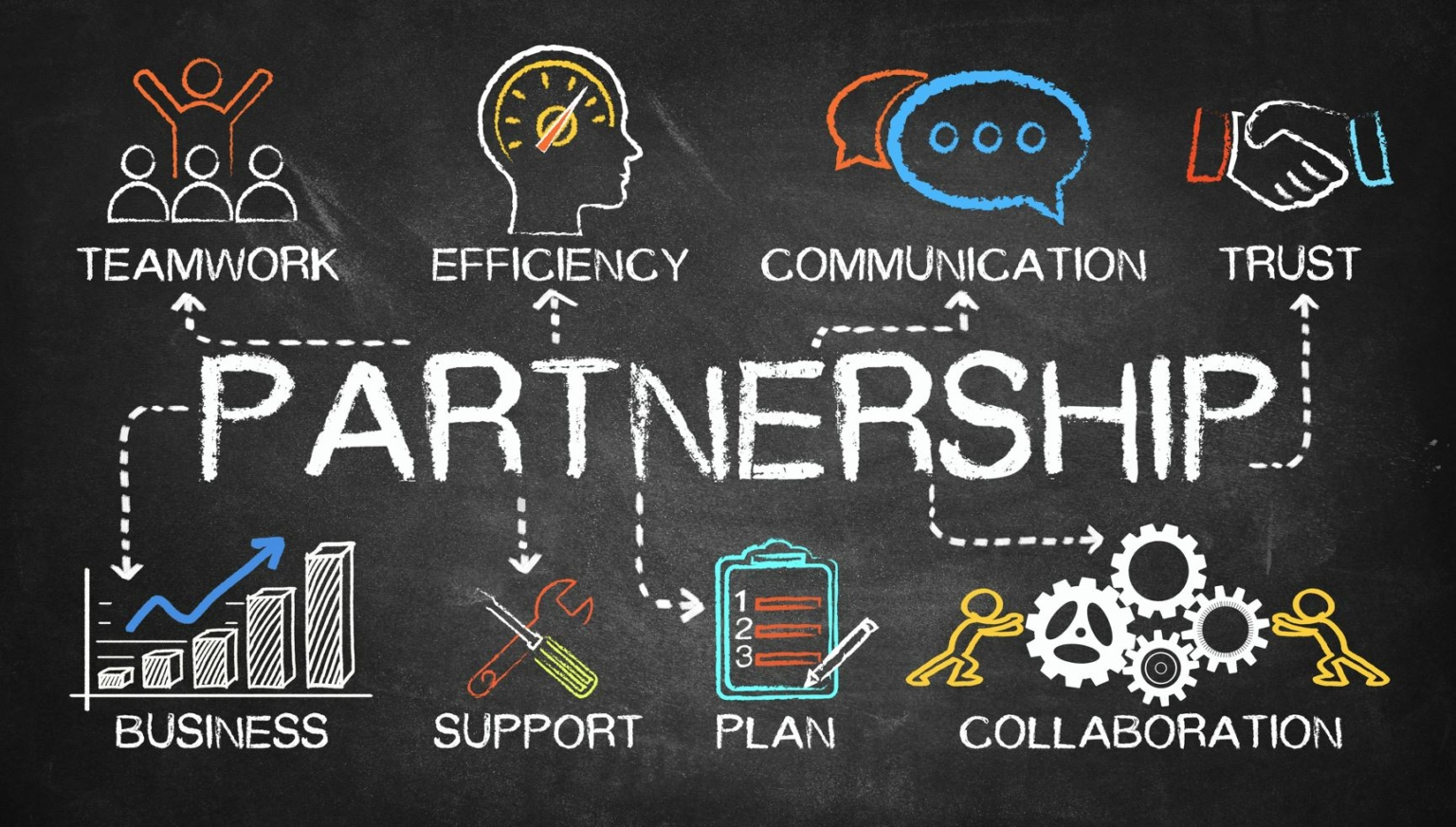
The best CEOs I’ve worked with know this partnership instinctively. They build strategy as much with the CFO as with the head of product or sales. They reward honest challenge, not blind consensus. They request dashboards that update daily, not glossy decks that live in PowerPoint. They ask, “What happens to operating income if adoption slows? Can we reverse full-time hiring if needed? Which assumptions unlock upside with minimal downside?” Then they listen. And change. That’s how transformation becomes durable.
Let me share a story. A leader I admire embarked on a bold plan: triple revenue in two years through international expansion and a new channel model. The exec team loved the ambition. Investors cheered. But the CFO, without hesitation, did not say no. She said let us break it down. Suppose it costs $30 million to build international operations, $12 million to fund channel enablement, plus incremental headcount, marketing expenses, R&D coordination, and overhead. Let us stress test the plan. What if licensing stalls? What if fulfillment issues delay launches? What if cross-border tax burdens permanently drag down the margin?
The CEO wanted the bold headline number. But together, they translated it into executable modules. They set up rolling gates: a $5 million pilot, learn, fund next $10 million, learn, and so on. They built exit clauses. They aligned incentives so teams could pivot without losing credibility. They also built redundancy into systems and analytics, with daily data and optionality-based budgeting. The CEO had the vision, but the CFO gave it a frame. That is partnership.
That framing role extends beyond capital structure or P&L. It bleeds into operating rhythm. The strategic CFO becomes the architect of transformation cadence. They design how weekly, monthly, and quarterly look and feel. They align incentive schemes so that geography may outperform globally while still holding central teams accountable. They align finance, people, product, and GTM teams to shared performance metrics—not top-level vanity metrics, but actionable ones: user engagement, cost per new customer, onboarding latency, support burden, renewal velocity. They ensure data is not stashed in silos. They make it usable, trusted, visible. Because transformation is only as effective as your ability to measure missteps, iterate, and learn.
This is why I say the CFO becomes a strategic weapon: a lever for insight, integration, and investment.
Boards understand this too, especially when it is too late. They see CEOs who talk of digital transformation while still approving global headcount hikes. They see operating legacy systems still dragging FY ‘Digital 2.0’ ambition. They see growth funded, but debt rising with little structural benefit. In those moments, they turn to the CFO. The board does not ask the CFO if they can deliver the numbers. They ask whether the CEO can. They ask, “What’s the downside exposure? What are the guardrails? Who is accountable? How long will transformation slow profitability? And can we reverse if needed?”
That board confidence, when positive, is not accidental. It comes from a CFO who built that trust, not by polishing a spreadsheet, but by building strategy together, testing assumptions early, and designing transformation as a financial system.
Indeed, transformation without control is just creative destruction. And while disruption may be trendy, few businesses survive without solid footing. The CFO ensures that disruption does not become destruction. That investments scale with impact. That flexibility is funded. That culture is not ignored. That when exceptions arise, they do not unravel behaviors, but refocus teams.
This is often unseen. Because finance is a support function, not a front-facing one. But consider this: it is finance that approves the first contract. Finance assists in setting the commission structure that defines behavior. Finance sets the credit policy, capital constraints, and invoice timing, and all of these have strategic logic. A CFO who treats each as a tactical lever becomes the heart of transformation.
Take forecasting. Transformation cannot run on backward-moving averages. Yet too many companies rely on year-over-year rates, lagged signals, and static targets. The strategic CFO resurrects forecasting. They bring forward leading indicators of product usage, sales pipeline, supply chain velocity. They reframe forecasts as living systems. We see a dip? We call a pivot meeting. We see high churn? We call the product team. We see hiring cost creep? We call HR. Forewarned is forearmed. That is transformation in flight.
On the capital front, the CFO becomes a barbell strategist. They pair patient growth funding with disciplined structure. They build in fields of optionality: reserves for opportunistic moves, caps on unfunded headcount, staged deployment, and scalable contracts. They calibrate pricing experiments. They design customer acquisition levers with off ramps. They ensure that at every step of change, you can set a gear to reverse—without losing momentum, but with discipline.
And they align people. Transformation hinges on mindset. In fast-moving companies, people often move faster than they think. Great leaders know this. The strategic CFO builds transparency into compensation. They design equity vesting tied to transformation metrics. They design long-term incentives around cross-functional execution. They also design local authority within discipline. Give leaders autonomy, but align them to the rhythm of finance. Even the best strategy dies when every decision is a global approval. Optionality must scale with coordination.
Risk management transforms too. In the past, the CFO’s role in transformation was to shield operations from political turbulence. Today, it is to internally amplify controlled disruption. That means modeling volatility with confidence. Scenario modeling under market shock, regulatory shift, customer segmentation drift. Not just building firewalls, but designing escape ramps and counterweights. A transformation CFO builds risk into transformation—but as a system constraint to be managed, not a gate to prevent ambition.
I once had a CEO tell me they felt alone when delivering digital transformation. HR was not aligned. Product was moving too slowly. Sales was pushing legacy business harder. The CFO had built a bridge. They brought HR, legal, sales, and marketing into weekly update sessions, each with agreed metrics. They brokered resolutions. They surfaced trade-offs confidently. They pressed accountability floor—not blame, but clarity. That is partnership. That is transformation armor.
Transformation also triggers cultural tectonics. And every tectonic shift features friction zones—power renegotiation, process realignment, work redesign. Without financial discipline, politics wins. Mistrust builds. Change derails. The strategic CFO intervenes not as a policeman, but as an arbiter of fairness: If people are asked to stretch, show them the ROI. If processes migrate, show them the rationale. If roles shift, unpack the logic. Maintaining trust alignment during transformation is as important as securing funding.
The ability to align culture, capital, cadence, and accountability around a single north star—that is the strategic CFO’s domain.
And there is another hidden benefit: the CFO’s posture sets the tone for transformation maturity. CFOs who co-create, co-own, and co-pivot build transformation muscle. Those companies that learn together scale transformation together.
I once wrote that investors will forgive a miss if the learning loops are obvious. That is also true inside the company. When a CEO and CFO are aligned, and the CFO is the first to acknowledge what is not working to expectations, when pivots are driven by data rather than ego, that establishes the foundation for resilient leadership. That is how companies rebuild trust in growth every quarter. That is how transformation becomes a norm.
If there is a fear inside the CFO community, it is the fear of being visible. A CFO may believe that financial success is best served quietly. But the moment they step confidently into transformation, they change that dynamic. They say: Yes, we own the books. But we also own the roadmap. Yes, we manage the tail risk. But we also amplify the tail opportunity. That mindset is contagious. It builds confidence across the company and among investors. That shift in posture is more valuable than any forecast.
So let me say it again. Strategy is not a plan. Mechanics do not make execution. Systems do. And at the junction of vision and execution, between boardroom and frontline, stands the CFO. When transformation is on the table, the CFO walks that table from end to end. They make sure the chairs are aligned. The evidence is available. The accountability is shared. The capital is allocated, measured, and adapted.
This is why I refer to the CFO as the CEO’s most important ally. Not simply a confidante. Not just a number-cruncher. A partner in purpose. A designer of execution. A steward of transformation. Which is why, if you are a CFO reading this, I encourage you: step forward. You do not need permission to rethink transformation. You need conviction to shape it. And if you can build clarity around capital, establish a cadence for metrics, align incentives, and implement systems for governance, you will make your CEO’s job easier. You will elevate your entire company. You will unlock optionality not just for tomorrow, but for the years that follow. Because in the end, true transformation is not a moment. It is a movement. And the CFO, when prepared, can lead it.
Systems Thinking and Complexity Theory: Practical Tools for Complex Business Challenges
In business today, leaders are expected to make decisions faster and with better outcomes, often in environments filled with ambiguity and noise. The difference between companies that merely survive and those that thrive often comes down to the quality of thinking behind those decisions.
Two powerful tools that help elevate decision quality are systems thinking and complexity theory. These approaches are not academic exercises. They are practical ways to better understand the big picture, anticipate unintended consequences, and focus on what truly matters. They help leaders see connections across functions, understand how behavior evolves over time, and adapt more effectively when conditions change.
Let us first understand what each of these ideas means, and then look at how they can be applied to real business problems.
What is Systems Thinking?
Systems thinking is an approach that looks at a problem not in isolation but as part of a larger system of related factors. Rather than solving symptoms, it helps identify root causes. It focuses on how things interact over time, including feedback loops and time delays that may not be immediately obvious.
Imagine you are managing a business and notice that sales conversions are low. A traditional response might be to retrain the sales team or change the pitch deck. A systems thinker would ask broader questions. Are the leads being qualified properly? Has marketing changed its targeting criteria? Is pricing aligned with customer expectations? Are there delays in proposal generation? You begin to realize that what looks like a sales issue could be caused by something upstream in marketing or downstream in operations.
What is Complexity Theory?
Complexity theory applies when a system is made up of many agents or parts that interact and change over time. These parts adapt to one another, and the system as a whole evolves in unpredictable ways. In a complex system, outcomes are not linear. Small inputs can lead to large outcomes, and seemingly stable patterns can suddenly shift.
A good example is employee engagement. You might roll out a well-designed recognition program and expect morale to improve. But in practice, results may vary because employees interpret and respond differently based on team dynamics, trust in leadership, or recent changes in workload. Complexity theory helps leaders approach these systems with humility, awareness, and readiness to adjust based on feedback from the system itself.
Applying These Ideas to Real Business Challenges
Use Case 1: Sales Pipeline Bottleneck
A common challenge in many organizations is a slowdown or bottleneck in the sales pipeline. Traditional metrics may show that qualified leads are entering the top of the funnel, but deals are not progressing. Rather than focusing only on sales performance, a systems thinking approach would involve mapping the full sales cycle.
You might uncover that the product demo process is delayed because of engineering resource constraints. Or perhaps legal review for proposals is taking longer due to new compliance requirements. You may even discover that the leads being passed from marketing do not match the sales team’s target criteria, leading to wasted effort.
Using systems thinking, you start to see that the sales pipeline is not a simple sequence. It is an interconnected system involving marketing, sales, product, legal, and customer success. A change in one part affects the others. Once the feedback loops are visible, solutions become clearer and more effective. This might involve realigning handoff points, adjusting incentive structures, or investing in automation to speed up internal reviews.
In a more complex situation, complexity theory becomes useful. For example, if customer buying behavior has changed due to economic uncertainty, the usual pipeline patterns may no longer apply. You may need to test multiple strategies and watch for how the system responds, such as shortening the sales cycle for certain segments or offering pilot programs. You learn and adjust in real time, rather than assuming a static playbook will work.
Use Case 2: Increase in Voluntary Attrition
Voluntary attrition, especially among high performers, often triggers a reaction from HR to conduct exit interviews or offer retention bonuses. While these steps have some value, they often miss the deeper systemic causes.
A systems thinking approach would examine the broader employee experience. Are new hires receiving proper onboarding? Is workload increasing without changes in staffing? Are team leads trained in people management? Is career development aligned with employee expectations?
You might find that a recent reorganization led to unclear roles, increased stress, and a breakdown in peer collaboration. None of these factors alone might seem critical, but together they form a reinforcing loop that drives disengagement. Once identified, you can target specific leverage points, such as improving communication channels, resetting team norms, or introducing job rotation to restore a sense of progress and purpose.
Now layer in complexity theory. Culture, trust, and morale are not mechanical systems. They evolve based on stories people tell, leadership behavior, and informal networks. The same policy change can be embraced in one part of the organization and resisted in another. Solutions here often involve small interventions and feedback loops. You might launch listening sessions, try lightweight pulse surveys, or pilot flexible work models in select teams. You then monitor the ripple effects. The goal is not full control, but guided adaptation.
Separating Signal from Noise
In both examples above, systems thinking and complexity theory help leaders rise above the noise. Not every metric, complaint, or fluctuation requires action. But when seen in context, some of these patterns reveal early signals of deeper shifts.
The strength of these frameworks is that they encourage patience, curiosity, and structured exploration. You avoid knee-jerk reactions and instead look for root causes and emerging trends. Over time, this leads to better diagnosis, better prioritization, and better outcomes.
Final Thoughts
In a world where data is abundant but insight is rare, systems thinking and complexity theory provide a critical edge. They help organizations become more aware, more adaptive, and more resilient.
Whether you are trying to improve operational efficiency, respond to market changes, or build a healthier culture, these approaches offer practical tools to move from reactive problem-solving to thoughtful system design.
You do not need to be a specialist to apply these principles. You just need to be willing to ask broader questions, look for patterns, and stay open to learning from the system you are trying to improve.
This kind of thinking is not just smart. It is becoming essential for long-term business success.
Standing Ovation Problem and Product Design
When you seed another social network into an ecosystem, you are, for the lack of a better word, embracing the tenets of a standing ovation model. The standing ovation model has become, as of late, the fundamental rubric upon which several key principles associated with content, virality, emulation, cognitive psychology, location principles, social status and behavioral impulse coalesce together in various mixes to produce what would be the diffusion of the social network principles as it ripples through the population it contacts. Please keep in mind that this model provides the highest level perspective that fields the trajectory of the social network dynamics. There are however a number of other models that are more tactical and borrowed from the fields of epidemiology and growth economics that will address important elements like the tipping points that generally play a large role in essentially creating that critical mass of crowdswell, which once attained is difficult to reverse, unless of course there are legislative and technology reversals that may defeat the dynamics.
So I will focus, in this post, the importance of standing ovation model. The basic SOP (Standing Ovation problem) can be simply stated as: A lecture or content display in an audience ends and the audience starts to applaud. The applause builds and tentatively, a few audience may members may or may not decide to stand. This could be abstracted in our world as an audience that is a passive user versus an active user in the ecosystem. The question that emerges is whether a standing ovation ensues or does the enthusiasm fizzle. SOP problems were first studied by Schelling.
In the simplest form of the model, when a performance or content consumption ends, an audience member must decide whether or not to stand. Now if the decision to stand is made without any consideration of the dynamics of the other people in the audience, then there is no problem per se and the SOP model does not come into play. However, if the random person is on the fence or is reluctant or may not have enjoyed the content … would the behavioral and location dynamics of the other participants in the audience influence him enough to stand even against his better judgment. The latter case is an example of information cascade or what is often called the “following the herd” mentality which essentially means that the individuals abnegates his position in favor of the collective judgment of the people around him. So this model and its application to social networks is best explained by looking at the following elements:
1. Group Response: If you are part of a group and you have your set of judgments governing your decision to stand up, then are you willing to reserve those judgments to be part of group behavior. At what point is a person willing to seed doubt and play along with a larger response. This has important implications. For example, if you are in an audience and a member of a group that you know well, and a certain threshold quantity in the group responds favorably to the content, there may be some likelihood that you would follow along. On the other hand, if you are an individual in an audience, albeit not connected to a group, there is still some chance of you to follow along as long as it meets some threshold for example – if I can see about people stand, I will follow along. In a known group which may constitute you being a participant among five people, even if 3 people stand, you may stand up even though it does not meet your random 10 people formula. This has important implications in cohorts, building groups, providing tools and computational agents in social networks and dynamics to incline a passive consumer to an active consumer.

2. Visibility to the Group: Location is an important piece of the SOP. Imagine a theater. If you are the first one in the center of all rows, you will, unless you turn back, not be cognizant of people’s reactions. Thus, your response to the content will be preliminarily fed by the intensity of your reaction to the content. On the other hand, if you are seated behind, you will have a broader perspective and you may respond to the dynamics of how the others respond to the content. What does this mean in social dynamics and introducing more active participation? Simply that you have to again provide the underlying mechanisms that allow people to respond at a temporal level ( a short time frame) to how a threshold mass of people have responded. Affording that one person visibility that would follow up with a desired response would create the information cascade that would culminate in a large standing ovation.

3. Beachhead Response: An audience will have bias. That is another presumption in the model. They will carry certain judgments prior to a show – one of which is that the people in front who have bought the expensive seats are influential and have “celebrity” status. Now depending on the weight of this bias, a random person, in spite a positive audience response, may not respond positively if the front rows do not respond positively. Thus, he is heavily inclined to discounting the general audience threshold toward a threshold associated with a select group that could result in different behavior. However, it is also possible that if the beachhead responds positively and not the audience, the random person may react positively despite the general threshold dynamics. So the point being that designing and developing products in a social environment have to be able to measure such biases, see responses and then introduce computational agents to create fuller participation.

Thus, the SOP is the fundamental crux around which a product design has to be considered. In that, to the extent possible, you bring in a person who belongs to a group, has the spatial visibility, and responds accordingly would thus make for an enduring response to content. Of course, the content is a critical component as well for poor content, regardless of all ovation agents introduced, may not trigger a desired response. So content is as much an important pillar as is the placing of the random person with their thresholds of reaction. So build the content, design the audience, and design the placement of the random person in order that all three coalesce to make an active participant result out of a passive audience.

 Linked Stars Blog