Category Archives: Employee Engagement
Pivots – The Unholy Grail of Employee Engagement !
Most of you today have heard the word “pivot”. It has become a very ubiquitous word – it pretends to be something which it is not. And entrepreneurs and VC’s have found oodles of reasons to justify that word. Some professional CXO’s throw that word around in executive meetings, board meetings, functional meetings … somehow they feel that these are one of the few words that give them gravitas. So “pivot” has become the sexy word – it portrays that the organization and the management is flexible and will iterate around its axis quickly to accommodate new needs … in fact, they would change direction altogether for the good of the company and the customers. After all, agility is everything, isn’t it? And couple that with Lean Startup – the other Valley buzz word … and you have created a very credible persona. (I will deal with the Lean Startup in a later blog and give that its due. As a matter of fact, the concept of “pivot” was introduced by Eric Ries who has also introduced the concept of Lean Startup).

Pivots happen when the company comes out with product that is not the right fit to market. They assess that customers want something different. Tweaking the product to fit the needs of the customer does not constitute a pivot. But if you change the entire product or direction of the company – that would be considered a pivot.
Attached is an interesting link that I came across —
It gives examples of eight entrepreneurs who believe that they have exercised pivot in their business model. But if you read the case studies closely, none of them did. They tweaked and tweaked and tweaked along the way. The refined their model. Scripted.com appears to be the only example that comes closest to the concept of the “pivot” as understood in the Valley.
Some of the common pivots that have been laid out by Eric Ries and Martin Zwilling are as follows 😦http://blog.startupprofessionals.com/2012/01/smart-business-knows-8-ways-to-pivot.html). I have taken the liberty of laying all of these different pivots out that is on Mr. Zwilling’s blog.
- Customer problem pivot. In this scenario, you use essentially the same product to solve a different problem for the same customer segment. Eric says that Starbucks famously did this pivot when they went from selling coffee beans and espresso makers to brewing drinks in-house.
- Market segment pivot. This means you take your existing product and use it to solve a similar problem for a different set of customers. This may be necessary when you find that consumers aren’t buying your product, but enterprises have a similar problem, with money to spend. Sometimes this is more a marketing change than a product change.
- Technology pivot. Engineers always fight to take advantage of what they have built so far. So the most obvious pivot for them is to repurpose the technology platform, to make it solve a more pressing, more marketable, or just a more solvable problem as you learn from customers.
- Product feature pivot. Here especially, you need to pay close attention to what real customers are doing, rather than your projections of what they should do. It can mean to zoom-in and remove features for focus, or zoom-out to add features for a more holistic solution.
- Revenue model pivot. One pivot is to change your focus from a premium price, customized solution, to a low price commoditized solution. Another common variation worth considering is the move from a one-time product sale to monthly subscription or license fees. Another is the famous razor versus blade strategy.
- Sales channel pivot. Startups with complex new products always seem to start with direct sales, and building their own brand. When they find how expensive and time consuming this is, they need to use what they have learned from customers to consider a distribution channel, ecommerce, white-labeling the product, and strategic partners.
- Product versus services pivot. Sometimes products are too different or too complex to be sold effectively to the customer with the problem. Now is the time for bundling support services with the product, education offerings, or simply making your offering a service that happens to deliver a product at the core.
- Major competitor pivot. What do you do when a major new player or competitor jumps into your space? You can charge ahead blindly, or focus on one of the above pivots to build your differentiation and stay alive.
Now please re-read all of the eight different types of “pivot” carefully! And reread again. What do you see? What do you find if you reflect upon these further? None of these are pivots! None! All of the eight items fit better into Porter’s Competition Framework. You are not changing direction. You are not suddenly reimagining a new dawn. You are simply tweaking as you learn more. So the question is – Is the rose by any other name still a rose? The answer is yes! Pivot means changing direction … in fact, so dramatically that the vestiges of the early business models fade away from living memory. And there have been successful pivots in recent business history. But less so … and for those who did, you will likely have not heard of them at all. They have long been discarded in the ash heap of history.

Great companies are established by leaders that have vision. The vision is the aspirational goal of the company. The vision statement reflects the goal in a short and succinct manner. Underlying the vision, they incorporate principles, values, missions, objectives … but they also introduce a corridor of uncertainty. Why? Because the future is rarely a measure or a simple extrapolation of expressed or latent needs of customers in the past. Apple, Microsoft, Oracle, Salesforce, Facebook, Google, Genentech, Virgin Group, Amazon, Southwest Airlines etc. are examples of great companies who have held true to their vision. They have not pivoted. Why? Because the leaders (for the most part- the founders) had a very clear and aspirational vision of the future! They did not subject themselves to sudden pivots driven by the “animal spirits” of the customers. They have understood that deep waters run still, despite the ripples and turbulence on the surface. They have honed and reflected upon consumer behavior and economic trends, and have given significant thought before they pulled up the anchor. They designed and reflected upon the ultimate end before they set sail. And once at sea, and despite the calm and the turbulence, they never lost sight of the aspirational possibilities of finding new lands, new territories, and new cultures. In fact, they can be compared to the great explorers or great writers – search for a theme and embark upon the journey …within and without. They are borne upon consistency of actions toward attainment and relief of their aspirations.

Now we are looking at the millennial generation. Quick turnarounds, fast cash, prepare the company for an acquisition and a sale or what is commonly called the “flip” … everything is super-fast and we are led to believe that this is greatness. Business plans are glibly revised. This hotbed of activity and the millennial agility to pivot toward short-term goal is the new normal — pivot is the concept that one has to be ready for and adopt quickly. I could not disagree more. When I hear pivots … it tells me that the founders have not deliberated upon the long-term goals well. In fact, it tells me that their goals are not aspirational for the most part. They are what we call in microeconomic theory examples of contestable agents in the market of price-takers. They rarely, very rarely create products that endure and stand the test of time!
So now let us relate this to organizations and people. People need stability. People do not seek instability – at least I can speak for a majority of the people. An aspirational vision in a company can completely destabilize a certain market and create tectonic shifts … but people gravitate around the stability of the aspirational vision and execute accordingly. Thus, it is very important for leadership to broadcast and needle this vision into the DNA of the people that are helping the organization execute. With stability ensured, what then happens are the disruptive innovations! This may sound counter-factual! Stability and disruptive innovations! How can these even exist convivially together and be spoken in the same breath! I contend that Innovation occurs when organizations allow creativity upon bedrock of discipline and non-compromising standards. A great writer builds out the theme and let the characters jump out of the pages!

When you have mediocrity in the vision, then the employees have nothing aspirational to engage to. They are pockets sometimes rowing the boat in one direction, and at other times rowing against one another or in a completely direction. Instability is injected into the organization. But they along with their leaders live behind the veil of ignorance – they drink the Red Bull and follow the Pied Piper of Hamelin. So beware of the pivot evangelists!
MECE Framework, Analysis, Synthesis and Organization Architecture toward Problem-Solving
MECE is a thought tool that has been systematically used in McKinsey. It stands for Mutually Exclusive, Comprehensively Exhaustive. We will go into both these components in detail and then relate this to the dynamics of an organization mindset. The presumption in this note is that the organization mindset has been engraved over time or is being driven by the leadership. We are looking at MECE since it represents a tool used by the most blue chip consulting firm in the world. And while doing that, we will , by the end of the article, arrive at the conclusion that this framework alone will not be the panacea to all investigative methodology to assess a problem – rather, this framework has to reconcile with the active knowledge that most things do not fall in the MECE framework, and thus an additional system framework is needed to amplify our understanding for problem solving and leaving room for chance.
So to apply the MECE technique, first you define the problem that you are solving for. Once you are past the definition phase, well – you are now ready to apply the MECE framework.

MECE is a framework used to organize information which is:
- Mutually exclusive: Information should be grouped into categories so that each category is separate and distinct without any overlap; and
- Collectively exhaustive: All of the categories taken together should deal with all possible options without leaving any gaps.
In other words, once you have defined a problem – you figure out the broad categories that relate to the problem and then brainstorm through ALL of the options associated with the categories. So think of it as a mental construct that you move across a horizontal line with different well defined shades representing categories, and each of those partitions of shades have a vertical construct with all of the options that exhaustively explain those shades. Once you have gone through that exercise, which is no mean feat – you will be then looking at an artifact that addresses the problem. And after you have done that, you individually look at every set of options and its relationship to the distinctive category … and hopefully you are well on your path to coming up with relevant solutions.
Now some may argue that my understanding of MECE is very simplistic. In fact, it may very well be. But I can assure you that it captures the essence of very widely used framework in consulting organizations. And this framework has been imported to large organizations and have cascaded down to different scale organizations ever since.
Here is a link that would give you a deeper understanding of the MECE framework:
http://firmsconsulting.com/2010/09/22/a-complete-mckinsey-style-mece-decision-tree/
Now we are going to dig a little deeper. Allow me to digress and take you down a path less travelled. We will circle back to MECE and organizational leadership in a few moments. One of the memorable quotes that have left a lasting impression is by a great Nobel Prize winning physicist, Richard Feynman.

“I have a friend who’s an artist and has sometimes taken a view which I don’t agree with very well. He’ll hold up a flower and say “look how beautiful it is,” and I’ll agree. Then he says “I as an artist can see how beautiful this is but you as a scientist takes this all apart and it becomes a dull thing,” and I think that he’s kind of nutty. First of all, the beauty that he sees is available to other people and to me too, I believe. Although I may not be quite as refined aesthetically as he is … I can appreciate the beauty of a flower. At the same time, I see much more about the flower than he sees. I could imagine the cells in there, the complicated actions inside, which also have a beauty. I mean it’s not just beauty at this dimension, at one centimeter; there’s also beauty at smaller dimensions, the inner structure, also the processes. The fact that the colors in the flower evolved in order to attract insects to pollinate it is interesting; it means that insects can see the color. It adds a question: does this aesthetic sense also exist in the lower forms? Why is it aesthetic? All kinds of interesting questions which the science knowledge only adds to theexcitement, the mystery and the awe of a flower! It only adds. I don’t understand how it subtracts.”

The above quote by Feynman lays the groundwork to understand two different approaches – namely, the artist approaches the observation of the flower from the synthetic standpoint, whereas Feynman approaches it from an analytic standpoint. Both do not offer views that are antithetical to one another: in fact, you need both to gather a holistic view and arrive at a conclusion – the sum is greater than the parts. Feynman does not address the essence of beauty that the artist puts forth; he looks at the beauty of how the components and its mechanics interact well and how it adds to our understanding of the flower. This is very important because the following dialogue with explore another concept to drive this difference between analysis and synthesis home.
There are two possible ways of gaining knowledge. Either we can proceed from the construction of the flower ( the Feynman method) , and then seek to determine the laws of the mutual interaction of its parts as well as its response to external stimuli; or we can begin with what the flower accomplishes and then attempt to account for this. By the first route we infer effects from given causes, whereas by the second route we seek causes of given effects. We can call the first route synthetic, and the second analytic.
We can easily see how the cause effect relationship is translated into a relationship between the analytic and synthetic foundation.
A system’s internal processes — i.e. the interactions between its parts — are regarded as the cause of what the system, as a unit, performs. What the system performs is thus the effect. From these very relationships we can immediately recognize the requirements for the application of the analytic and synthetic methods.
The synthetic approach — i.e. to infer effects on the basis of given causes — is therefore appropriate when the laws and principles governing a system’s internal processes are known, but when we lack a detailed picture of how the system behaves as a whole.

Another example … we do not have a very good understanding of the long-term dynamics of galactic systems, nor even of our own solar system. This is because we cannot observe these objects for the thousands or even millions of years which would be needed in order to map their overall behavior.
However, we do know something about the principles, which govern these dynamics, i.e. gravitational interaction between the stars and planets respectively. We can therefore apply a synthetic procedure in order to simulate the gross dynamics of these objects. In practice, this is done with the use of computer models which calculate the interaction of system parts over long, simulated time periods.

The analytical approach — drawing conclusions about causes on the basis of effects – is appropriate when a system’s overall behavior is known, but when we do not have clear or certain knowledge about the system’s internal processes or the principles governing these. On the other hand, there are a great many systems for which we neither have a clear and certain conception of how they behave as a whole, nor fully understand the principles at work which cause that behavior. Organizational behavior is one such example since it introduces the fickle spirits of the employees that, at an aggregate create a distinct character in the organization.

Leibniz was among the first to define analysis and synthesis as modern methodological concepts:
“Synthesis … is the process in which we begin from principles and [proceed to] build up theorems and problems … while analysis is the process in which we begin with a given conclusion or proposed problem and seek the principles by which we may demonstrate the conclusion or solve the problem.”
So we have wandered down this path of analysis and synthesis and now we will circle back to MECE and the organization. MECE framework is a prime example of the application of analytics in an organization structure. The underlying hypothesis is that the application of the framework will illuminate and add clarity to understanding the problems that we are solving for. But here is the problem: the approach could lead to paralysis by analysis. If one were to apply this framework, one would lose itself in the weeds whereas it is just as important to view the forest. So organizations have to step back and assess at what point we stop the analysis i.e. we have gathered information and at what point we set our roads to discovering a set of principles that will govern the action to solve a set of problems. It is almost always impossible to gather all information to make the best decision – especially where speed, iteration, distinguishing from the herd quickly, stamping a clear brand etc. are becoming the hallmarks of great organizations.

Applying the synthetic principle in addition to “MECE think” leaves room for error and sub-optimal solutions. But it crowd sources the limitless power of imagination and pattern thinking that will allow the organization to make critical breakthroughs in innovative thinking. It is thus important that both the principles are promulgated by the leadership as coexisting principles that drive an organization forward. It ignites employee engagement, and it imputes the stochastic errors that result when employees may not have all the MECE conditions checked off.
In conclusion, it is important that the organization and its leadership set its architecture upon the traditional pillars of analysis and synthesis – MECE and systems thinking. And this architecture serves to be the springboard for the employees that allows for accidental discoveries, flights of imagination, Nietzschean leaps that transform the organization toward the pathway of innovation, while still grounded upon the bedrock of facts and empirical observations.

Implementing Balanced Scorecard Model for Employee Engagement
The Balanced Scorecard Model (BSC) was introduced by Kaplan & Norton in their book “The Balanced Scorecard” (1996). It is one of the more widely used management tools in large organizations.
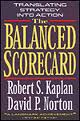
One of the major strengths of the BSC model is how the key categories in the BSC model links to corporate missions and objectives. The key categories which are referred to as “perspectives” illustrated in the BSC model are:
Financial Perspective:
Kaplan and Norton do not disregard the traditional need for financial data. Timely and accurate data will always be a priority, and managers will do whatever necessary to provide it. In fact, often there is more than enough handling and processing of financial data. With the implementation of a corporate database, it is hoped that more of the processing can be centralized and automated. But the point is that the current emphasis on financials leads to the “unbalanced” situation with regard to other perspectives. There is perhaps a need to include additional financial-related data, such as risk assessment and cost-benefit data, in this category.
Customer Perspective
Recent management philosophy has shown an increasing realization of the importance of customer focus and customer satisfaction in any business. These are leading indicators: if customers are not satisfied, they will eventually find other suppliers that will meet their needs. Poor performance from this perspective is thus a leading indicator of future decline, even though the current financial picture may look good. In developing metrics for satisfaction, customers should be analyzed in terms of kinds of customers and the kinds of processes for which we are providing a product or service to those customer groups
Internal Business Process Perspective
This perspective refers to internal business processes. Metrics based on this perspective allow the managers to know how well their business is running, and whether its products and services conform to customer requirements (the mission). These metrics have to be carefully designed by those who know these processes most intimately; with our unique missions these are not necessarily something that can be developed by outside consultants. My personal opinion on this matter is that the internal business process perspective is too important and that internal owners or/and teams take ownership of understanding the process.
Learning and Growth Perspective
This perspective includes employee training and corporate cultural attitudes related to both individual and corporate self-improvement. In a knowledge-worker organization, people — the only repository of knowledge — are the main resource. In the current climate of rapid technological change, it is becoming necessary for knowledge workers to be in a continuous learning mode. Metrics can be put into place to guide managers in focusing training funds where they can help the most. In any case, learning and growth constitute the essential foundation for success of any knowledge-worker organization.
Kaplan and Norton emphasize that ‘learning’ is more than ‘training’; it also includes things like mentors and tutors within the organization, as well as that ease of communication among workers, the engagement of the workers, the potential of cross-training that would create pockets of bench strength and switch hitters, and other employee specific programs that allows them to readily get help on a problem when it is needed. It also includes technological tools; what the Baldrige criteria call “high performance work systems.”
Innovation Perspective
This perspective was appended to the above four by Bain and Company. It refers to the vitality of the organization and its culture to provide the appropriate framework to encourage innovation. Organizations have to innovate. Innovation is becoming the key distinctive element in great organizations, and high levels of innovation or innovative thinking are talent magnets.
Taking the perspectives a step further, Kaplan and Cooper instituted measures and targets associated with each of those targets. The measures are geared around what the objective is associated with each of the perspectives rather than a singular granule item. Thus, if the objective is to increase customer retention, an appropriate metric or set of metrics is around how to measure the objective and track success to it than defining a customer.
One of the underlying presumptions in this model is to ensure that the key elements around which objectives are defined are done so at a fairly detailed level and to the extent possible – defined so much so that an item does not have polymorphous connotations. In other words, there is and can be only a single source of truth associated with the key element. That preserves the integrity of the model prior to its application that would lead to the element branching out into a plethora of objectives associated with the element.
Objectives, Measures, Targets and Initiatives
Within each of the Balance Scorecard financial, customer, internal process, learning perspectives and innovation perspectives, the firm must define the following:
Strategic Objectives – what the strategy is to achieve in that perspective
Measures – how progress for that particular objective will be measured
Targets – the target value sought for each measure
Initiatives – what will be done to facilitate the reaching of the target?

As in models and analytics, the information that the model spouts could be rife with a cascade of metrics. Metrics are important but too many metrics associated with the perspectives may diffuse the ultimate end that the perspectives represent.
Hence, one has to exercise restraint and rigor in defining a few key metrics that are most relevant and roll up to corporate objectives. As an example, outlined below are examples of metrics associated with the perspectives:
Financial performance (revenues, earnings, return on capital, cash flow);
Customer value performance (market share, customer satisfaction measures, customer loyalty);
Internal business process performance (productivity rates, quality measures, timeliness);
Employee performance (morale, knowledge, turnover, use of best demonstrated practices);
Innovation performance (percent of revenue from new products, employee suggestions, rate of improvement index);
To construct and implement a Balanced Scorecard, managers should:
- Articulate the business’s vision and strategy;
- Identify the performance categories that best link the business’s vision and strategy to its results (e.g., financial performance, operations, innovation, and employee performance);
- Establish objectives that support the business’s vision and strategy;
- Develop effective measures and meaningful standards, establishing both short-term milestones and long-term targets;
- Ensure company wide acceptance of the measures;
- Create appropriate budgeting, tracking, communication, and reward systems;
- Collect and analyze performance data and compare actual results with desired performance;
- Take action to close unfavorable gaps.
The link above contains a number of templates and examples that you may find helpful.

I have discussed organization architecture and employee engagement in our previous blogs. The BSC is a tool to encourage engagement while ensuring a tight architecture to further organizational goals. You may forget that as an employee, you occupy an important place in the ecosystem; the forgetting does not speak to your disenchantment toward the job, neither to your disinclination toward the uber-goals of the organization. The forgetting really speaks to potentially a lack of credible leadership that has not taken the appropriate efforts to engage the organization by pushing this structure that forces transparency. The BSC is one such articulate model that could be used, even at its crudest form factor, to get employees informed and engaged.
Economics of Employee Retention
It is a common fact that employee turnover in a company has significant cost consequences. HR departments and managers deploy programs to create great work environments to prevent employee turnover. Some industries have higher turnover than others. However, despite the expected high turnover rate, companies are realizing that the acquisition cost of getting a new employee to replace someone who has left is meaningfully higher.

There are a number of tangible and intangible costs that have been connected to employee turnover:
- Pre-departure costs—such as the reduced productivity of an employee who is discontented and using company time to look for another job, plus the costs of any efforts to retain the employee once he or she has announced his intent to leave.
- Termination costs—those related to termination of employment, including exit interviews, security precautions, pay calculations, and other recordkeeping costs, plus the unemployment tax impact and payments for severance, accrued vacation time, retirement plan contributions, and any extension to benefits.
- Recruitment costs—related to advertising, recruiting, interviewing, pre-employment evaluations, security and background checks, hiring bonuses, relocation, etc.
- Training costs—the cost of training new employees in necessary job skills can be significant.
- Productivity costs—related to new workers, who are generally less productive, require more supervision, and contribute less to customer satisfaction.
- Vacancy costs—lost sales or lost productivity while the position remains vacant, plus the cost of overtime or temporary help to cover fill in.
- Corporate culture – high turnover is a reflection of corporate culture. If potential candidate become aware of high turnover, this could further increase the corporate’s acquisition costs.

It has been estimated that the cost of employee turnover could range anywhere from 50% of the employee’s salary up to 500% of the employee’s salary.
Employee turnover= (Number of separations per year/ Average number of employees per year)*100
The general median is 130%. Here is a specific scenario to think through:
Assume there are 100 employees in an organization. The average compensation is $50K per year. The employee turnover rate is 10%. That means about 10 employees leave the company in any given year. If the average cost is $50K per year, and the median is 130% or 1.3X compensation cost, then the total impact in this scenario would be $650,000. Thus, it represents almost 13% of the run rate of payroll. If there are programs that could stem the flow out by 50%, that would save $325,000 which represents 6.5% of payroll. This is a fairly significant statistic. And since 130% is a median across all industries, I contend that knowledge industries have a higher median than industries that are driven by low or medium skilled workers at the lower end of the pay scale.
So what are some of the ways that would minimize this turnover? First, whatever the turnover number, the company would want to compare themselves to similar organizations in the specific industry or region. In fact, some turnover may be healthy to the company. Second, one single program may not be good enough. They have to consider multiple programs that could be deployed concurrently or over time.
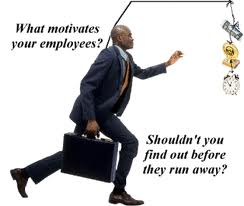
So, companies seeking a performance-oriented approach to employee retention might seek to enhance work value in some of the following ways (courtesy of the Performance Improvement Council of the Incentive Marketing Association):
Employee involvement in job design, goal setting, and selection of rewards.
Clear communication about company goals and ways employees can contribute to and share in its success.
Incentive programs that reward people for significant and measurable performance improvements.
Recognition programs offering meaningful recognition to employees for both tangible and intangible contributions to their company.
Project-oriented approaches in which all employees can work on diverse, limited-term assignments rather than being sequestered within a single department or function.
Developing talent exchanges to enhance careers by connecting employees with appropriate projects, roles, and positions within their companies.
Training through coordinated programs designed to enhance employee knowledge and then rewarding employees for that increased knowledge. Consider cross training to enhance skills and improve productivity. This both satisfies employees and equips them to perform better.
Fostering feelings of support by setting clear goals for employees and rewarding them upon accomplishment, and by promoting consistent values and recognizing people who embody them. This directs retention resources to actions and values that have a measurable benefit to the organization.
Creating an atmosphere of fun with spot “atta-boy” rewards, contests, or meetings, specifically related to organizational goals and values. This creates an atmosphere conducive to retention while keeping the focus on achieving goals.
Addressing the measurement issue by instituting “real-time” goal setting, performance measurement, and skills development programs to ensure that people always know where they stand, and to address performance issues and skill gaps before they become problems.
Fair Compensation. No one said that compensation will have no effect on turnover and retention. Determine a fair wage in your labor market and do what you can to meet it. A fair and equitable wage and benefits package is the foundation for a successful employee retention program.
Build trust. As mentioned above, a “climate of trust” is one of the factors that influence employee retention. Trust is built with employees through fair working conditions, management responsiveness to employee concerns, realistic performance expectations, and open communication, including one-on-one communications between managers and employees whenever possible.
Don’t limit motivation efforts to star employees. Incentive, reward, and recognition programs should be expanded to include as many employees as possible, rather than just the top 5 or 10 percent. Remember, it is the large middle range of employees that can contribute the most in terms of improved productivity and lower turnover costs.

The Role of Motivation
Higher levels of motivation can translate into a 53 percent reduction in employee turnover, according to a recent study by Stephen Condly, associate professor at the University of Central Florida, Orlando, conducted for the SITE Foundation. No retention strategy can succeed without addressing the issue of employee motivation.
“Incentives, Motivation, and Workplace Performance,” a study conducted by the professors at the University of Southern California for the International Society of Performance Improvement, found the following factors critical to fostering motivation and loyalty.
- Work value. The research confirmed that people stay motivated when they value their work, no matter how mundane the task. Someone building a house for low-income tenants might get pleasure from the most arduous labor, knowing the good that can come from the effort. Organizations can foster work value by recognizing contributions in a meaningful way, and regularly communicating the organizational goals toward which each employee can contribute. They can add to satisfaction through use of incentive programs that set goals for quality or quantity, and reward those who achieve or surpass them.
- Training. Many people draw satisfaction from developing the capability to do their jobs better or acquiring additional skills or responsibility.
- Support. Most people gain satisfaction from knowing that their organization appreciates their effort. This often comes in the form of meaningful recognition to those who achieve their goals or who exemplify important organizational values.
- Emotional appeal. Yes, people work better when they feel happy. Properly structured incentive and recognition programs can foster an atmosphere of fun and excitement, even in dreary jobs.
- Measurement. Knowing how one is doing in the pursuit of a goal is another way to create satisfaction. Effective measures of quality and productivity keep employees focused on goals, especially if accompanied with proper recognition when they succeed.
Applying Gamification in the Workplace
Wikipedia defines gamification as the use of game mechanics and game design techniques in non-game contexts. It applies to non-game applications and processes, in order to encourage people to adopt them, or to influence how they are used. It makes technology use more exciting and engaging, and encourages users to engage in desired behaviors with fruitful consequences to the environment where these techniques and processes are being deployed.

Many years ago, I took a series of courses at Cal Tech in Pasadena at the School of Industrial Relations. One of the courses was applying tools to encourage teamwork and participation. Thereafter, I have attended field trips in organizations in strategic off-sites where we had to do rope walking, free fall, climbing bamboo structures strung together to retrieve flags, etc. Thus, in those days – we applied sports and board games to fuel a shared success environment. Now things have become more technology oriented, and we have thus seamlessly transitioned to some extent from those environments to consumer web based experiences. This does not suggest that the other alternatives are less rewarding; they draw upon other types of triggers but gamification through technology is more accessible and generally less expensive with less overhead in the long run.
What are the four key elements in Gamification?
Games generally tend to have four elements that are closely intertwined. Absent any of these four elements and the jury would be out on whether the application could suitably be considered gamified. Clearly, when these elements are being applied to non-gaming contexts, you will find that some of these elements are more watered down or cruder representation of game design principles or applications to actual game play environments. Regardless, all of these elements are necessary conditions that must come into play.

1.Narratives
Games have narratives. They must be able to tell a story. They must place the player or user in a context, make them aware of the context, create a temporal dimension of a past, present and future and provide a theme or a set of themes that the players pursue.
2.Game Mechanics
These constitute the provision of tools and use cases that create PvP (Player vs. Player) or PvE (Player vs. Environment) experience. Common tools like teleporting, cockpit load (number of player controls), in-game user interaction, human-computer interaction, etc. come into play. The mechanics must aptly support the narrative.
3.Aesthetics
People look for rich experiences. In MMORPG, the aesthetics are extremely rich and immersive. In gamified applications, it need not be so. Regardless, users have continued to raise the bar on aesthetics and richness of media to support their interaction. So the trend toward aesthetics will continue, albeit at a lower benchmark than would be in the extreme case of a high quality MMORPG game.
4.Rewards
Finally, games have to have a purpose. The narratives have to have a light at the end of the tunnel. There is a carrot and stick principle in game design. It is a very important component to either persuade people to behave or not behave in a certain manner. Rewards are vanity points awarded for achieving goals that are user-driven or context driven. Either way, it is and will continue to remain the key element in game design.

The myth of rewards!
In one my earlier blogs, I laid out the distinction between intrinsic and extrinsic motivation. This has bearing on the concept of rewards and recognition in the workplace. You can find the details in my blog – “Intrinsic and Extrinsic Motivation: Impact on Employee Engagement”. (https://linkedstarsblog.com/2012/10/16/intrinsic-and-extrinsic-motivation-impact-on-employee-engagement/
Designing an application with rewards to fuel engagement in the workplace is a good idea. But rewards have to follow a narrative, a storyline. For example, an application that simply awards points and badges based on transactions without a narrative cannot be considered an application that applies all of the elements of the gamification process. It only addresses one element, and in fact, for some it is the least important component. When one focuses the product design around this single component, I contend that you are not really gamifying; you are in fact drawing upon some temporary impulses that are not sustainable and enduring.
Hence, the narrative and craftsmanship is quite critical to gamifying an application and making it relevant for employees in the workplace.
One must adopt the right mix of the gaming elements to ultimately create ends such as stickiness, re-engagement, and deeper levels of interaction, fun, challenge, promoting options to cooperate and also compete, and broadcast success.

Scales:
So now we arrive at assessing the scales to benchmark each of those ends. I am being particular by not calling these tools, since tools are to support mechanics whereas scales are manifestations of an end result. For practical design and implementation purposes, here are a few scales that are common across all games, some of which are quite relevant for gamification in an employee setting. Some of the more common scales to assess or broadcast success are:
1) Leaderboards

2) Achievement levels and measures of achievements
3) Challenges between users
4) Progress Bars

5) Reward Points that have redemption value

To reiterate, for the final outcomes associated with the scales to be meaningful, the narrative is extremely important. Storyboarding the experience in various settings is the key to designing relevant gamified applications. In fact, applying the appropriate narratives concerning particular industries is a very interesting architectural initiative that can be pursued.

Thus, in the case of workplace engagement, if the nuances of the work and the industry were emulated around themes with contextual narratives, it would truly make for wonderful experiences that ignite employee engagement while furthering corporate objectives.
Intrinsic and Extrinsic Motivation: Impact on Employee Engagement
The difference between intrinsic and extrinsic motivation lays the groundwork to reflect the qualitative dimension of motivation. The distinction is critical, in that – understanding it would serve the purpose of laying out the appropriate organizational architecture that would encourage the proper motivation that would drive employee engagement.
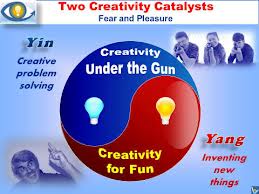
Intrinsic motivation reflects an engagement in activities that are performed with the sole end being satisfaction. An intrinsically motivated employee would do things simply for the sheer joy of doing things and assessing results. Tangible rewards or any rewards per se are not the ends that they drive toward. On the other hand, an extrinsically motivated employee is driven by tangible rewards – money, gifts, social approval; or they are driven specifically to avoid punishments – getting fired, rejection, being passed over for an important project, and career limiting responses.
Thus, in both instances, the theory was fairly mechanistic and behavioral. In fact, even intrinsically motivated employees can be framed in a mechanistic and behavioral world wherein the cause and effect relationship is an act and the joy of seeing a result. The only difference is that they are not connected to influences from without. But what has become a fact is that if the organization provides the appropriate structure to allow employees to ignite their intrinsic drives, the organization will benefit more than the alternative framework. This does not mean that one has to do without the other; it does mean though that depending on the nature of the work and the stage of the company – either or both motivation archetypes can be activated which will elicit the right engagement to advance the cause of the company. The questions though remain – What, When and How?
What? The culture has to address deficiency needs. These constitute the needs like security in the job, reasonable pay, and opportunities for growth, promotions, recognition, etc. Deploying a structure that only satisfies the intrinsic inclinations will be less likely to succeed if the deficiency needs are not clearly addressed. This would mean that good organizations would embark and deploy programs to address and mitigate deficiency needs. However, all that the organization has provided upon successful deployment is a sense of shared relief. But the organization needs to up their ante to allow for “growth needs” which is the manifestation of the intrinsic metric. That would mean to dive deeper on a case by case basis and as a group to deploy programs that fuel aspirational and idealistic goals of the employees. A great example that I immediately recall is the 3M model or the Google model wherein employees are given time to do their own thing on company time! Now this is obviously not practical for all companies, but certainly there is and will be some points that organizations can deploy to fuel “voluntary” engagement.

When? Timing is important. An organization can set a directional tone, but when to deploy what is driven by a host of discrete or related factors – for example, rush to go-to-market, liquidity crisis, major software pushes, declaring and preparing for earnings’ release, etc. When the organization is being driven on account of all these factors and more to ensure their survival, they do not have the degree of freedom necessarily to deploy the programs that promote “growth needs”. In fact, some organizations in a hyper-competitive environment may always feel as if they are in a pressure cooker and thus cascade that pressure across the ranks and files of the company. In the extreme case, if the organization is better insulated from the trials and tribulations of external factors, they would have a greater degree of freedom to nurture the “growth needs”. Now the latter scenario is very important to understand since today we belong in the information age rather than the mechanistic industrial age. In fact, we are being ushered at a break neck pace into an age where insight gathered against information is the salient competitive distinction — the morass of data and information is fast becoming now a millstone around an organization’s neck. So to success in the Age of Insights, so to speak, the company MUST deploy programs that anticipate and nurture the “growth needs”. The case for it is amplified further by the simple fact that people are mobile and have more and more choices. Hence, the Best Place to Work is an important metric that companies and employees follow since these companies have provided the right mix. To reiterate, timing the programs is important but the fact that both programs must be deployed to ensure an engaged culture is less debatable.

How? This is the penultimate question. Once the organization have assessed what is need and when, they have to execute. How do we establish a balanced set of programs that would fuel the appropriate level of engagement that will positively impact the organization? Conversely, how do we untether from legacy programs that were good for a particular set of circumstances, but may not be good going forward. This probably comes more in the realm of organizational psychologists but here are a few takeaways. First, employees have to be given free choice – in other words, given other alternatives, they would choose to do that alternative that optimizes and increases the value of the company the most. A fine example would be co-founders banging away at their work 24X7 and fuelled by dreams and possibilities for their creation. Put on a spotlight on this behavior – Multiply this behavior a hundred fold to characterize mass group psychology, and then figure out what can be done to create a “permanent immanence” or the state of continuous excitement and engagement. What we know based on studies, that engagement arising out of intrinsic motivation results in creativity, well-being, cognitive flexibility, loyalty, etc. By comparison, we also know that engagement as a result of extrinsic motivation may be as good – or depending on your perspective, may be as bad as a sugar high. Engagement ceases immediately or slowly once the extrinsic motivator is removed. In fact, a more extreme version suggests that introduced extrinsic motivation programs that serve “dependency needs” may actually depress engagement even lower than the original state.

So the general consensus appears to be to introduce not a plan but a surprise. For example, rewards that are expected, contingent on engagement or on task completion, and tangible are more likely to be detrimental to intrinsic motivation than rewards that are unexpected, not contingent, and intangible. More studies have in fact shown that employers should pursue the internalization of an employees’ extrinsic motivation for these tasks. Thus commending employees with unplanned surprises coupled with surfacing the value of the activity in and out of the organization appeals to the individual’s innate sense of worth to the company and outside of it. Hence, recognition at deeper granularity that is served with an element of surprise in an open environment is one of the better programs that ignite employee engagement.

Especially with the introduction of the Internet, people have started to believe that nation-state lines are blurring, and that we are becoming part of a global community. Civil upheavals such as the ones that took place in Libya and Egypt, were not confined to the nation-state as its citizens used the Internet, specifically, social media, to communicate globally. Despite the global communication, is the term “global citizenship” truly exemplified across sovereign-state borders?
View original post 682 more words
Employee Engagement and Corporate Social Responsibility
We start off with the premise – Human beings are good. Absent any constraints, human beings are inclined toward doing good. It is a fair assumption that have stood the test of time and the institutions, at an aggregate level, have for the most part endured and advanced human prosperity and happiness on account of the fundamental premise.

As we continue to thrive and move forward and forge and foray into new branches of knowledge and gather insights into our worlds, internal and external, we have a little more headroom to reach out and engage and contribute to the well being of other people that may not serve any immediate vested interest. Along the way, people have gathered a mix of different capital of various magnitudes – economic capital, intellectual capital, and social or reputation capital – and hence, they are in a better position today, than any time before, to be able sprinkle this capital across local and non-local communities. Thus, economic capital may translate into micro-lending and charity and endowments, intellectual capital may translate into voluntary time associated with teaching and mentorship, and social or reputation capital may translate into giving people opportunities. There is a far greater degree of awareness of larger issues that impinges on the advancement of the human race … issues around environment, conservation, global sustainability, clean energy, medical, basic infrastructure matters, democratic values, food, et al. And to that end, NGO’s, foundations, wealthy donors, corporations, governments, taxpayers, et al have contributed immensely to all of these causes.
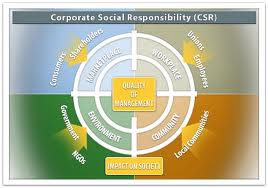
Sometime ago I read this article – The Case against Corporate Social Responsibility in the WSJ. (http://online.wsj.com/article/SB10001424052748703338004575230112664504890.html)
The argument was that if corporations ought not to focus on profits and social responsibility since those are competing outcomes that dip into a shared pot of responsibility of enhancing shareholders’ wealth. Yes, the argument has some merit if we were to reduce this argument to fiat consideration. But given the increased awareness of people in a world that is globalized and is under a spotlight of rich social media, this argument carries less weight today than more early years in business history. Talent has indeed become a prized asset, and companies set up structures, with the profit motive in mind, to harness the asset in a needful manner – all to finally serve the interests of the shareholder. But talent has also become fickle and mobile; it is becoming relatively more difficult to handcuff talent to the steering wheel of an organization. The organization is thus, for the sake of long-term sustainability, have to create structures that will encourage loyalty and engagement among the employees. And thus, the organization has to espouse higher aspirational ideals, which may immediately sacrifice short term profits for long term sustainability. I contend that corporate social responsibility is becoming another factor that will increase in importance over the passage of time.

So how do the flow of such events and the presumption of good tie into employee engagement? To stretch the above argument further, it is important for company to provide a supportive framework to allow employees to distribute their capital, should they choose to do so! I am not suggesting that people must distribute the capital, but I am suggesting that they have the opportunity to do so. And when they do, they aptly get recognized because it is still a capital that is being distributed generally with no expectation of immediate return. The returns maybe illusory with respect to formulating tangible financial metrics, but nonetheless it has a lot of importance. Thus, it is important that there are channels and applications and systems in place to encourage social good within the ranks and files of the employees.
Here are some interesting facts that you ought to think through. And these are facts in the context of US only:
1. There are over 1million charities and foundations.
2. The total amount of revenue associated with these charities and foundations are over $1.5 trillion.
3. Almost 50% of the amount is driven by private donations, of which $300 billion are private individual contributions. Private donations represent estates, bequests, etc.
4. There are over 20 million people employed in charity and foundations in the US.
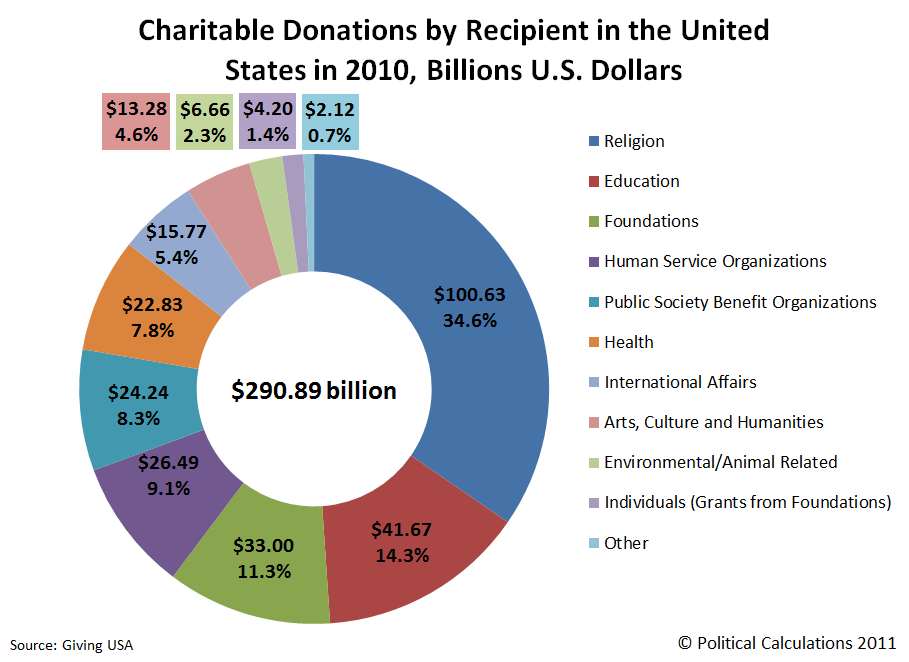
So clearly this is a big and powerful sector. And if companies can provide the structure to support the cause of community engagement among employees, that would only mean that they magnify their community footprint, and hence will have access to the new millennial generation that transcends the extrinsic provisions of the employer-employee contract.

 Linked Stars Blog