Joseph Campbell, The Power of Myth, and the Art of Envisioning System Architecture
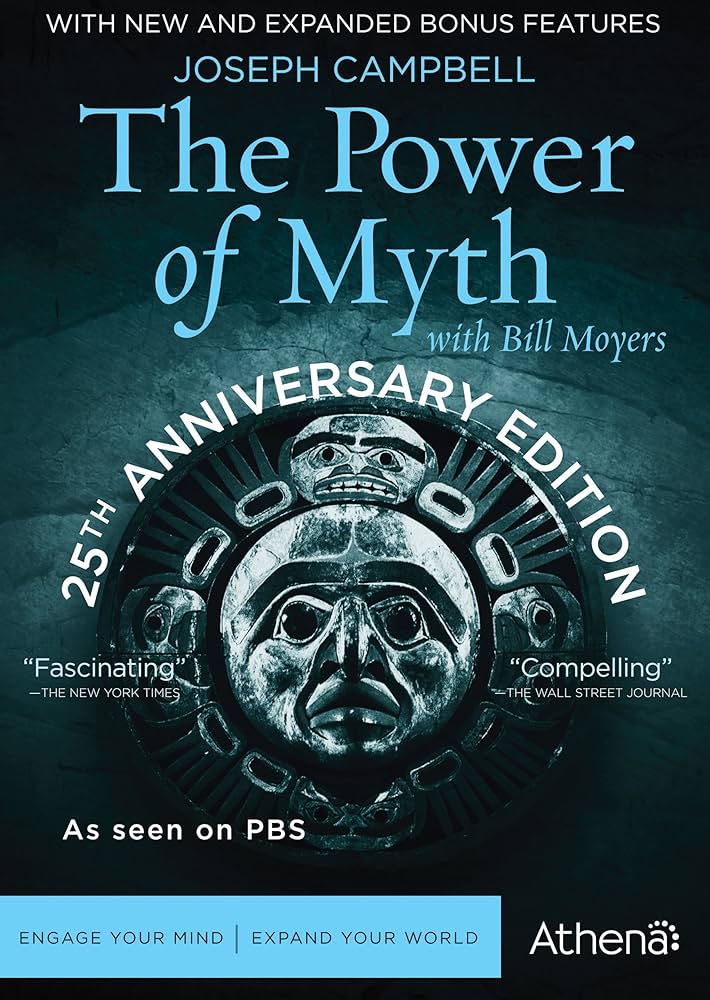
Joseph Campbell believed that mythology is not merely a collection of old stories; it is the human mind’s original operating system: a universal architecture that encodes how we understand change, complexity, and meaning. In The Power of Myth, his celebrated conversation with Bill Moyers ( I binged on this entire series this Saturday after a long while), Campbell argued that myths are “clues to the spiritual potentialities of human life.” Yet let’s read these myths more broadly. They are also models of systemic behavior, blueprints for how transformation unfolds, whether in an individual, an enterprise, or a technological ecosystem.

Modern system architecture, whether in finance, operations, or digital transformation, faces a challenge similar to that of mythology: to impose order without rigidity, to design for change without losing coherence, and to align many moving parts into a living, breathing whole. Seen through Campbell’s lens, architecture is not an engineering diagram but a hero’s journey in structure and function. It is a story of departure from legacy, confrontation with uncertainty, and eventual return with renewal and insight.
This essay examines how Campbell’s mythic framework can guide the way we envision and construct systems. It explores myth as the original design language, shows how the Hero’s Journey mirrors architectural transformation, and offers a practical synthesis for leaders designing resilient, meaningful, and adaptive systems.
I. Myth as the Blueprint of Human Systems
Campbell’s insight begins with a profound observation: across all civilizations, the same basic pattern repeats. Whether one reads the Odyssey, the Bhagavad Gita, or Star Wars, the storyline follows a universal topology which he calls the monomyth. The hero is called to adventure, crosses a threshold into the unknown, undergoes trials and transformation, and returns with an “elixir” that restores the community.
This pattern is not confined to literature. It is embedded in the human experience of transformation itself. Every system, be it biological, social, or organizational, must at times break its equilibrium, traverse chaos, and re-emerge at a higher level of order. Myth thus becomes the architecture of change.
In modern terms, one could call it a recursive algorithm: a self-similar process that repeats at different scales. Each subsystem, individual team, department, or platform undergoes its own hero’s journey within the larger enterprise narrative. The organization evolves as these micro-journeys interact, merge, and reinforce each other.
This recursive layering of journeys parallels how system architects think. They model modules, interfaces, and flows. Bear in mind that each operates with local autonomy while maintaining global coherence. The aim is to create a structure in which each part serves both its own function and the integrity of the whole. Myth, in essence, is the human mind’s first architecture diagram. It shows that enduring systems are not built from control alone, but from patterns of interaction guided by purpose.
II. The Hero’s Journey as a Systemic Map
To see how Campbell’s mythic model translates into architectural thinking, it helps to map the significant phases of the Hero’s Journey onto the process of system design and transformation.
1. Departure – The Call to Transformation
In the mythic narrative, the hero receives a call to adventure that disturbs the stability of the familiar world. There is usually resistance, hesitation, or denial. Similarly, in system design, the first step is to acknowledge that the current state—legacy infrastructure, static reporting, siloed processes—can no longer support the enterprise’s evolving goals.
The “call to adventure” in this context might be a strategic imperative: the need for automation, scalability, or predictive insight. Yet just as in mythology, departure demands courage. Organizations cling to legacy environments because they are stable and known. The departure phase requires both leadership and faith that what lies beyond the threshold, though uncertain, holds greater value.
In architectural terms, this is the moment of disruption: namely, when the system is deliberately unsettled so that it may evolve. It is the point at which a decision is made to move from existing architectures to adaptive, modular ones, often involving distributed systems, advanced analytics, or artificial intelligence.
2. Initiation – The Trials of Integration
The initiation phase in myth is the crucible, a period of trials, tests, and revelations. Heroes encounter helpers and enemies, face ordeals, and undergo symbolic death and rebirth. In a system architecture, this is the transformation stage, where integration, design, and implementation converge.
Architects at this stage must navigate a complex landscape: data pipelines, governance models, user adoption, and competing design philosophies. Conflicts arise between speed and control, between local autonomy and global standardization, between innovation and compliance. These are the dragons of modern enterprise.
The successful architect, like the mythic hero, learns to balance forces rather than eliminate them. Campbell called this the “coincidence of opposites”: the ability to hold dualities in creative tension. In system terms, this means designing with trade-offs in mind. One must weigh the time-space balance of computation (pre-aggregated versus real-time), the entropy of data models (flexibility versus discipline), and the complexity of governance (centralization versus decentralization).
The most powerful systems emerge not from perfect control but from simple rules that enable emergence. This aligns with complexity theory and with leadership models that empower decision-making at the edge. Just as the hero must rely on intuition and allies, architects must rely on principles rather than micromanagement. When simple, clear standards such as data schema conventions or API contracts are consistently enforced, teams can innovate within shared boundaries.
The initiation phase is therefore not a linear build but a living negotiation of a dance between structure and spontaneity, design and discovery.
3. Return – The Elixir of Integration
In Campbell’s framework, the hero’s return is not merely homecoming but integration. The hero brings back the “boon” which I think of as a gift of insight, knowledge, or capability that renews the community. The journey is complete only when this new wisdom is assimilated into ordinary life.
In architecture, this is the post-deployment phase: the system becomes operational, knowledge is institutionalized, and the organization experiences measurable improvement. Yet return is often underestimated. Many transformation efforts fail not in design but in integration. It is the inability to embed new capabilities into the daily rhythm.
For the architect, therefore, the return phase requires a self-sustaining design, a system that continues to evolve without heroic intervention. It must include feedback loops, performance metrics, and maintenance protocols that act as the organizational immune system. This is the modern equivalent of the mythic “elixir”: a living capability that strengthens the enterprise against future entropy.
When the system achieves this equilibrium, it ceases to be a project and becomes part of the organism’s identity. In mythic terms, the hero becomes king, sage, or teacher or if I may call it the new custodian of order.
III. The Mythic Mindset for System Architects
Campbell once said that myth reveals “what it means to be alive.” In the same way, a well-designed architecture reveals what it means for an organization to live and evolve. Both operate through pattern recognition, which is the ability to discern structure within chaos.
For a system architect or a finance executive overseeing transformation, adopting a mythic mindset provides several advantages.
1. Framing Transformation as a Narrative
Data flows and process diagrams rarely inspire people, but stories do. A transformation project framed as a hero’s journey resonates deeply: there is a clear beginning, a quest, obstacles, and a collective triumph. When teams understand the “why” behind change in narrative terms, resistance decreases and participation increases.
Instead of abstract technical objectives, the story might read: We are leaving behind outdated systems to seek a single source of truth. We will face integration challenges, but we will return with a platform that empowers every team to see the business clearly. This narrative coherence can align stakeholders more effectively than a dozen technical presentations.
2. Recognizing the Role of Threshold Guardians
In myth, every hero meets gatekeepers—figures who test their worthiness to enter the unknown. In organizations, these constraints include compliance requirements, data security mandates, and resource limitations. They are not enemies but necessary filters that preserve integrity. Recognizing them as part of the journey, not obstacles to it, transforms frustration into design wisdom.
3. Building for Adaptation, Not Perfection
Myths survive because they evolve. Each retelling adapts to a new context while preserving core patterns. System architecture must do the same. Designing for adaptability means embracing modularity, reusability, and continuous learning. The goal is not a flawless system but a resilient structure that can absorb change without collapsing.
4. Controlling Entropy Through Meaningful Standards
Campbell often spoke of the mythic hero’s task to bring order to chaos. In systems, chaos appears as entropy, and that is none other than data drift, process decay, or the uncontrolled proliferation of tools. The counterforce is the creation of durable “moats”: documentation, automation, standardized controls, and governance frameworks that maintain order without suffocating flexibility.
Entropy cannot be eliminated; it must be managed through renewal. Just as myths are periodically reinterpreted to stay alive, systems must be periodically refactored and retrained to remain relevant.
IV. The Architecture of Return: Sustaining Renewal
The power of Campbell’s model lies not in its sequence but in its cyclicality. The end of one journey becomes the beginning of another. Each return sows the seeds for a new departure. In systemic terms, this is the principle of continuous improvement. You have already read a few of my essays on feedback loops. Continuous Improvement is the ongoing feedback loop that transforms learning into capability.
A healthy architecture therefore, embodies the following qualities:
- Transparency: Every component knows how it connects to the whole.
- Traceability: Decisions and data can be followed back to their origins.
- Feedback: Systems collect information about their own performance.
- Redundancy: Critical functions are protected through diversity of design.
- Evolution: Components can be upgraded or replaced without destabilizing the core.
These qualities echo biological systems and myths alike. Both persist not through rigidity but through structured adaptability.
When leadership fosters the mindset of viewing every change as part of an ongoing journey rather than a discrete project, then inevitably the transformation becomes cultural rather than episodic. The system itself develops narrative intelligence: an awareness of its own history, purpose, and trajectory.
V. The Meeting of Myth and Mathematics
The connection between mythology and system design might appear poetic, but it rests on a logical foundation. Campbell’s framework of transformation parallels the logic of complex adaptive systems, information theory, and control dynamics.
When a system departs from equilibrium, it enters a state of increased entropy. Through feedback and adaptation, it reorganizes into a higher level of complexity. This process mirrors the mythic initiation: chaos followed by renewal.
Turing’s concepts of time-space trade-offs apply here as well. Every system must balance computation time against storage space; every organization must balance speed of change against depth of structure. The mythic hero faces the same trade-off—venturing quickly risks failure, but hesitation costs opportunity.
Von Neumann’s idea of self-replication in systems echoes Campbell’s notion of mythic renewal: patterns that reproduce themselves across generations, adapting but never losing identity. Both imply that enduring design depends on self-similarity, which is a rule simple enough to be inherited and flexible enough to evolve.
Thus, mythology and system architecture share a mathematical symmetry: both translate chaos into pattern and time into structure.
VI. The Practical Framework: A Mythic Checklist for Architects
To translate these ideas into practice, one can structure any major architectural initiative around a mythic framework:
- Call to Adventure: Identify the disruption or opportunity demanding change. Define why the current architecture must evolve.
- Crossing the Threshold: Establish guiding principles and governance. Recognize what risks and constraints must be respected.
- Tests and Trials: Confront integration challenges, data quality issues, and cultural resistance. Allow small failures to inform larger design choices.
- Allies and Mentors: Engage cross-functional teams, experts, and governance bodies as supporting archetypes.
- The Abyss: Confront the hardest problem—the one that threatens to derail progress. Often this is not technical but human: lack of trust, clarity, or alignment.
- Revelation and Transformation: Discover the new design paradigm—simpler, modular, and resilient. Institutionalize the insight through documentation and standards.
- Return with the Elixir: Deliver measurable value—reduced cost, improved insight, faster decisions—and embed the capability into the organization’s rhythm.
- Guardians of the Moat: Establish controls and feedback loops to preserve integrity against entropy.
- Cycle of Renewal: Use metrics and retrospectives to begin the next improvement journey.
This framework is as much about psychology as it is about technology. It ensures that every stakeholder sees the architecture not as a static deliverable but as a living system, perpetually evolving toward greater coherence and value.
VII. The Leader as Architect and Storyteller
The most effective system architects and financial leaders are not just process engineers; they are storytellers of transformation. They understand that structure without story becomes sterile, while story without structure becomes chaos.
Campbell’s enduring message was that myths reveal the shared patterns of human striving. The architect’s task is similar: to design systems that honor those patterns—systems that empower, clarify, and sustain.
When a leader presents a transformation as a narrative, people locate themselves within it. They understand their role in the larger pattern. The architecture ceases to be an abstraction; it becomes a collective journey.
VIII. The Power of Myth in the Age of Systems
Today’s organizations operate in a constant state of flux and are drowning in data proliferation, algorithmic decision-making, and distributed intelligence. The temptation is to manage this complexity through control. Yet as both Campbell and complexity theorists remind us, true order arises not from rigidity but from the right balance between structure and freedom.
A mythic approach invites humility. It acknowledges that no single designer can foresee all interactions within a living system. Instead, the architect sets conditions for emergence by defining simple, consistent principles and trusting the system to self-organize.
This mindset transforms the role of the modern executive. The leader becomes less a commander and more a gardener, cultivating conditions where coherence can emerge naturally. The hero’s journey becomes not the story of one individual but the collective saga of a learning organization.
IX. The Enduring Lesson
Campbell wrote that the purpose of the hero’s journey is not the triumph of the individual but the renewal of the community. The same is true of every architectural transformation. The goal is not the perfection of a platform but the evolution of the enterprise’s capacity to learn, adapt, and thrive.
When systems are designed with this principle in mind, they become more than tools; they become living frameworks of intelligence and purpose. They reflect not only the logic of technology but the logic of life itself.
Just as myths endure because they embody the deep grammar of human meaning, great architecture endures because it represents the deep grammar of systemic integrity. Both must balance chaos and order, change and continuity, freedom and discipline.
In the end, the most elegant architecture, like the most enduring myth, is one that transcends its designer. It continues to evolve, teaching new generations how to navigate uncertainty and find coherence amid change.
To envision architecture through Joseph Campbell’s eyes is to recognize that our systems are not merely mechanical, but they are mythic. It is the expressions of our collective will to bring order to chaos, meaning to data, and story to structure. When we build with that awareness, we design not only for efficiency but for resilience, not only for output but for renewal.
We create systems that, like the great myths, stand the test of time because they speak to something universal: the perpetual journey of transformation, return, and rebirth that defines both humanity and the organizations we build.
Posted on November 3, 2025, in Learning Organization, Learning Process, Management Models, Model Thinking, Organization Architecture, Social Systems, Vision. Bookmark the permalink. Comments Off on Joseph Campbell, The Power of Myth, and the Art of Envisioning System Architecture.

 Linked Stars Blog