Operational Excellence: Drive Margin without Raising Prices
Finding Margin in the Middle: How to Drive Profit Without Price Hikes
In a market where inflation spooks buyers, competitors slash to gain share, and customers have more tools than ever to comparison-shop, raising prices is no longer the first, easiest, or even smartest lever to grow profit. Instead, margin must increasingly be found, not forced. And it must be found in the middle, which is generally found in the often-overlooked core of the operating model where process, precision, and practical finance intersect.
There is a reason why Warren Buffett often talks about companies with “pricing power.” He is right. But for most businesses, particularly in crowded or commoditized industries, pricing power is earned slowly and spent carefully. You cannot simply hike prices every quarter and expect customer loyalty or competitive positioning to stay intact. Eventually, elasticity catches up, and the top-line gains are eaten away by churn, discounting, or brand erosion.
So where does a wise CFO turn when pricing is off-limits?
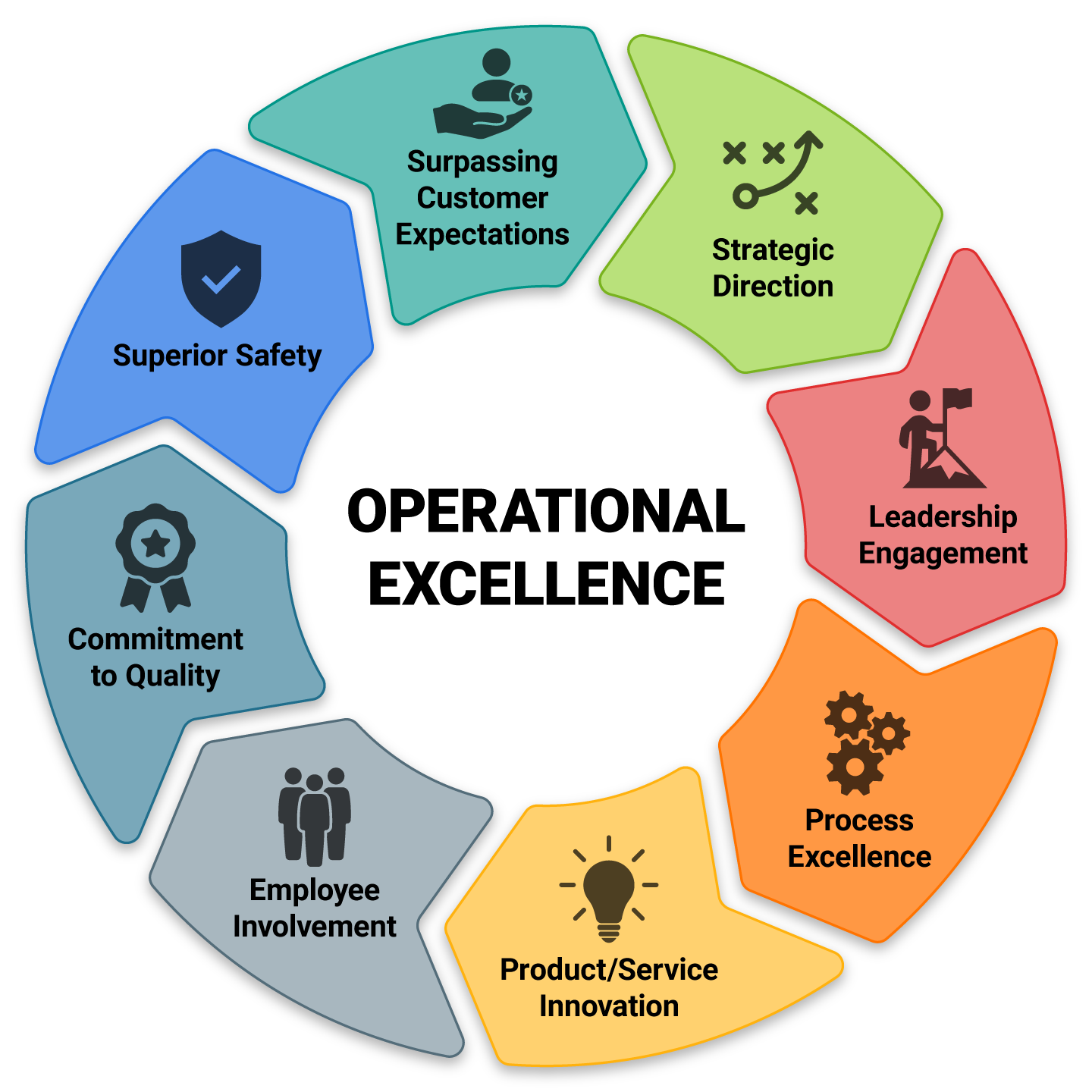
They turn inward. They look beyond the sticker price and focus on margin mechanics. Margin mechanics refers to the intricate chain of operational, behavioral, and financial factors that, when optimized, deliver profitability gains without raising prices or compromising customer experience.
1. Customer and Product Segmentation
Not all revenue is created equal. Some customers consistently require more service, more concessions, or more overhead to maintain. Some products, while flashy, produce poor contribution margins due to complexity, customization, or low attach rates.
A margin-focused CFO builds a profitability heat map that resembles a matrix of customers, products, and channels, sorted not by revenue, but by gross margin and fully loaded cost to serve. Often, this surfaces surprising truths: the top-line star customer may be draining resources, while smaller customers yield quiet, repeatable profits.
Armed with this, finance leaders can:
- Encourage marketing and sales to prioritize “sweet spot” customers.
- Redirect promotions away from margin-dilutive SKUs.
- Discontinue or reprice long-tail products that erode EBITDA.
The magic is that no pricing change is needed. You’re optimizing mix, not increasing cost to the customer.
2. Revenue Operations Discipline
Most finance teams over-index on financial outcomes and under-index on how revenue is produced. Revenue is a function of lead quality, conversion rates, onboarding speed, renewal behavior, and account expansion.
Small inefficiencies compound. A two-week onboarding delay slows revenue recognition. A 5% lower renewal rate in one segment turns into millions in churn over time. A poorly targeted promotion draws in low-value users.
CFOs can work with revenue operations to improve:
- Sales velocity: Track sales cycle time and identify friction points.
- Sales productivity: Compare bookings per rep and subsequently adjust territory or quota strategies accordingly.
- Customer expansion paths: Analyze time-to-upgrade across cohorts and incentivize actions that accelerate it.
These are margin levers disguised as go-to-market metrics. Fixing them grows contribution margin without touching list prices.
3. Variable Cost Optimization
In many businesses, fixed costs are scrutinized with zeal, while variable costs sneak by unchallenged. But margin improvement often comes from managing the slope, not just the intercept.
Ask:
- Are your support costs scaling linearly with customer growth?
- Are third-party services like cloud, logistics, and payments growing faster than revenue?
- Are your service delivery models optimized for cost-to-serve by segment?
Consider the SaaS company that offers phone support to all users. By introducing tiered support, for example, live help for enterprises, self-serve for SMBs, it cuts the support cost per ticket by 30% and sees no drop in NPS. No price hike. Just better alignment between cost and value delivered.
There is an excellent YouTube video detailing how Zendesk transitioned to this model, which reduced costs, improved focus, and enabled smarter “land and expand” strategies for the GTM team.
4. Micro-Incentives and Behavioral Engineering
Margin lives in behavior. The way customers buy, the way employees discount, and the way usage unfolds are driven by incentives.
Take discounting. Sales reps often discount more than necessary, mainly out of fear of losing the deal or a reflexive habit of “close by any means possible”. Introduce approval workflows, better deal-scoring tools, and training on value-selling, and you will likely reduce unnecessary margin erosion.
Or consider customer behavior. A freemium product may cost more in support and infrastructure than it brings in downstream. By adjusting onboarding flows or nudging users into monetized tiers sooner, you reshape unit economics.
These are examples of behavioral engineering, which are minor design changes that improve how humans interact with your systems. The CFO can champion this by testing, measuring, and codifying what works. The cumulative effect on margin is real and repeatable.
5. Forecasting Cost-to-Serve with Precision
Finance teams often model revenue in detail but treat the cost of delivery as a fixed assumption. That is a mistake.
CFOs can partner with operations to build granular, dynamic models of cost-to-serve across customer segments, usage tiers, and service types. This enables:
- Proactive routing of low-margin segments to more efficient delivery models.
- Early warning on accounts that are becoming margin negative.
- Scenario modeling to test how changes in volume or behavior affect gross margin.
With this clarity, even pricing conversations become more strategic. You may not raise prices, but you may adjust packaging or terms to protect profitability.
6. Eliminating Internal Friction
Organizations bleed margins through internal friction due to manual processes, approval delays, redundant tools, and a lack of integration.
A CFO looking to expand margin without raising prices should conduct an internal friction audit:
- Where are we spending time, not just money?
- Which tools overlap?
- Which processes create avoidable delays or rework?
Every hour saved in collections, procurement approvals, and financial close contributes to margin by freeing up capacity and accelerating throughput. These gains are invisible to customers but visible on the profit and loss (P&L) statement.
7. Precision Budgeting and Cost Discipline
Finally, no discussion of margin is complete without cost control. But this is not about blanket cuts. It is about precision: the art and science of knowing which costs are truly variable, which drive ROI, and which can be deferred or restructured.
The CFO must move budgeting from a fixed annual ritual to a living process:
- Use rolling forecasts that adjust with real-time data.
- Tie spend approvals to milestone achievement, not just time.
- Benchmark cost centers against peers or past performance with clarity.
In this way, costs become not just something to report—but something to shape.
The Best Margin Is Invisible to the Customer
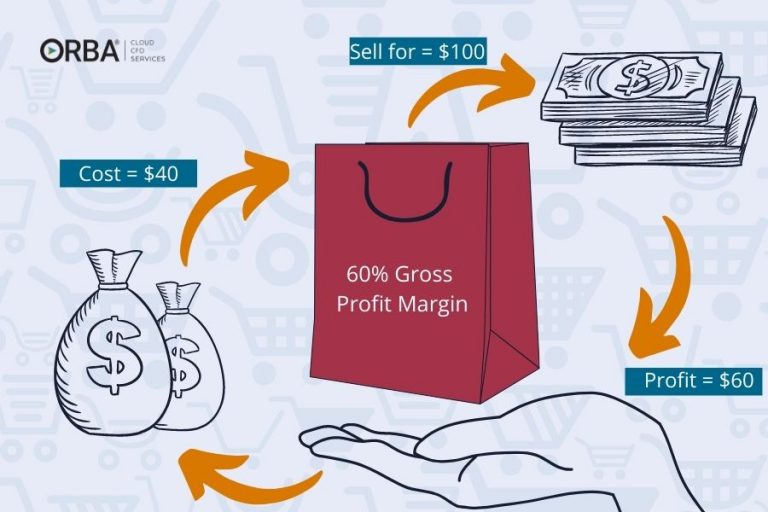
When you raise prices, customers notice. Sometimes they pay more. Sometimes they churn. However, when you achieve margin through operational excellence, behavioral discipline, and data-driven decisions, the customer remains none the wiser. And your business grows stronger without risking the front door.
This is the subtle, often-overlooked genius of modern financial leadership. Margin expansion is not always about dramatic decisions. It is about understanding where value is created, where it is lost, and how to gently nudge the machine toward higher efficiency, higher yield, and higher resilience.
Before calling a pricing meeting, consider holding a discovery session. Pull your data. Map your unit economics. Audit your funnel. Examine your cost structure. Trace your customer journey. Somewhere, there is a margin waiting to be found.
And it might just be the most profitable thing you do this year without changing a single price tag.
Posted on September 26, 2025, in Employee Engagement and tagged business, entrepreneurship, finance, investing, marketing. Bookmark the permalink. Comments Off on Operational Excellence: Drive Margin without Raising Prices.

 Linked Stars Blog